Justice Vipul M. Pancholi on constitutional values & an advocate’s journey at Parul University!
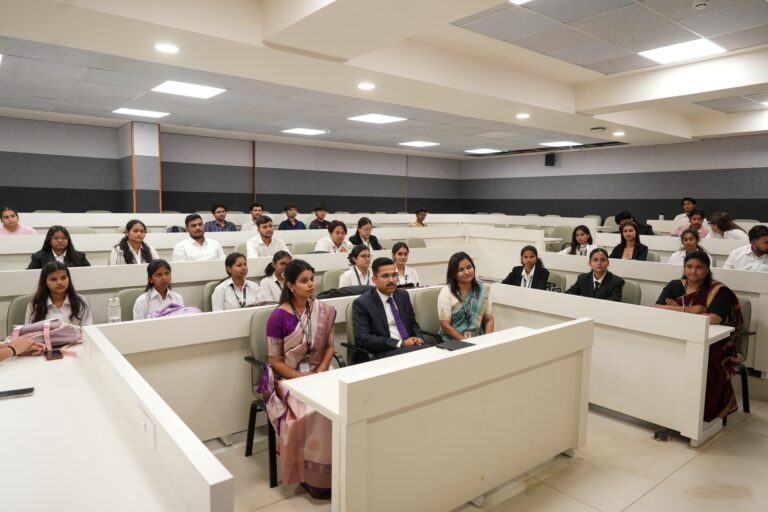
Hon’ble Mr. Justice Vipul Manubhai Pancholi is a Judge of the Supreme Court of India. He addressed the inaugural ceremony of Samvidhan Pe Charcha 4.0 , choosing to speak to students not about constitutional doctrine, which earlier speakers had covered, but about the journey of entering the legal profession.
Education does not follow a straight line
Justice Pancholi shared that his own path into law was not conventional: he first took a Bachelor of Science in Electronics before entering legal education. From that he drew a lesson for every student uncertain about their direction.
“Education does not always follow a straight line.”
The analytical skills developed in science—looking at facts, discovering patterns, weighing evidence—are needed in legal reasoning, he said, making knowledge from one discipline valuable for the other. He told students that they should not view a nontraditional background as a hindrance, and that his career supports this idea by demonstrating that a nontraditional path can be a successful one. The selection of the law,” he added, “is the adoption of a commitment to apply knowledge to the service of society, not position or prestige.
“The question a good advocate asks first”
Addressing the moot court, Justice Pancholi said that it was an opportunity for them to practise the art of advocacy before going into practice, identifying the issues, researching authorities, understanding of precedent, preparing written submissions and arguing before a bench. But, the most important moment is, he said, when a participant is not ready to answer a question. His main counsel was a way of thinking.
What is the worst possible thing that the other side could say?
We should never just prepare to present an argument, he said, but defend, challenge and sharpen it as it is challenged, which entails understanding the other side.
“Language as a bridge and clarity as strength”
Justice Pancholi, from a school that was taught in the Gujarati language, made special efforts for the students who were participating in the English and Gujarati moot courts. The language of a person’s early education should never be a barrier to aspirations, he said, because excellence in law is not limited to any one language, and language should be a conduit to knowledge, not a cage to opportunity. He also cautioned against confusing complexity with capability.
“A strong legal argument is a simple one.”
He ended with a call to action to win the competition over to become a good professional, to “argue with conviction, listen with care, compete with dignity,” and to make sure they take patience, humility and integrity with them. Explore law programs at Parul University, including B.A. LL.B. (Hons.), B.B.A. LL.B. (Hons.), and B.Com. LL.B. (Hons.), and build a strong foundation in legal studies, corporate law, and commercial practices to pursue a rewarding career in the legal field.