Explore design courses, essential practical skills, studio learning, and career opportunities for creative students
India is giving more importance to design as a skill for the future. In March 2026, the Ministry of Commerce and Industry said that design should be treated as a strategic capability that connects technology with people and turns ideas into useful products, systems, and experiences. (PIB)
For students, this shows why design is no longer limited to drawing or fashion. It now connects with technology, products, digital platforms, communication, films, interiors, and many other areas.
What Courses Can Students Explore in Design?
Design is a wide field, so students should first understand what they enjoy creating. Different courses prepare students for different types of work.
Some common areas include:
- Communication Design: Focuses on visual communication, branding, graphics, and digital content.
- Product Design: Teaches students how to create useful and user-friendly products.
- Fashion Design: Covers clothing, materials, trends, and the process of developing fashion products.
- Interior and Furniture Design: Deals with planning spaces, interiors, furniture, and how people use a place.
- UX and Interaction Design: Focuses on how people use websites, apps, and other digital products.
- Animation and VFX: Builds skills needed for animation, films, visual effects, and digital storytelling.
Students should read the subjects included in each programme rather than choosing only by the course name.
What Skills Should a Good Design Course Help Students Build?
Creativity is important in design, but creativity alone is not enough. Designers also need to understand people, problems, materials, technology, and communication.
A strong design course should help students learn research, observation, sketching, digital tools, presentation, and problem-solving. Students should also learn how to take feedback and improve their work.
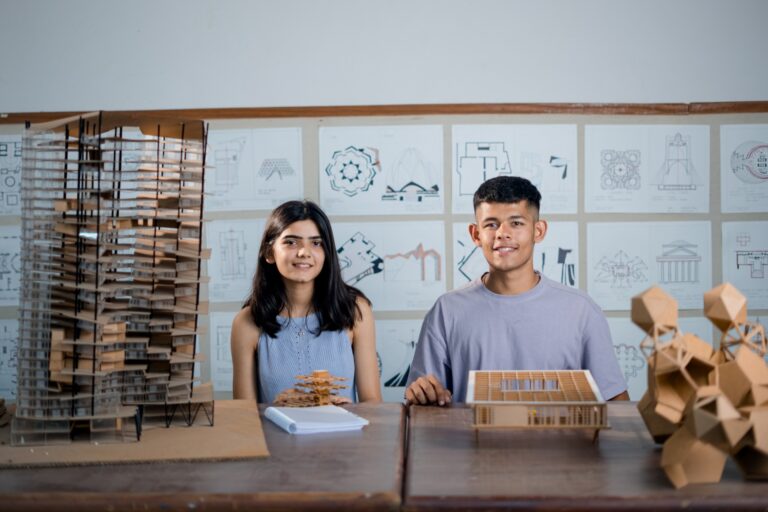
Design education becomes more useful when students create actual projects. A product design student, for example, may develop a model, test it, find problems, and improve the design. This process teaches much more than simply reading about product design.
Why Does Practical Exposure Matter in Design Education?
A designer’s work is usually judged by what they can create. This is why portfolios, projects, workshops, and practical assignments matter.
Students looking for a top university should check whether they will get enough chances to work on real ideas.
Useful learning opportunities can include:
- Studio-based projects and workshops
- Industry-based assignments
- Design competitions and exhibitions
- Internships and live projects
- Portfolio development
- Work with modern design software and tools
These experiences can help students understand their strengths and build work that they can later show during internships, higher studies, or job applications.
What Career Opportunities Can Design Students Explore?
The career path depends greatly on the design specialisation. A communication design graduate may work in graphic design, branding, advertising, or digital media. A product design graduate may work on consumer products, furniture, or industrial products.
Students interested in digital experiences can explore UI, UX, and interaction design. Fashion students may work in fashion design, merchandising, styling, or related creative roles. Animation and VFX students can explore films, gaming, digital content, and animation.
The creative economy is also growing. In September 2026, the Government stated that India’s animation, visual effects, gaming, and comics sector could require nearly 2 million skilled professionals by 2030. (PIB)
How Does Parul University Support Design Students?
Parul University offers design education through the Parul Institute of Design. Its current bachelor’s programmes include Communication Design, Product Design, UX and Interaction Design with AI, Fashion Design and Technology, Interior and Furniture Design, and Film, Animation and VFX.
Students can also explore master’s and diploma-level design programmes. The learning approach includes stages of exploring, experimenting, experiencing, and creating. This gives students space to develop ideas instead of depending only on classroom theory.
For students comparing design options, it is useful to study the latest curriculum, admission process, studio facilities, projects, and career opportunities before applying.
How Can Students Know Which Design Course Is Right for Them?
Students can start by noticing what type of problems they enjoy solving. Someone who enjoys spaces may prefer interior design, while a student interested in apps may connect better with UX design.
Try sketching, making digital artwork, creating simple products, editing videos, or redesigning everyday objects before choosing. These small experiments can give a much clearer idea about personal interest.
A design career often begins with curiosity. The right college can provide tools and direction, but students still need to observe, experiment, make mistakes, and keep creating. That process can slowly turn a creative interest into professional work.