Understanding Filmmaking at Maadhyam
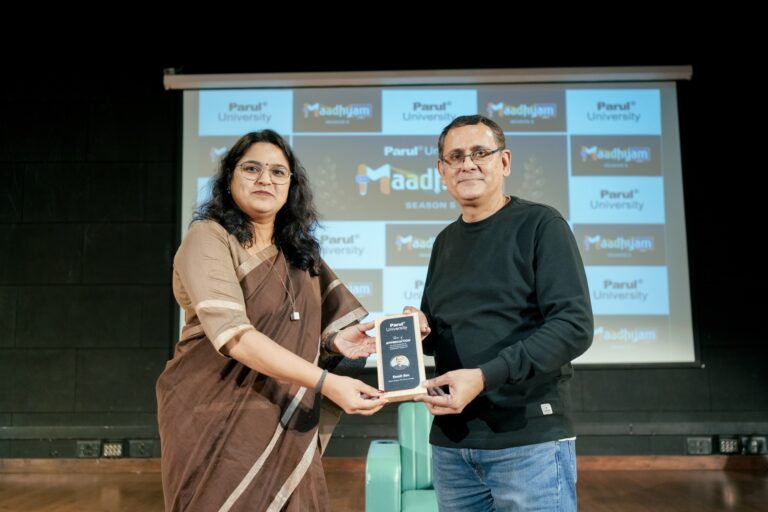
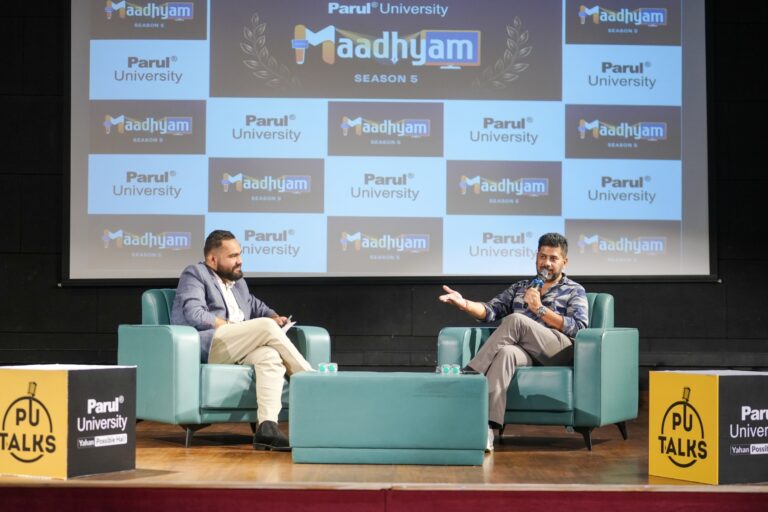
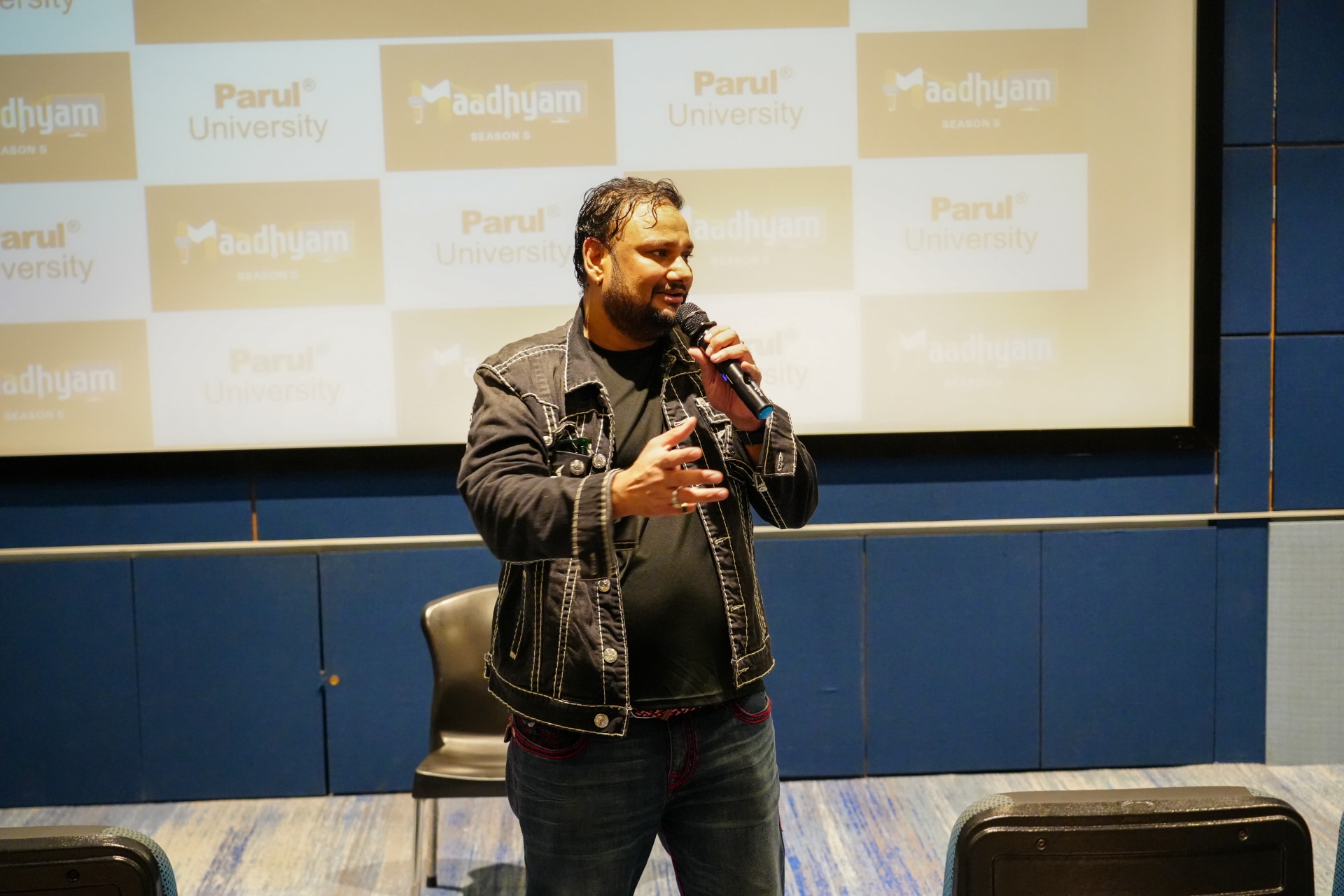
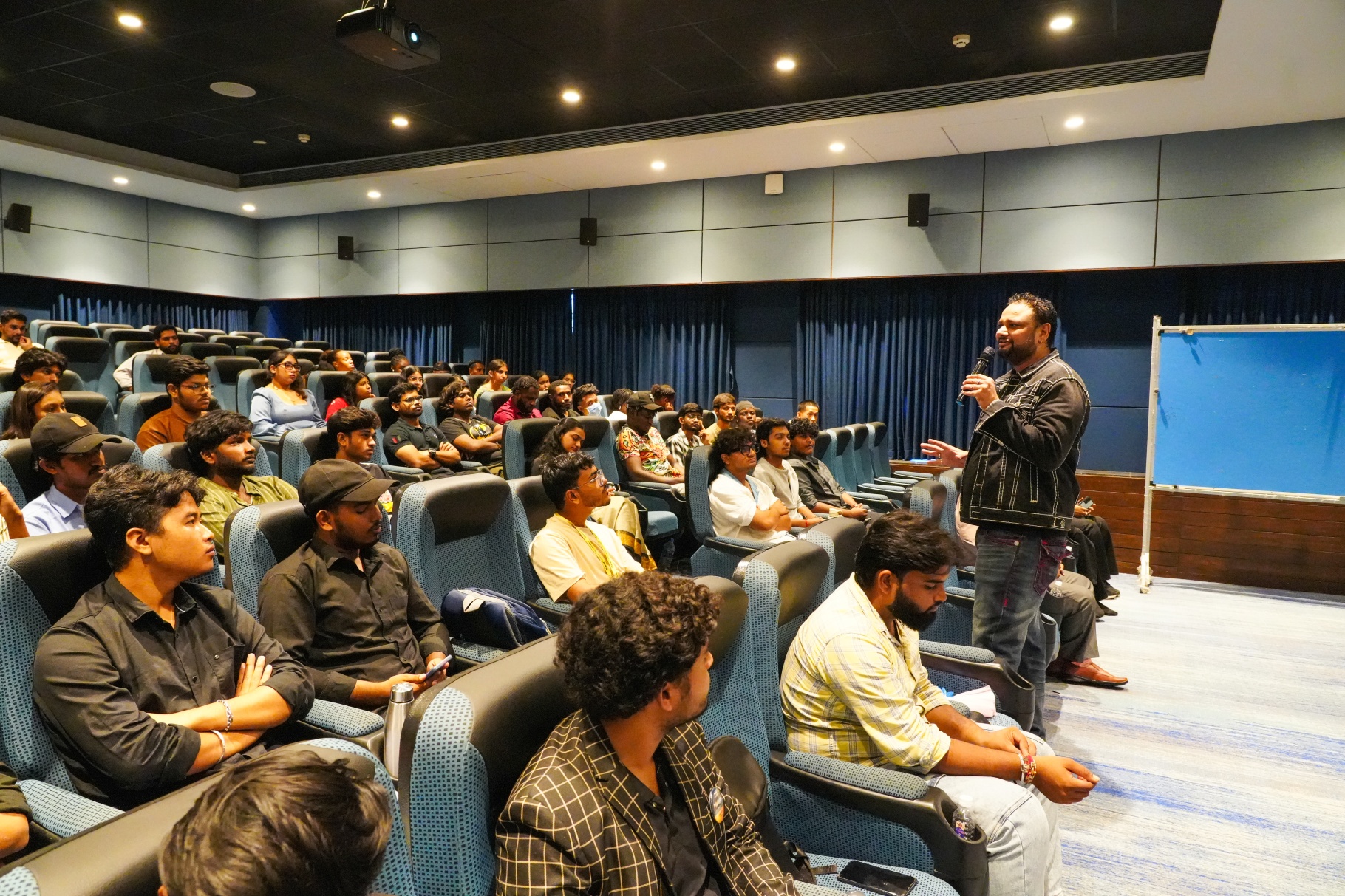
Filmmaker Devendra Malviya, the director of 2020 Delhi and founder of Visual Birds Studio, led the Scene to Screen filmmaking masterclass at Parul University‘s Maadhyam Season 5, where he was the guest and judge for the festival’s short-film event. He screened the trailer of 2020 Delhi, described at the festival as India’s first single-shot social thriller, and then took the stage to share his craft with the student filmmakers in the room, opening with a question that set the tone: has anyone seen a movie without any cuts?
Why a film without a single cut
Malviya explained his choice of the continuous, uncut format, referencing international single-shot films, and said he wanted to depict events exactly as the human eye sees them, because in real life there are no cuts. 2020 Delhi, he explained, unfolds across a single day and follows two boys from opposite communities caught in an abandoned factory during unrest, both facing an identity crisis as they try to survive. He was candid about the difficulty: finding a location that resembled the setting, and roughly two years of visual-effects work to stitch the continuous shot together.
Script first, always
Asked what the most important element in a film is, Malviya gave students a direct answer.
“Script is the most important. Story should be first.”
A strong script is the foundation, he said, and no amount of effort in production can save a weak or repetitive one. He described how a whole story is woven from one small concept, and urged young writers and directors to draw inspiration from films and books but never to imitate them.
A creator's responsibility, and a long road
Malviya spoke about the social responsibility of a creator to reflect the truths of society, while leaving judgement to the audience rather than the filmmaker. He was also honest about the length of the journey, describing how it took him close to three decades, and a move from a village to the film industry that he framed as crossing a distance of circumstance rather than only geography, to reach the point of making a film exactly as he envisioned it. He closed the masterclass with advice to look inward and draw from one’s own surroundings rather than copy established tropes.
Scene to Screen: the student films
Following the masterclass, ten short films made by students were screened for the audience and for Malviya, who gave direct, practical feedback on each, on cleaning up audio, tightening a cut, and keeping a complex concept clear. He reserved particular praise for restraint, noting that knowing what to remove from a film is as important as knowing what to include. The winning film was Kothangam Thumli’s My War, with Harjith Pillai’s One More Day as runner-up. Learn filmmaking with different programmes at Parul University.
Also Read: What Should a Reporter Take Care of While Reporting ?