What separates a strong media festival from a routine one is the people it puts in front of students, and Maadhyam Season 5 at Parul University brought a genuinely senior roster. Across its PU Talks and Samvaad sessions, its seven Pre-Maadhyam workshops, and its thirteen competitions, held under the theme “Biggest Stage, Brightest Stories” in September 2026, more than twenty working professionals from national television, print, digital, and film taught, spoke, and judged. This page lists them all. For a prospective student, it is the clearest single measure of the industry exposure the Department of Journalism and Mass Communication offers.
PU Talks and Samvaad: the speakers
The festival’s talk sessions brought senior journalists into direct conversation with students. Each has a dedicated report linked at the end of this page.
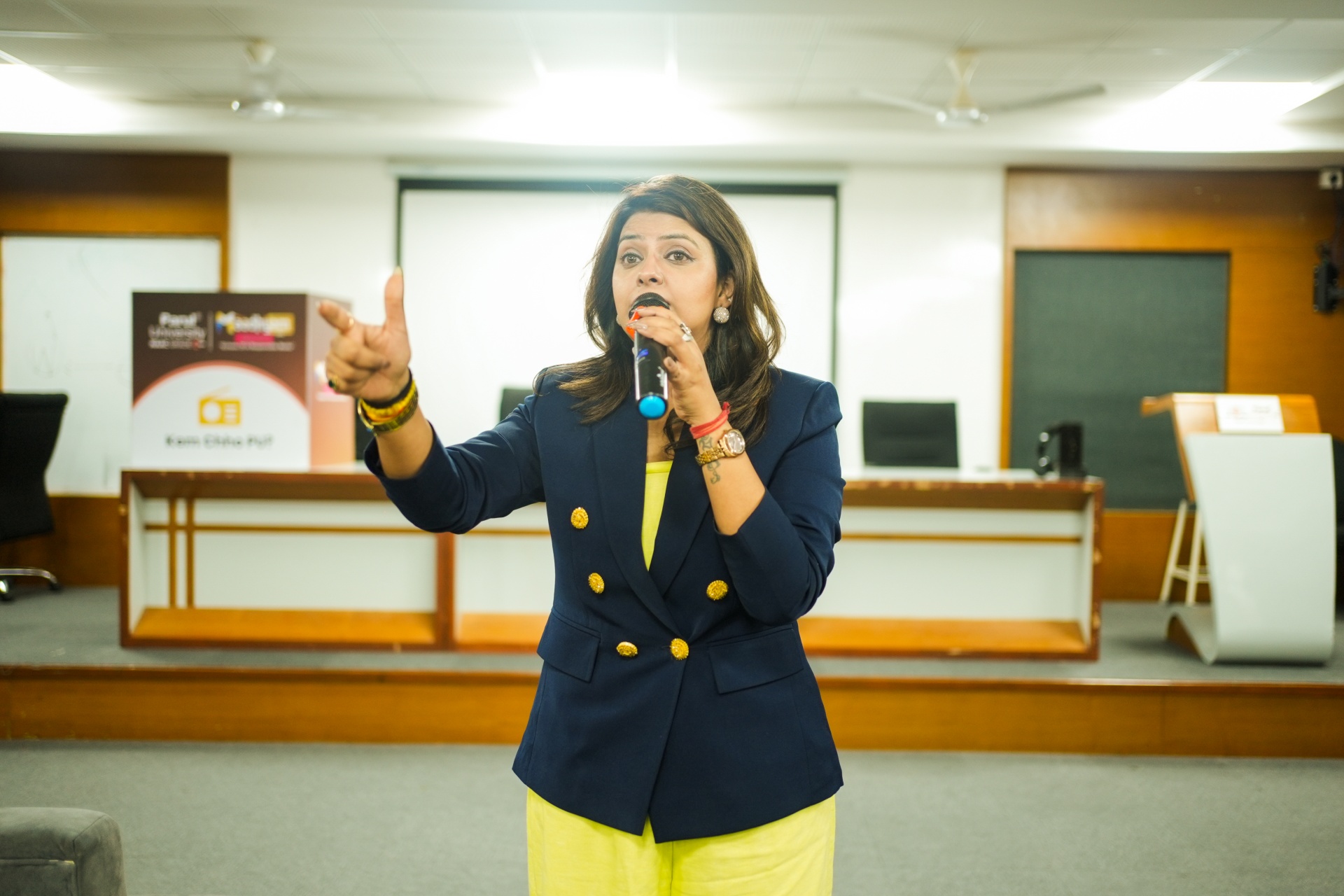
- Priyanshi Sharma, Co-founder, Peek TV (former NDTV anchor). Her Samvaad, Finding Your Own Path, argued that credibility is the product: accuracy over speed, transparency about money, and building an independent newsroom.
- Somit Sen, Senior Editor, The Times of India. His Samvaad, Reinventing the Newsroom, made the case that print endures while journalism goes digital and that a story must be read widely, checked on every side and made watertight.
- Sandhya Panchal, News Editor, News18 Gujarati. In Journalism Beyond the Camera, she taught that the real story is the hidden one behind the obvious frame and that ground reporting, not the studio, is where truth is found.
- Heem Brahmbhatt, Senior Anchor and News Producer, ABP Asmita. His Samvaad on ground reporting urged students to anchor as living, thinking people and to inform rather than be opinionated.
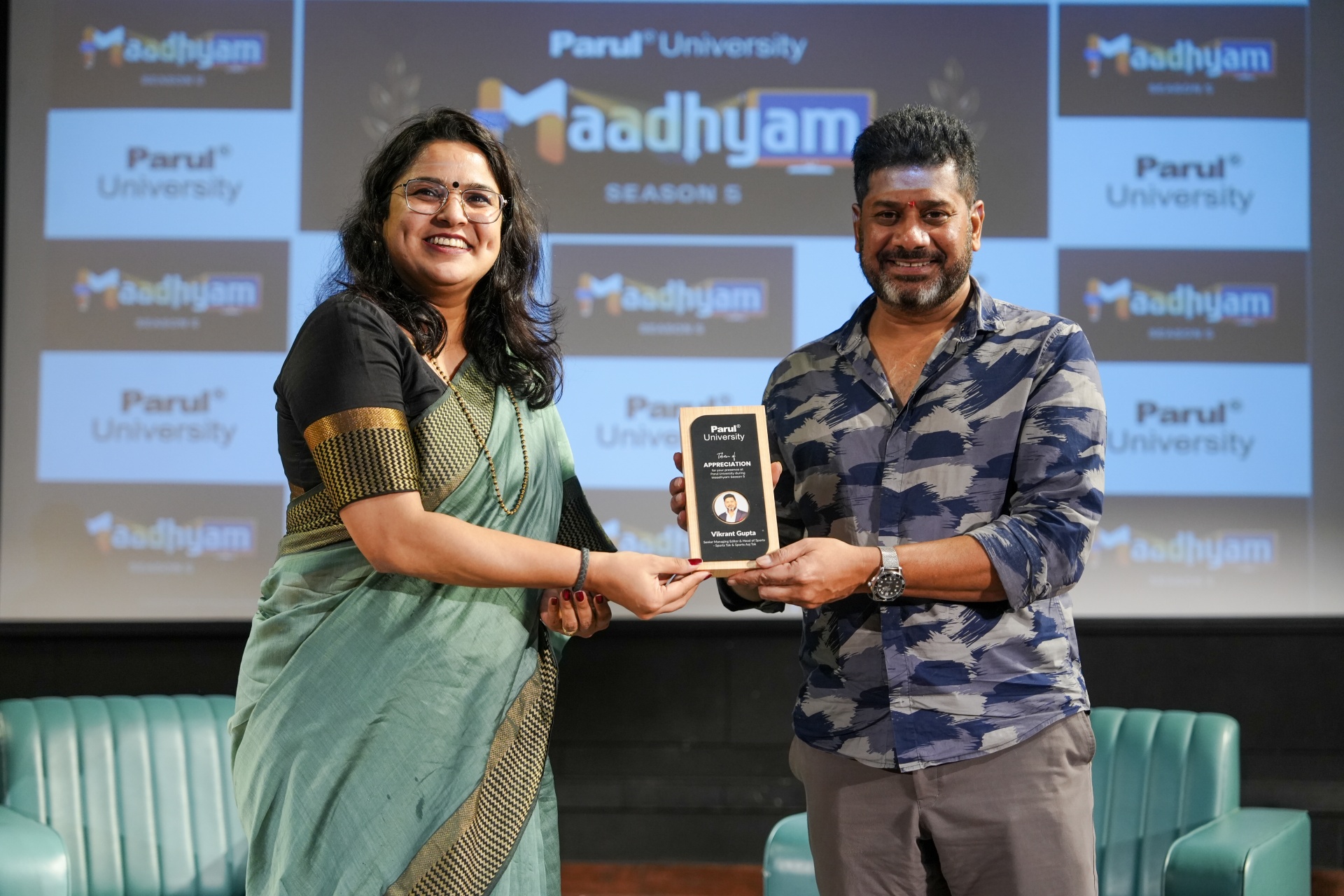
- Vikrant Gupta, Senior Managing Editor and Head of Sports, Sports Tak and Aaj Tak. In Sports Beyond Sports, he spoke on digital attention, protecting your time, and why a beginning journalist needs personality and a willingness to learn.
Pre-Maadhyam workshops: the industry trainers
The seven Pre-Maadhyam workshops were each led by a working practitioner in that discipline.
- Anamni Gupta, Deputy Copy Editor, The Indian Express. Led the headline, the print journalism workshop, teaching news values, the inverted pyramid, verification, and media ethics.
- Pinak Shukla, Channel Head, Growth Now News (ex-Aaj Tak, TV9). Led by Newsflash, the broadcast journalism workshop shows how a 120-plus-person television newsroom turns a tip into a broadcast.
- Shiv Narayan Joshi, Philosopher and Photo-Artist. Led Pixel Stories, the photography workshop, pressing students to move beyond snapshots to images that carry emotion and context.
- Parima Jain, Senior Radio Jockey and Audio Producer. Led Tune In, the radio workshop, treating radio as a discipline of voice, scripting, and audience connection.
- Umang Pardasani, Strategic PR Consultant and Brand Strategist. Led The Brand IQ, the PR and branding workshop, covering crisis communication and newsworthy press releases.
- Jitesh P., Creative Director and Senior Advertising Copywriter. Led The Hook, the advertising workshop, on the first three seconds, copywriting, and audience segmentation.
- Santosh Thundiyil, Director of Photography and Cinematographer. Led The Director’s Eye, the cinematography workshop, treating the lens as an emotional gateway and teaching visual grammar.
- RJ Devanggana, Radio Jockey, Carvaan Club Hindi. Festival chief guest who led the radio jockey workshop and judged the campus radio jockeying event.
Scene to Screen: The Filmmaking Masterclass
Devendra Malviya, filmmaker and director, founder of Visual Birds Studio. Led the Scene to Screen masterclass and judged the short-film competition; director of the single-shot social thriller 2020 Delhi. He told students the script comes first and no production can save a weak story.
The competition judges
The thirteen competitions were judged by working journalists and specialists in each field.
- Gopi Maniar, Senior Special Correspondent, India Today / TV9. Judged PU Wants To Know, the live field-reporting competition, teaching the reality of ground reporting.
- Prashant Rupera, Senior Investigative Journalist and Bureau Chief. Judged The Last Lead, the investigative journalism competition, on observation, fact-checking, and connecting clues.
- Chandresh Narayanan, Senior Sports Journalist, Author, and Cricket Analyst. Judged The Reporter’s Dugout, the sports journalism competition, on knowledge, writing, and analysis.
- Rahesha Sehgal, Senior News Anchor, Editor, and Broadcast Journalist. Judged the flagship Journalist of the Year championship, which tests complete journalism across writing, reporting, and anchoring.
- Mona Verma, Author, Columnist, and Literary Critic. Judged Kahani Mania, the story-writing competition, on the philosophy and discipline of creative writing.
- Priyanka Goswami, Prominent Editorial Illustrator and Visual Artist. Judged Vyang Chitra, the editorial cartooning competition.
- Tejas Shah, Renowned Commercial and Fine Art Photographer. Judged Lens and Lines, the mobile photography competition, on technical and visual craft.
- Vinod Desai, Senior Political Analyst, Academician, and Debater. Judged Breaking Views, the national debate competition, on civil, evidence-based arguments.
- Aditya Shah, Creative Director and Brand Strategist. Judged M-Ad, the poster advertising and ad-film competition.
- Shambhavi Jha, Fashion Educator, Media Consultant, and Pageant Judge. Judged Walk the Talk, the styled-expression and modelling competition.
The future direction!
A list of names is really a measure of exposure. In one festival, a student at Maadhyam, Season 5, could learn the art of print from an editor in the Indian Express, broadcast from among the channel heads, independent journalism from the founder of an independent newsroom, and be critiqued by a correspondent of India Today, while learning the art of cinematography from a working director of photography. It’s the hands-on, actual, real-life aspect of teaching and teaching by practicing professionals who give direct feedback that makes the Faculty of Liberal Arts’ journalism and mass communication lessons so effective, and not a lot of words can paint a picture as vividly as a list of people.