

Program details overview
B.Tech. in Mechanical Engineering (Work Integrated Program)
Mechanical engineering is one of those disciplines where the gap between classroom knowledge and shop floor reality can be wide. You learn one thing in theory, and then you get to work and realize the actual decision-making is far messier, more contextual, and more demanding than any textbook prepared you for. This program sits right at that intersection.
Built for working professionals, it connects mechanical engineering fundamentals with the kind of applied, industry-tested learning that holds up in real conditions. The structure is designed around the reality that most professionals can’t afford a career break. You stay in your role, you keep accumulating experience, and you come out the other side with both a degree and a deeper technical foundation, one that opens up the next step, whether that’s moving into a more senior position, broadening into a new function, or keeping postgraduate options on the table.
Here is how you can study this program

B.Tech. in Mechanical Engineering (Work Integrated Program)
This B.Tech in Mechanical Engineering Work Integrated programme is designed for working professionals who wish to expand and improve their mechanical skills. By closely linking theory to proven industrial applications, this programme provides relevant and immediately-useful knowledge/application. It allows working with studying and therefore no break in your employment history. The programme’s focus on industry-related (practical) knowledge helps to make more informed decisions on the job, create new opportunities to advance, and create a pathway for pursuing further academic qualifications.
Secure your place
Batch Commencing
8th July Onwards
Duration
3 Years Programs
Credits
180
Seats
60
Fee
1,85,000/- Per Annum
Language
English
Eligibility Criteria
Professionals working in Registered Industry/Organization (Central/State)/Private/Public Limited Company/MSMEs located within 50 km radial distance from the institute, Minimum of ONE-year Full Time/Regular Working Experience, A candidate must meet the Lateral eligibility criteria as per AICTE norms, Obtained a minimum 3-year Diploma in Engineering/Technology with at least 45% marks (40% for reserved category) in the qualifying examination.
*Tuition Fees may vary depending on the Country/State in which the candidate has passed their qualifying examination.
Extend Your Learning, Walk Away with Dual Degrees
While you are studying your main degree, you can also study another degree as a dual degree program which provides you an opportunity to explore multiple fields of study. With Dual Degree you can study your main degree in physical mode and your second degree in hybrid mode with adjustable study hours

Why study this program
Be a part of a engaging learning atmosphere that gives you the tools to excel in the career of your choice.
Flexible Distance Learning
Students can keep studying while maintaining their work and personal obligations.
Build on Existing Knowledge
Students can use their existing knowledge to study advanced mechanical engineering materials.
Hands-On Practical Learning
Students will develop their skills through laboratory work and workshops and by participating in actual industry projects.
Industry-Relevant Skills
Students will acquire technical skills that match the requirements of manufacturing facilities and automotive companies and fundamental engineering fields.
Career-Ready Approach
Students will develop their abilities to solve problems analyze systems and create solutions which they need to face authentic engineering difficulties.

What you can become after studying Mechanical Engineering (Work Integrated Program)?

Mechanical Engineer

Production Engineer

Design Engineer

Maintenance Engineer

Quality Control Engineer
Manufacturing Engineer
Here is the Important Information you need to Know
Find out if this is the right course for you.
Find out if this is the right course for you.

Download curriculum
Get a complete overview of what you’ll learn, the skills you’ll build, and how the program shapes your academic journey.


Download teaching scheme
Understand how your learning is structured, from subject flow to timelines, designed to keep your progress clear and consistent.

Download faculty details
Discover the experts behind your education: their experience, specialisations, and the knowledge they bring into the classroom.
Launch your career with our leading placements
We provide you with leading placement opportunities before you graduate, with the best career training and an exposure to leading recruiters.
3-5 LPA
Average Package
100+
Recruiter
8 LPA
Highest Package Offered

Give your future career a head start
Explore our facilities & resources for this program
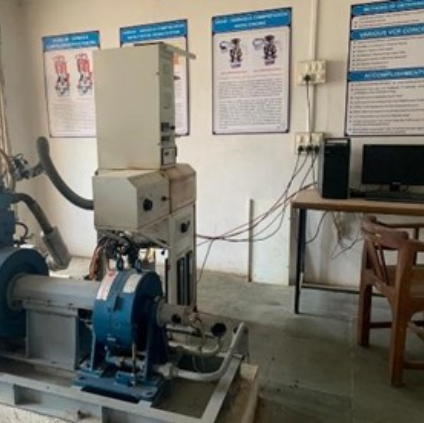
IC Engine Research Lab
This lab enables students to study the performance, combustion, and emission characteristics of internal combustion engines. It helps them understand engine components, testing methods, and real-world applications related to automobile and energy systems.
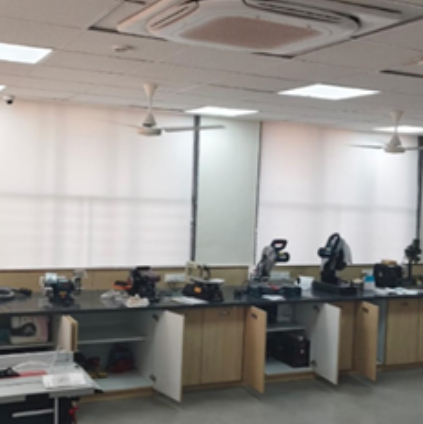
Idea Lab
The Idea Lab encourages creativity and innovation by providing tools and resources for students to convert ideas into prototypes. It supports project-based learning, interdisciplinary collaboration, and problem-solving skills.
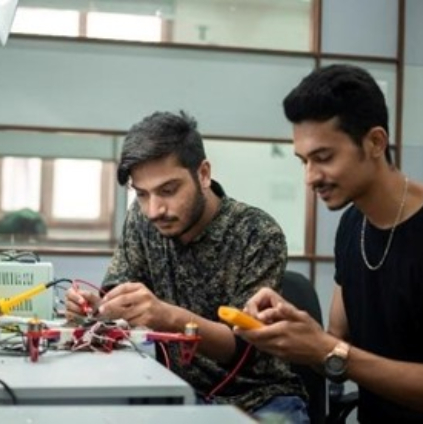
FAB Lab
The FAB Lab provides digital fabrication facilities such as 3D printing, laser cutting, and CNC machining. It helps students design and manufacture prototypes, enhancing practical knowledge of modern manufacturing technologies.
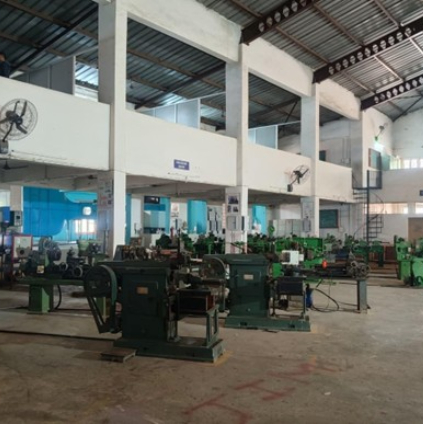
Workshop Facility
The workshop facility provides hands-on training in basic manufacturing processes like fitting, welding, turning, and machining. It builds fundamental technical skills required for mechanical engineering practice and industry readiness.
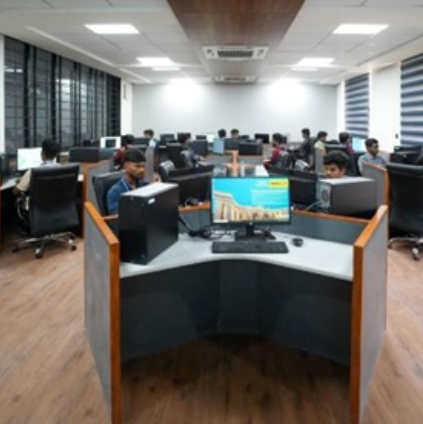
AR/VR lab
The AR/VR Lab allows students to visualize complex mechanical systems and simulations using augmented and virtual reality technologies. It enhances conceptual understanding, interactive learning, and virtual experimentation.
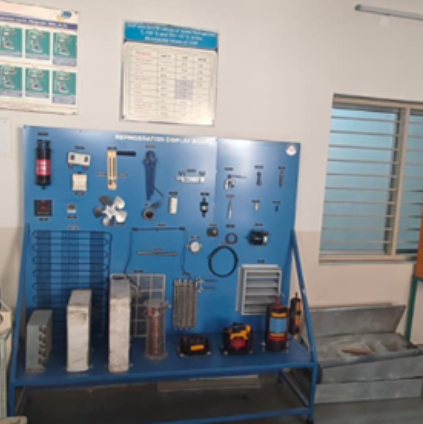
Refrigeration and Air Conditioning Lab
This lab helps students understand the principles of refrigeration cycles, air conditioning systems, and cooling technologies. It provides practical exposure to system components, performance analysis, and energy efficiency.
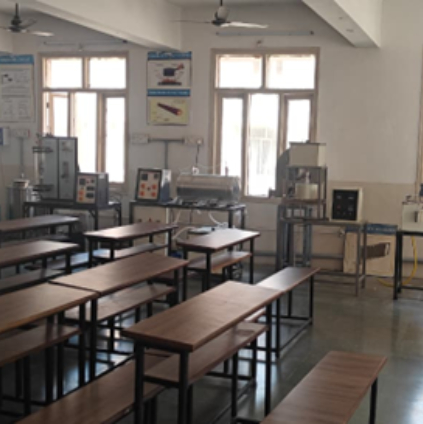
Heat Transfer lab
The Heat Transfer Lab enables students to study conduction, convection, and radiation phenomena through experiments. It strengthens theoretical knowledge by demonstrating practical heat transfer applications in engineering systems.
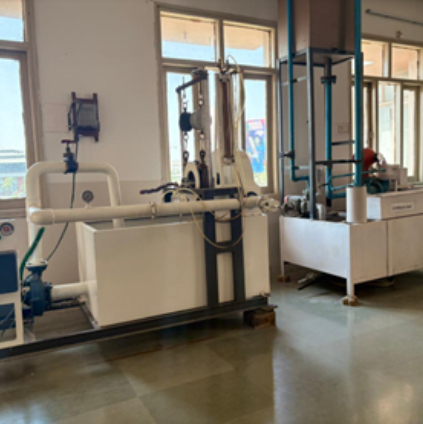
Fluid Mechanics and Fluid Power Engineering lab
This lab provides practical understanding of fluid flow behavior, hydraulic machines, and pneumatic systems. It helps students analyze fluid properties, pressure losses, and fluid power applications used in industries.
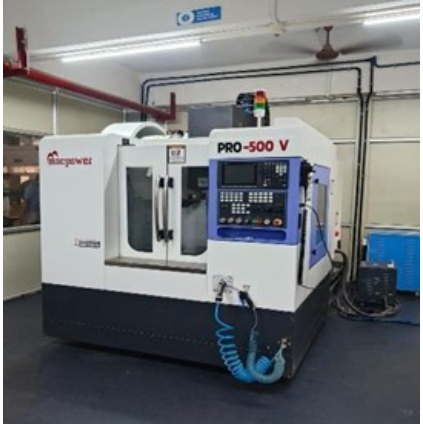
Advanced Manufacturing Facility
The Advanced Manufacturing Facility exposes students to modern machining technologies such as CNC machining, automation, and precision manufacturing. It helps develop advanced skills required for high-quality production and industrial applications.
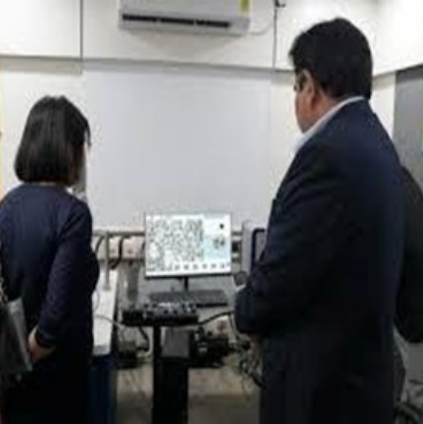
Micro Nano Research and Development Centre
This center focuses on advanced research in micro and nano-scale materials and manufacturing processes. It supports students in research activities, innovation, and development of next-generation engineering technologies.
Stay up to date with Mechanical Innovations
What Is Prompt Injection? AI Security in the Age of Agentic AI and MCP
As AI systems move from answering questions to taking actions, they become software that can be attacked. Prompt injection, now ranked the number-one risk to AI applications, is the central threat, and agentic AI and the Model Context Protocol expand the attack surface. Here is what it means, and how to defend against it.

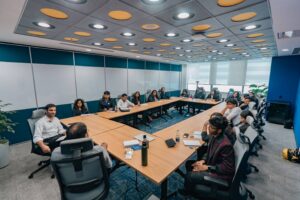
Is Parul University Actually Good for Industry Exposure? A Complete, Evidence-Based Answer for Students and Parents Based on the October 2025 Bangalore Industry Programme, 146 Practical Learning Tours, 150 Plus PU Talks Speakers, 3,500 Plus Placement Offers, and the Books Recommended Directly by C-Suite Executives
Is PU good for package and industry exposure? From busting myths to evidences, here’s your full-fledge guide to industry programmes & packages. Explore how PU tours are the real time evidence of industry-ready approach, 150 Plus PU talks held with top companies of India & World and how C-Suite Executives are recommending books to students directly (not something you would see in any university). That’s when PU outshines the rest as it ensures industry-readiness straight from the first year. Read ahead the full coverage.
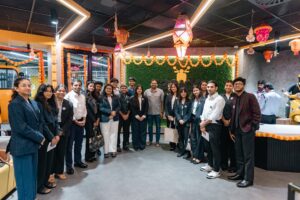
Mr. Rishikesh SR of Rapido, Mr. Sanjeev Kumar Singh of Ather Energy, and Mr. Ankit Rastogi of Angel One on First Principles Thinking, Trust as the Default Operating Mode, and Building Across 350 Cities
Parul University’s students met 3 innovators of India – Mr. Rishikesh SR – Co-founder, Rapido, Mr. Sanjeev Kumar Singh – Chief Operating Officer, Ather Energy, and Mr. Ankit Rastogi – Chief Product Officer, Angel One. Read the full coverage!
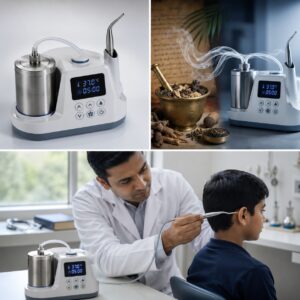
How Parul University Researchers Turned an Ancient Ayurvedic Ear Healing Procedure Into a Precision-Engineered Medical Device That Could Reach Primary Health Centres Across India: The Karnadhoopan Device for Chronic Ear Discharge
Parul University’s research & development cell worked on India’s Leading Cause – Hearing Loss. They engineered an ancient ayurvedic ear’s healing process into a medical device that can easily reach Primary Health Centres across India. Read when and how Karnadhoopan Device was designed to heal millions of CSOM patients and successfully got GSBTM fundings.
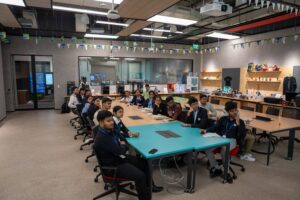
Every Parul University Course Mapped to the IIMUN Hyderabad Leadership Tour Sessions: A Complete Course- Finder Guide for Students Inspired by DRDO, Saina Nehwal, IIIT Hyderabad, Microsoft, Dr Reddy’s, and MCEME.
Eleven sessions. Eleven programme mappings. If Dr Anuj Kumar Varshney’s DRDO session inspired you, the course is B.Tech ECE or M.Sc Physics. If Saina Nehwal’s discipline appeals, look at B.PEd or Sports Scholarship.
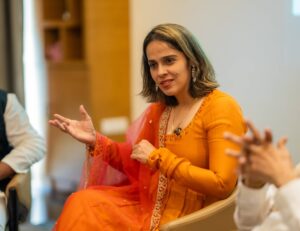
What Parul University Students Asked at the IIMUN Hyderabad Leadership Tour: Every Audience Question and Speaker Response From IIIT Hyderabad, DRDO, and Saina Nehwal Sessions
The IIMUN Hyderabad Leadership Tour was not a lecture series where students sat passively. The 10 Parul University students asked pointed questions across every session. This article compiles the complete Q&A content
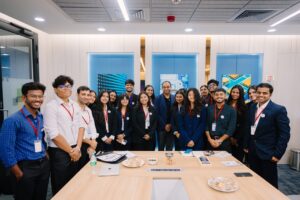
Inside Applied Materials, Marvell Technology India, and Cisco India
In the fully-sponsored trip to Bangalore, Parul University’s 3 students met 3 Top Tech Leaders, Mr. Avinash Avula, Mr. Navin Bishnoi, and Ms. Daisy Chittilapilly. Read the full coverage ahead.
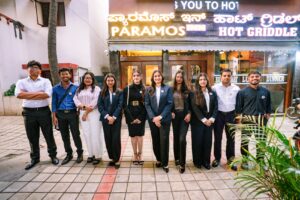
9 students of Parul University received a full-fledged sponsored trip to industry leadership programme in Bangalore.
9 students of Parul University visited a four-day industry leadership programme in Bangalore. Read the full coverage ahead.
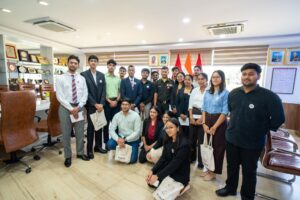
Lt General Neeraj Varshney at MCEME: Decision Diary, the Eight-Step Framework, the Three Life Biases That Distort Half of Every Choice You Make.
Lt General Neeraj Varshney, Commandant of MCEME with 5 master’s degrees, addressed 10 Parul University students on the IIMUN Hyderabad Tour on 30 October 2025.
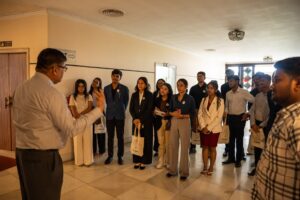
IIIT Hyderabad’s Smart Innovative Campus Explained: 300 Sensor Nodes, Wi-SUN Wireless Network, Digital Twin, Ten Parul University Students Witnessed.
IIIT Hyderabad’s Smart Innovative Campus deploys 300+ sensor nodes across the campus using Wi-SUN wireless, VISEN radio frequency backup, and a digital twin of water management. Sensors that deliver 97% accuracy.
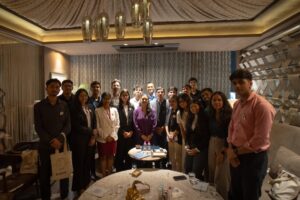
Senior Scientist Of DRDO Dr. Anuj Kumar Varshney on Laser Technology, Energy Weapons and Why He Writes The Books in Hindi.
DRDO Senior Scientist Dr Anuj Kumar Varshney spent two hours with 10 Parul University students at Niloufer Cafe, Hyderabad on 30 October 2025. Covered Directed Energy Weapons, DRDO’s 52 labs, the Summer Internship pathway, and science writing in Hindi.
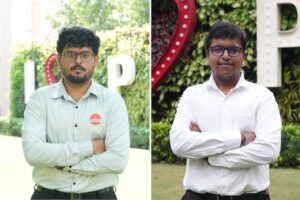
Deloitte From Daily DSA Practice, Cafe Coffee Day After Two Surgeries and a Pivot to Online Drives: How the Same T&P Cell That Produced 60 LPA at Microsoft Builds Placement Capability Across CSE, Mechanical Engineering, Every CGPA, and Every Circumstance.
Vansh Gupta at Deloitte, hackathons, backend dev, AI/ML projects. Impact training prepared Tarun Manikanta Sai Battula: 4.5 LPA at Cafe Coffee Day. Atmospheric Water Generator project. Strength: management and communication. Credit mock interviews and T&P Cell.


