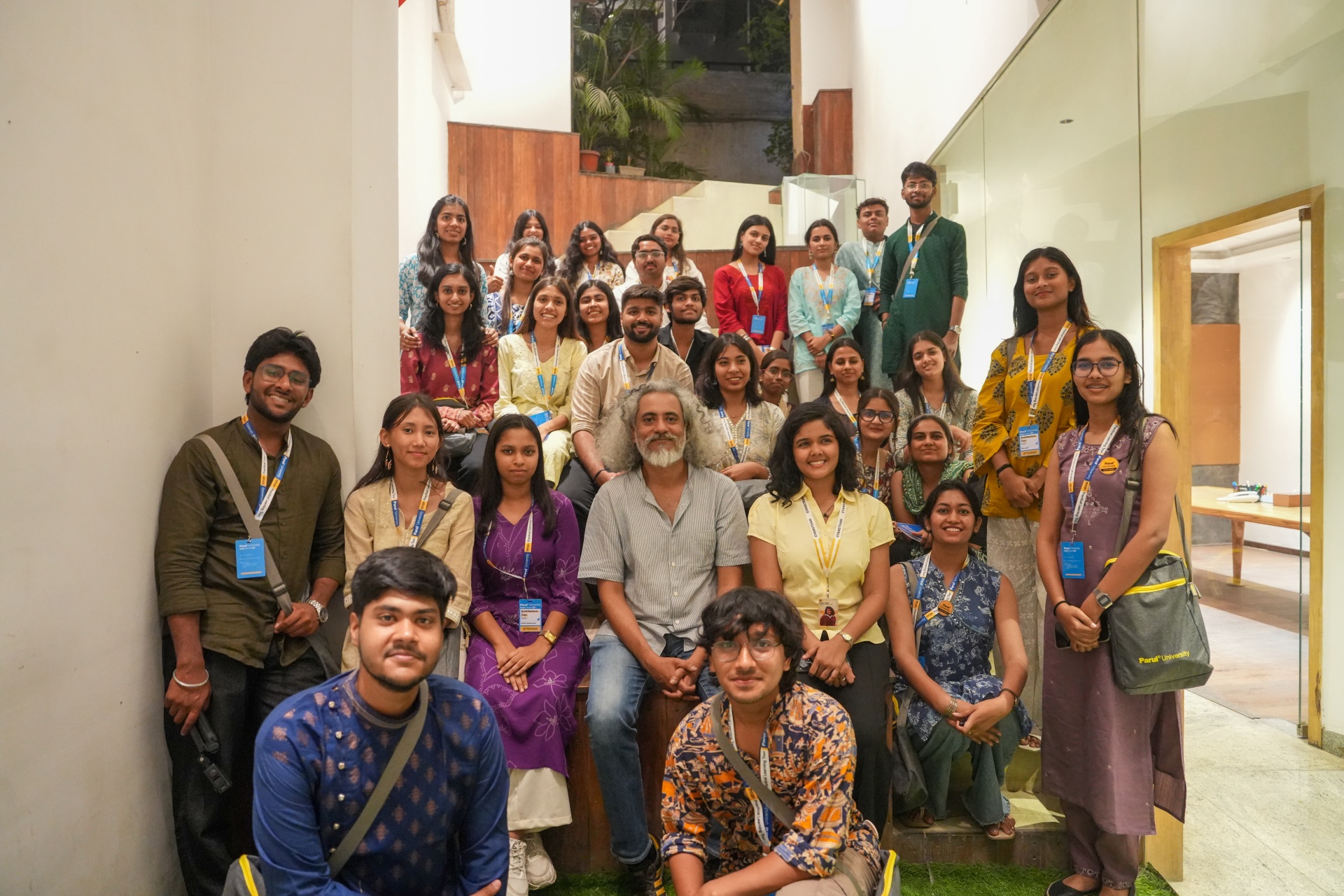
Three sessions across the Parul Institute of Architecture and Delhi tour took place at three of India’s most respected private architecture practices. Each firm represents a distinct intellectual position on what contemporary Indian architecture should be. Studio Lotus emphasises cultural identity and zero design repetition. Morphogenesis emphasises systematic sustainable practice at scale through a proprietary framework. Anagram Architects emphasises the climate-culture intersection and the discipline of design details across geographic diversity.
Studio Lotus: 300 projects, zero design repetition
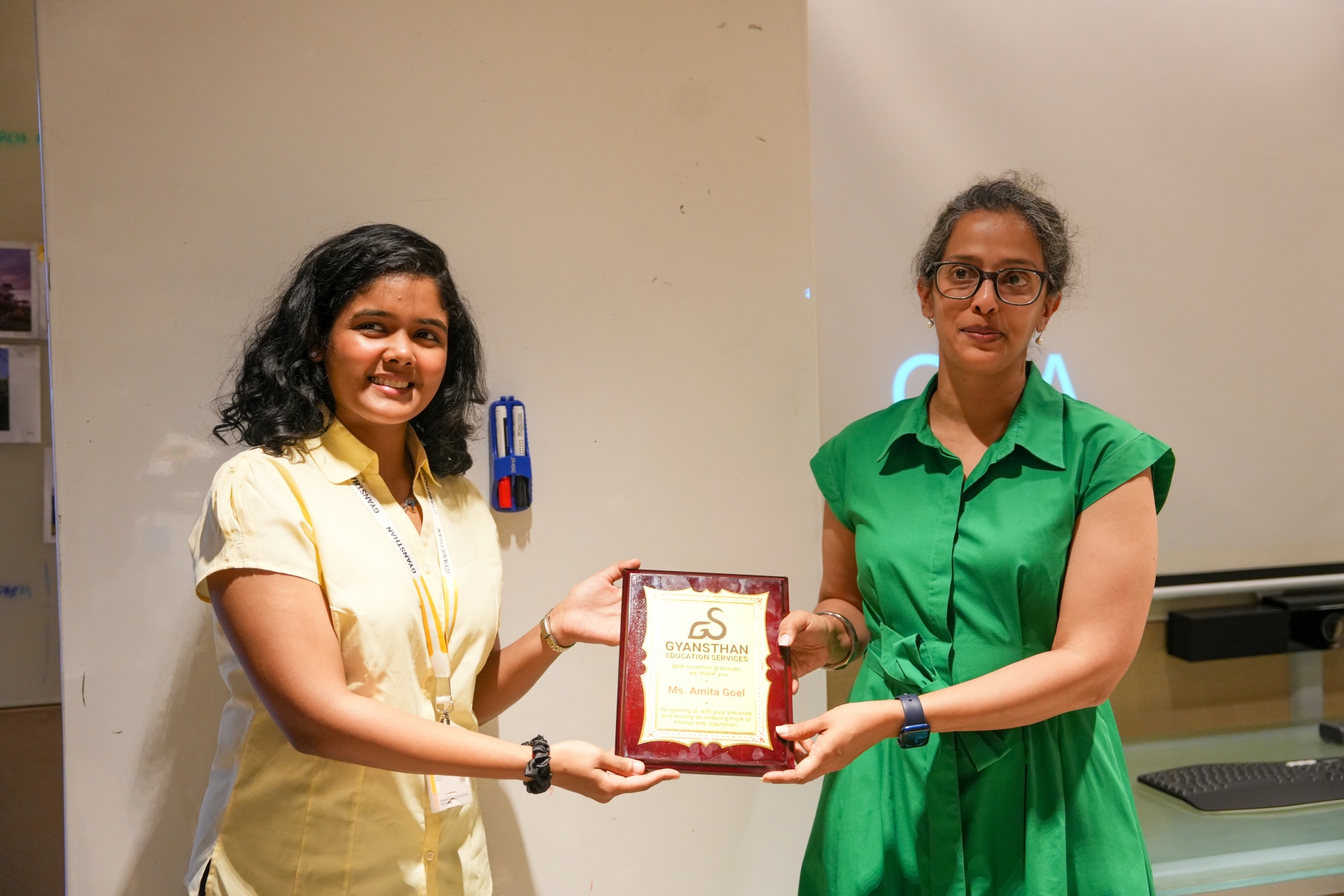
The Studio Lotus session was hosted by Ms. Amita Goel, Associate Principal and Head of Communications at the firm. Ms. Goel walked the Parul Institute of Architecture students through a portfolio that the firm itself frames as 300 plus completed projects with zero design repetition across them. Each project, in the Studio Lotus operational model, is a new exploration. The firm explicitly refuses templated solutions.
- Building Organisation Centre: the firm’s structured approach to programming complex multi-use buildings.
- RAAS Chhatrasagar (2019): a heritage hospitality restoration project in Rajasthan that exemplifies the firm’s commitment to cultural identity as design source material.
- Dharavi (flora and fauna study): a research project documenting the ecological and human density layered into Mumbai’s largest informal settlement, reframing Dharavi as a design subject rather than a problem to be erased.
- Wooden furniture and product design: the firm’s parallel practice in object design, treating the chair, the table, and the joinery as design objects continuous with the building.
- Royal Enfield flagship store: the brand-architecture intersection where the spatial experience itself communicates brand identity.
- Garage Cafe in Goa: a small-scale hospitality project demonstrating that design intelligence is independent of project budget.
- EICMA exhibition (Italy): the firm’s international visibility, with India-rooted architectural practice represented at one of the world’s most-watched motorcycle and design exhibitions.
“Contour housing, material availability.”
Operational principles emphasised by Studio Lotus during the session
The two-word phrase contour housing captures the Studio Lotus design discipline. Buildings should respect the contour of the land they sit on rather than flatten it. Material availability captures the firm’s procurement discipline. Every project starts from what materials are locally and economically available at the site, rather than from a generic specification imposed regardless of context. The combined effect is that no two Studio Lotus projects look the same, because no two sites have the same contour and no two locations have the same available materials.
Parul Institute of Architecture students who want to pursue this kind of practice find direct preparation in the B.Arch programme at Parul University, with its emphasis on site-responsive design, materials, and the cultural-identity modules built into the curriculum. The Bachelor of Interior Design prepares students for the interior and product-design parallel practice that Studio Lotus operates.
Read More: From heritage to urban future discussion in Delhi Tout of Architecture.
Morphogenesis: SOUL and the discipline of scale
The Morphogenesis session was led by Ms. Shivi and Ms. Pooja, both Principal Architects and Project Managers at the firm. The intellectual content of the session was different from the Studio Lotus model in a productive way. Where Studio Lotus emphasises bespoke design at every project, Morphogenesis emphasises systematic design discipline at scale. The firm operates at a size that requires repeatable processes without producing repetitive buildings.
- How large architecture firms run: the operational mechanics of practice management, project pipelines, and team structuring at scale.
- Sustainable projects across climate zones: the firm’s portfolio of buildings designed for warm, hot, dry, and humid Indian climates, each calibrated to its specific micro-climate.
- Software stack for large-firm practice: the BIM, parametric, environmental analysis, and visualization tools that allow a firm at Morphogenesis scale to deliver consistent quality across project teams.
- Orientation and passive design as basic discipline: the firm’s insistence that solar orientation, wind movement, and seasonal sun path analysis are non-negotiable starting points of every project.
“Be focused on what you do.”
Operational principle emphasised by the Morphogenesis principals
The Morphogenesis SOUL framework is the firm’s proprietary design discipline for sustainable architecture. The framework structures how the firm thinks about ecological, social, and economic dimensions of a project from concept through construction. The Parul Institute of Architecture students who attended the session came away with a working understanding of how a contemporary Indian firm can operate at the scale required to compete internationally while maintaining the discipline required to call itself sustainable.
The Master of Architecture at Parul University includes specialised modules on sustainability, environmental analysis, and BIM that align directly with the Morphogenesis practice model. Students interested in firm management and large-scale practice find the modules on professional practice, project economics, and contract administration particularly relevant.
Read More: Mr. Gurmeet Singh Chauhan at Parul Institute of Architecture’s Delhi Tour 2026!
Anagram Architects: climate-culture intersection and 120 sites
The Anagram Architects session was hosted by Mr. Madhav Raman, Co-Founder and Principal Architect. The firm’s intellectual identity sits at the intersection of climate and culture. The two concepts, in the Anagram model, are not separable. The climate of a place produces its culture. The culture of a place produces its architecture. Designing for one without the other produces buildings that are technically sound but culturally illegible.
- Climate and culture as integrated design inputs: the firm’s structural commitment to treating climatic response and cultural response as a single design problem.
- Gurgaon Farmhouse: a residential project that demonstrates the climate-culture integration at the building scale.
- NASA scientific visualization collaboration: the firm’s interdisciplinary work that extends architectural practice into the visualization of complex scientific data.
- CAT Thermometer: the firm’s research-driven approach to measurement, calibration, and the documentation of design impact.
- Anthropometry as a working tool: the firm’s insistence on designing for actual human dimensions and behaviour rather than for abstract architectural ideals.
- 12 designs across 120 sites: the firm’s discipline of producing limited design typologies adapted carefully to multiple specific contexts.
“Details need to be there in every single thing.”
Operational principle emphasised by Mr. Madhav Raman at Anagram Architects
Mr. Raman’s emphasis on detail is operational rather than aesthetic. A building is the cumulative effect of thousands of design decisions, each made at the detail level. A studio that gets the broad strokes right but treats details as secondary produces buildings that read as competent but never as exceptional. Anagram’s design discipline reverses this. Every detail is designed. Every junction is considered. The cumulative effect at the building scale is the consequence of intentional decisions at every smaller scale.
What three firms in succession teach
The succession of Studio Lotus, Morphogenesis, and Anagram Architects sessions at the Parul Institute of Architecture Delhi tour gave students three operational models in three days. Studio Lotus shows that describes design at every project is possible when material discipline and cultural identity anchor the work. Morphogenesis shows that systematic process at scale is possible when a proprietary framework provides the design discipline. Anagram Architects shows that geographic diversity is possible when climate and culture are treated as integrated design inputs.
None of the three models is the right model in the abstract. Each is the right model for a different kind of practice, a different kind of client, and a different professional temperament. A Parul Institute of Architecture student deciding what kind of firm to build, join, or found benefits from understanding all three positions before committing.
Read More: Five PID students choose design.
FAQs
Who are Studio Lotus, Morphogenesis, and Anagram Architects?
Studio Lotus, Morphogenesis, and Anagram Architects are three of India's leading private architecture practices. Studio Lotus is known for cultural-identity-driven design across hospitality, retail, and residential work, with notable projects including RAAS Chhatrasagar and Royal Enfield flagship stores. Morphogenesis operates at large firm scale across multiple Indian climate zones using its proprietary SOUL framework for sustainable design. Anagram Architects, co-founded by Mr. Madhav Raman, integrates climate and cultural inputs as inseparable design problems, with projects spanning 120 sites including the Gurgaon Farmhouse and a NASA scientific visualization collaboration.
What is the Morphogenesis SOUL framework?
The Morphogenesis SOUL framework is the firm's proprietary design discipline for sustainable architecture, structuring how the firm addresses ecological, social, and economic dimensions of a project from concept through construction. The framework allows the firm to deliver consistent design quality at scale across multiple project teams and Indian climate zones, including warm, hot, dry, and humid conditions. Morphogenesis principals Ms. Shivi and Ms. Pooja presented the framework to Parul Institute of Architecture students during the Delhi Tour.
What did Parul Institute of Architecture students learn from the Studio Lotus session?
Parul Institute of Architecture students at the Studio Lotus session, hosted by Associate Principal Ms. Amita Goel, learned about the firm's discipline of zero design repetition across 300 plus projects, the role of cultural identity and material availability as design starting points, the breadth of project types from RAAS Chhatrasagar to Royal Enfield flagship stores to the EICMA exhibition in Italy, and the integration of product design (wooden furniture) into the architectural practice.
What is Anagram Architects known for?
Anagram Architects, co-founded by Mr. Madhav Raman, is known for the integrated treatment of climate and culture as a single design problem. The firm has produced 12 design typologies adapted across 120 sites, including the Gurgaon Farmhouse, work on NASA scientific visualization, the CAT Thermometer research project, and the discipline of designing for actual human anthropometry. Mr. Raman emphasised the importance of detail in every design decision during the Parul Institute of Architecture Delhi Tour session.
What architecture program does Parul University teach?
The B.Arch programme at Parul Institute of Architecture is the entry pathway for careers at firms like Studio Lotus, Morphogenesis, and Anagram Architects. The Master of Architecture at Parul University, with specialised modules in sustainability, BIM, parametric design, and professional practice, prepares students for senior roles. The Master of Architecture in Urban Design feeds careers in urban-scale practice. The Bachelor of Interior Design prepares students for the interior and product-design work that firms like Studio Lotus integrate with their architectural practice.