A studio in Alibag is designed so it can be dismantled, loaded onto trucks, and rebuilt elsewhere as the sea rises. A rural shelter built from Lego-like concrete bricks with a solar park on its roof. The session was about architecture as a social and climate response.
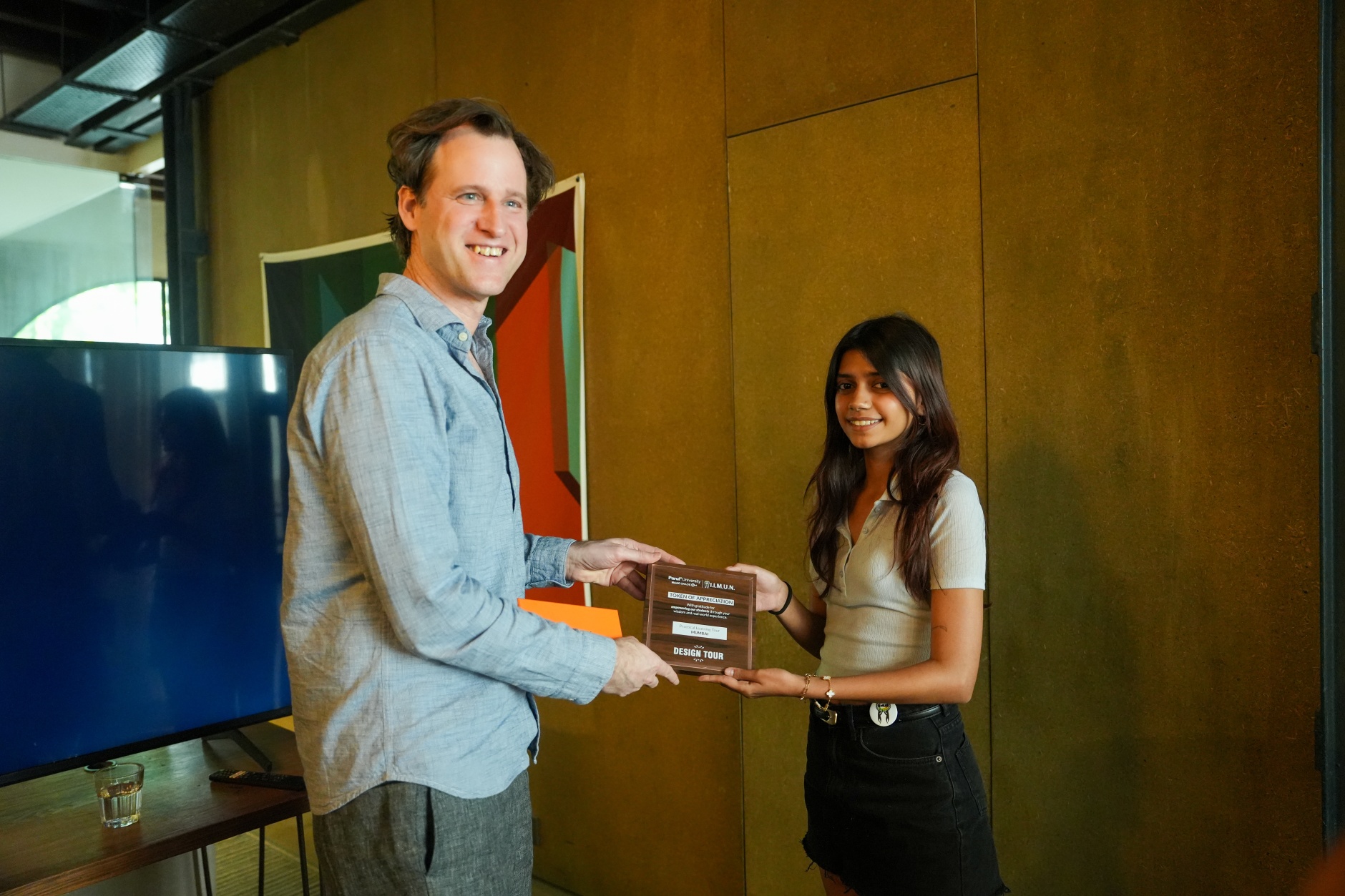
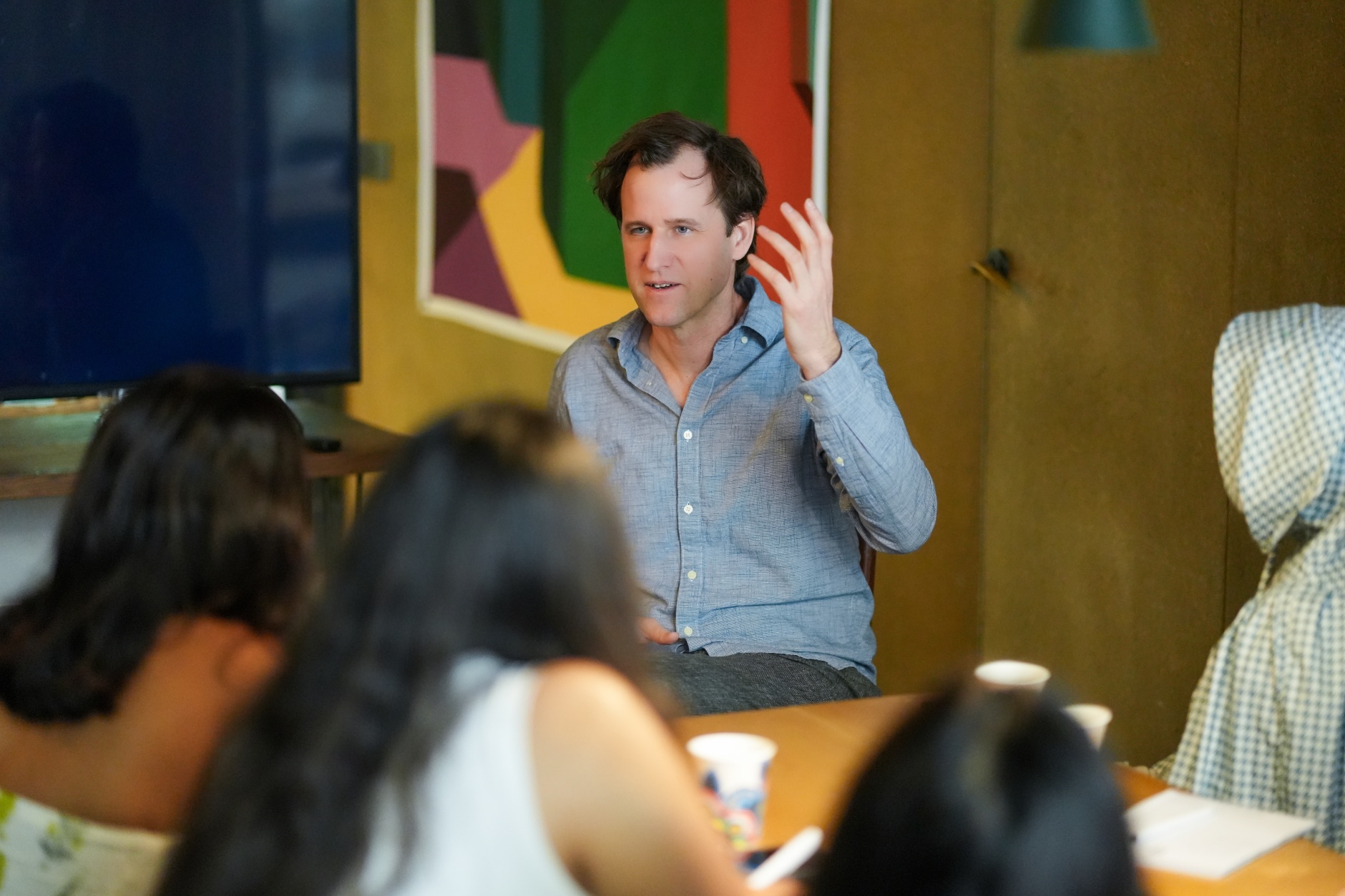
The Architecture BRIO session of the 2026 Parul Institute of Design Mumbai Industry Tour was held at the BRIO office. Robert Verrijt, co-founder of Architecture BRIO, addressed students across architecture, interior design, fashion, and product design. The session was distinctive within the tour because Robert Verrijt frames architecture not as commission-led practice but as a response to two pressures running through the present moment: climate change and the housing needs of the global poor. The conversation moved from his Dutch village childhood to the 2000 Gujarat earthquake that reshaped his understanding of what design is for, to the working methods of his fifty-person studio.
From Vogue to Top Design Dignitaries- PID’s Industry Tour To Mumbai!
From a Dutch village to Mumbai: the role of travel
Robert Verrijt grew up in a small village of about two thousand people in the south of the Netherlands. The early environment was sheltered. Travel changed his perception, and he backpacked through southern Europe, then spent several weeks in Japan, which transformed his view of how the world could be lived in. In December 1999, he arrived in India for a school project in Ahmedabad, and his first impression of Mumbai was negative. He hated the noise and density of the city on the first day. Time in Ahmedabad and travel through India shifted his view; by 2006, he had moved to Mumbai permanently to co-found Architecture BRIO with his partner Shefali Balwani.
The 2000 Gujarat earthquake and what it changed
The pivot in his architectural philosophy came in 2000, when the Gujarat earthquake struck. He saw buildings collapse in front of him. The event taught him that the civilisation we have built is fragile. His Dutch architectural training had emphasised the appearance of buildings; the earthquake taught him that buildings have to be judged by the actual quality of life they create, including their resilience. India also exposed him to the visible gap between rich and poor in a way that European urban experience had not. From this combination of experiences emerged a single working principle: good design improves the quality of life. Aesthetics matter but cannot be separated from social and material consequences.
He discovered that the civilisation we have built is quite fragile. Good designs should improve the quality of life.
Robert Verrijt, Co-founder, Architecture BRIO, on the 2000 Gujarat earthquake
Learning from the landscape and local materials
When entering a new site, the architect must drop all preconceived design templates and ask what the landscape itself teaches.
Robert Verrijt offered the students a principle: when arriving at a new location to build, set aside previous designs and ask what can be learned from this specific landscape. Never impose a design template onto a new town or city. Research the land first. Building in Goa, for example, is structurally different from building in the Himalayas or in the Kutch desert. The climate, the seasons, and especially the underlying geology differ. The Himalayan mountains were formed from ancient ocean beds. The rocks across Maharashtra were formed from volcanic lava that solidified into basalt millions of years ago. Each landscape has its own material logic, and the architecture should be built with what is locally available. Across small villages in India, this principle is preserved by default: people use the rocks available on their doorstep. Modern architecture frequently forgets it. So master the basics first with discipline and end-to-end exposure by enrolling in the Bachelor of Architecture (B.Arch) program from Parul University!
Architecture, AI & Urban Planning – Kiran Kapadia at PID’s Mumbai Tour
Geoffrey Bawa and the cost of leaving mentorship too early
Robert Verrijt’s architectural lineage runs through Sri Lanka. He worked with Channa Daswatte, the partner of the late Sri Lankan master architect Geoffrey Bawa, shortly after Bawa’s death. Bawa is regarded as one of the most consequential tropical-architecture practitioners of the twentieth century. Robert Verrijt admitted that during his time with Daswatte, he was immature and impatient. He left the office early to establish his own firm and now regrets it. If he had stayed longer, he would have absorbed more and made fewer independent mistakes. The lesson he offered to students was direct: mentorship is undervalued by young architects who are in a hurry.
Bawa’s significance was that he refused the European default of imported materials and instead built with the local landscape. Sri Lanka, during Bawa’s working period, was isolated by political circumstances, and Bawa could not import European steel and glass. He worked with locally available materials, and the buildings he made felt like the landscapes they sat within. Bawa was not interested in walls and roofs alone. He designed so that a person on the veranda would feel the wind while staying dry from the rain. That sensory, environmental integration is what tropical architecture, properly practised, is for.
If I had stayed longer in Channa Daswatte’s office, I would not have committed a lot of errors independently. What if I had learned more in the office!
Robert Verrijt, Co-founder, Architecture BRIO, on the regret of leaving his mentor early
Luxury Craft in the age of AI – Gayatri Khanna’s at PID’s Mumbai!
Why do design colleges overemphasise individuality?
Robert Verrijt’s critique of design education was specific and contrarian. Colleges, he argued, tell students to be too independent too early. Express yourself. Show who you are. The advice is wrong for beginners. If a student concentrates only on themselves, they miss the accumulated knowledge of the masters who lived before them. The brain at the start of a career contains only what the student has personally seen, which is insufficient material from which to design anything significant. A good designer fills the knowledge baggage first by studying history, exhibitions, and literature, and then develops a personal voice from that foundation. Individuality before substance is hollow. Level up from day 1 by gaining such exposure in the Master of Planning program from Parul University!
Skills required for the next five years
Asked what skills design students should develop, Robert Verrijt’s answer mixed the historical and the technical.
- History: Studying general history allows a designer to place themselves within the larger world. Without history, a designer is working from inside their own narrow experience.
- Software fluency: Software speed allows a young architect or designer to access better opportunities faster. Mastery of tools is professional currency.
- Hand sketching with pen on paper: Despite computers and AI, sketching by hand remains a permanently powerful human skill. Sketching is a method of exploring ideas while communicating with someone. AI cannot sit at a table and doodle with a collaborator. The medium itself reminds the designer of the human community they are designing for.
Sketching with a pen on paper is going to remain a very powerful human skill forever.
Robert Verrijt, Co-founder, Architecture BRIO, on the durable skills of design
Climate adaptation and the demountable Alibag studio
Robert Verrijt described a working response to rising sea levels. Years ago, his studio was commissioned to design a working studio for an artist in Alibag. The site was low agricultural land near the ocean that was submerged by seawater each monsoon. Building a heavy permanent structure would either wash away or crumble under flood pressure. Instead, the studio designed a demountable building: a structure that can be dismantled into parts and reconstructed elsewhere. If sea levels worsen over the next decade, the studio can be disassembled, loaded onto trucks, and rebuilt at another location. This avoids both the loss of the building and the disposal of building materials into landfill.
The principle has wider application as climate change intensifies.
Robert Verrijt noted that almost half of India’s population lives near coastal areas. As sea levels rise, many will eventually need to relocate. Architecture has a role in this transition. Buildings designed for permanence on threatened coastlines will be lost. Buildings designed for relocation can move with the population. The demountable studio is a working prototype for climate-displaced housing of the future.
Billion Bricks: twenty million shelters and the solar-park-on-roof solution
Robert Verrijt collaborates with Billion Bricks, a project that designs shelter for homeless and rural populations. India alone, he explained, requires approximately twenty million rural shelters. Building this many shelters at scale presents two compounding problems. First, the manufacturing and powering of so many homes requires enormous energy. Coal-based power stations would pollute. Solar parks would occupy too much agricultural land. Second, building shelters in remote villages without access to heavy machinery is operationally difficult.
The Billion Bricks solution addresses both. The shelters are built from interlocking concrete bricks designed like Lego, light enough for ordinary people to lift without machinery and structurally robust enough to withstand storms when assembled. Poor families can fasten the bricks together themselves, raise walls capable of resisting weather, and lay metal rods purchased from local hardware stores across the top to support a roof. The roof itself is the second innovation: it is a solar park. By placing the solar panels directly on the roofs of the shelters, the project provides both housing and clean power without requiring separate solar-park land. The shelter and the energy infrastructure occupy the same footprint.
Drawing by hand versus computers, and knowing when a design is finished
Robert Verrijt was asked whether sketching by hand automatically produces more humane architecture. He was honest: no. Historically, intimidating monumental architecture commissioned by oppressive rulers was also drawn by hand. The medium does not determine the moral content. But computers carry their own risks. Software can focus on numbers and cost optimisation in ways that crowd out the human community a building must serve. Hand sketching reminds the designer of human scale and presence. Both modes have value when used with judgment.
On the related question of when a design is finished, Robert Verrijt described his own method: he treats his concepts as precious stones, and on any single project, he selects only one or two stones around which everything else is built. Once he has explored the chosen stones in depth, no further decoration is needed. The remaining concepts are saved for new projects. Other architects, he noted, pile fifty concepts into a single project, and the result is unfinishable.
If you use only one strong concept, you will know when you are done.
Robert Verrijt, Co-founder, Architecture BRIO, on the discipline of finishing
Leading a fifty-person studio
Robert Verrijt’s studio grew from fifteen people to fifty in a relatively short period. He is candid about not being a professional manager. With that scale of team, systems and processes become essential. The leader cannot do everything personally. The work is to identify each employee’s individual skills and establish a process that enables employees to become self-reliant decision-makers. When team members think for themselves, they do not need to bring every question back to the leader. The role of the leader is to delegate enough authority that people can act freely within their domains.
What each design discipline took from the session
- Interior Design students: Climate-adaptive design, minimalism, the integration of light and materials with the environment, and concept-driven simplicity.
- Architecture students: The Geoffrey Bawa legacy, the discipline of local materials, the demountable structure as climate response, and the Billion Bricks model for social-impact architecture.
- Product Design students: Clarity in design, sustainability built in rather than added on, and design that responds to context.
- Fashion, Visual Communication, and Animation students: Concept-driven creative work, the role of light and simplicity, and the principle that context (location, culture, & climate) shapes design decisions.
FAQs
Who is Robert Verrijt and what is Architecture BRIO?
Robert Verrijt is the co-founder of Architecture BRIO, a Mumbai-based architecture studio he founded with his partner Shefali Balwani. He trained at Delft University of Technology in the Netherlands and arrived in India in December 1999 for a school project in Ahmedabad, settling permanently in Mumbai in 2006. The studio has grown to approximately fifty people and works on projects across India, including climate-adaptive structures and the Billion Bricks rural-shelter collaboration. He spoke to Parul Institute of Design students at the Architecture BRIO office in March 2026 during the Parul Institute of Design Mumbai Industry Tour, addressing climate-adaptive design, mentorship under Channa Daswatte (the partner of the late Sri Lankan master architect Geoffrey Bawa), and the social-impact dimensions of architecture.
What did Robert Verrijt say about climate change and architecture?
Robert Verrijt argued that architecture has a direct role in responding to climate change. Almost half of India's population lives near coastal areas, and as sea levels rise, many will eventually need to relocate. Buildings designed for permanence on threatened coastlines will be lost; buildings designed for relocation can move with the population. He described a demountable studio his firm designed for an artist in Alibag, on low agricultural land that floods annually during the monsoon. Rather than build a heavy permanent structure, the team designed a building that can be dismantled into parts, loaded onto trucks, and reconstructed elsewhere as the sea worsens. The principle protects both the structure and the materials from loss, and it prevents construction waste from going to landfill.
What is the Billion Bricks project that Architecture BRIO is involved with?
Billion Bricks is a project that Robert Verrijt collaborates with to design shelter for homeless and rural populations. India alone requires approximately twenty million rural shelters. The project addresses two compounded problems: the energy required to manufacture and power so many homes (coal pollutes, large solar parks consume agricultural land), and the difficulty of building in remote villages without heavy machinery. The solution uses interlocking concrete bricks designed like Lego, light enough for ordinary people to lift and assemble without machinery and structurally robust enough to withstand storms. The roof is itself a solar park, providing both shelter and clean energy from the same footprint. Families can fasten the bricks themselves, lay locally available metal rods across the top, and support the solar-panel roof.
What did Robert Verrijt say about Geoffrey Bawa's influence on his architecture?
Robert Verrijt worked with Channa Daswatte, the partner of the late Sri Lankan master architect Geoffrey Bawa, shortly after Bawa's death. Bawa is regarded as one of the twentieth century's most consequential tropical-architecture practitioners. During Bawa's working period, Sri Lanka was isolated by political circumstances and could not import European steel and glass, so Bawa worked with locally available materials. The buildings he produced felt continuous with the landscapes they sat within. Bawa was not interested only in walls and roofs; he designed so that a person on the veranda would feel the wind while staying dry from the rain. Robert Verrijt has stated that he left Daswatte's office too early in his own career and regrets it, because the depth of learning available in that mentorship was greater than he understood at the time.
What does Robert Verrijt say is wrong with design education?
Robert Verrijt argues that design colleges over-emphasise individuality. Students are told to be themselves and express their personal voice from the very beginning of their training. He believes this is wrong for beginners. If a student concentrates only on themselves, they miss the accumulated knowledge of the masters who came before. The brain at the start of a career contains only what the student has personally seen, which is insufficient material for designing anything significant. A good designer first fills their knowledge baggage by studying history, exhibitions, and literature, and develops a personal voice afterwards. He also emphasised three durable skills for the next five years: history, software fluency, and hand sketching with pen on paper, which he believes will remain a permanent human skill that AI cannot replicate.
Why is hand sketching still important in architecture according to BRIO?
Robert Verrijt argues that despite computer-aided design and the rise of AI, sketching with pen and paper remains a permanently powerful human skill. Sketching is a method of exploring ideas while communicating directly with another person. AI cannot sit at a table and doodle with a collaborator. The medium itself reminds the designer of the human community they are designing for. He is honest, however, that the medium does not determine the moral content of the design: historically, monumental architecture commissioned by oppressive rulers was also drawn by hand. Both hand drawing and computer-aided design have value when used with judgment, but the human-scale presence that hand sketching enforces is part of why it remains essential to the discipline