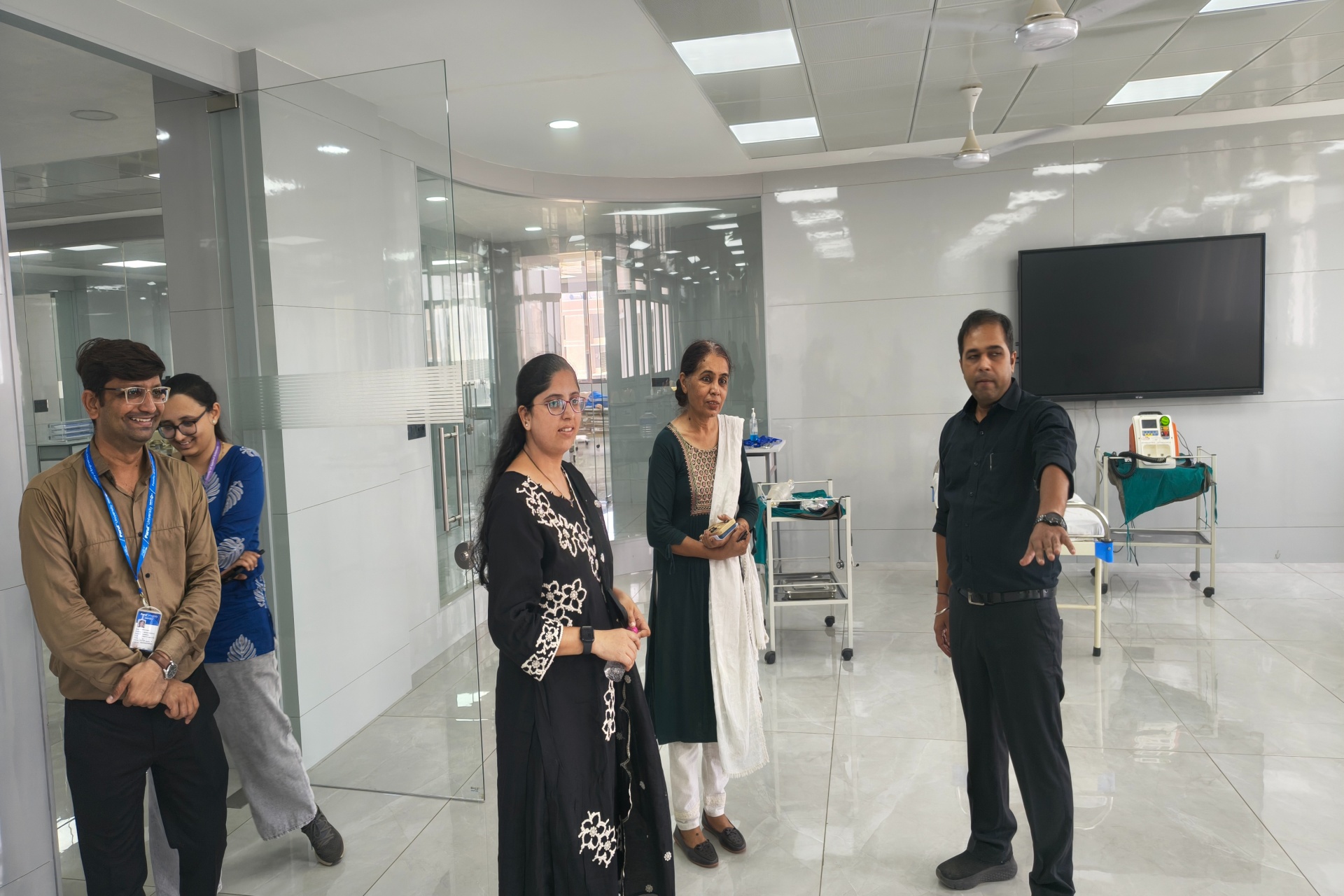
Meet the Director of Sea Pearl Biotech (Lilapur, Ahmedabad, Gujarat) – Dr. Sanjiv Kumar Mishra. He delivered an expert session at a 3-day hands-on workshop on Microbial Cell Factories at the MNRDC of Parul University. He shared his views on Blue-Green Innovation – Algal manufacturing for health, nutrition and sustainability. He even positioned microalgae at the centre of global industry. He even quoted – India’s future is shaped by biotechnology, and Spirulina manufacturing showcases a next-level opportunity within the future.
The workshop master hub coverage is at the MNRDC Microbial Cell Factories Workshop article, with the microalgae cultivation technical track (covering BG-11 media, Chlorella vulgaris, Chlorella minutissima, and lipid extraction) documented at the microalgae cultivation article and the Day 2 nanomedicine expert session by Dr Puja Sandhbor at the Tata Memorial ACTREC session coverage. The broader entrepreneurship and startup ecosystem at Parul University, including PIERC and its 254-startup portfolio, is documented at the PIERC ecosystem record, with the faculty research record at the faculty currently serving record.
Sea Pearl Biotech: the algae-based biotechnology company
Sea Pearl Biotech is an algae-based biotechnology company located in Lilapur, Ahmedabad, Gujarat, engaged in the manufacture and distribution of algal-based nutritional products. The company’s initial-phase objectives centre on building a strong domestic presence in the Indian market while establishing pathways toward overseas markets and the launch of subsequent product lines. The company represents the kind of laboratory-to-commercial-enterprise pipeline that the broader Microbial Cell Factories workshop theme advocates: translating microalgae research from the laboratory into scalable commercial operations that produce nutritional and pharmaceutical outputs for public health applications.
The positioning of Sea Pearl Biotech in Gujarat positions the company amidst India’s Most Active Biotechnology, Pharmaceutical, Manufacturing geography, in line with companies such as Zydus, Sun Pharma, Alembic (Vadodara), and Amneal as they operate across the state’s industrial front. The end to end pond to powder production framework as operated by Sea Pearl Biotech crosses every stage from algal cultivation via harvest processing, via product packaging, and chain traceability.
Key microalgae species for industrial biomass generation
Dr Mishra mapped the diverse algal species used commercially in the global biomass industry. Each species offers a distinct biochemical profile and application focus.
- Source for astaxanthin, the high-value carotenoid pigment used in nutritional supplements, cosmetics, and aquaculture feed.
- Dunaliella salina. Source for beta-carotene, the orange pigment with provitamin A activity used in nutritional supplements and natural food colouring.
- Spirulina platensis. Source for protein and phycocyanin (the blue pigment used as natural food colouring and bioactive supplement).
- Rich in chlorophyll and protein. Used in nutritional supplements and as a health food across multiple international markets. The same Chlorella species was cultivated at the MNRDC microalgae workshop track.
- Source for omega-3 fatty acids and DHA (docosahexaenoic acid), essential for brain and cardiovascular health. Particularly relevant for vegan and vegetarian omega-3 supplementation.
- Schizochytrium and Aurantiochytrium. Marine protists are used for omega-3 fatty acid and lipid production.
- Porphyridium and Porphyra. Red algae and seaweed species with applications across food, supplements, and cosmetic markets.
The breadth of the species portfolio indicates that the algal biotechnology industry is not a single-organism-based industry but a complete ecosystem of biomass production spanning health, food, cosmetic, and industrial chemical applications.
Global and Indian Spirulina market landscape
Dr Mishra presented a detailed picture of the global Spirulina market. Global production stands at approximately 65,000 tonnes annually, with China commanding nearly 90 percent of the market share. India currently contributes around 2,000 tonnes per year, approximately 2 to 3 percent of the global requirement, leaving substantial scope for expansion. Countries including Malaysia, Indonesia, and Thailand are positioning themselves to challenge China’s dominance, reflecting intensifying global competition that creates a strategic opportunity for India.
Indian companies are increasingly doubling their production capacity to meet rising demand for products both domestically and abroad. The global Spirulina market is projected to grow into a 5 billion dollar market within five years. The growth driver mix includes health-related trends across nutritious food adoption, functional food demand growth, and increasing scientific evidence supporting the bioactivity of algae across health applications. In Japan, one-third of children consume some form of algae daily, illustrating how culturally and societally entrenched algal consumption has become and how this drives continued consumer market growth.
Market applications and global consumers
The session mapped Spirulina applications across multiple market segments. Spirulina has become a common ingredient in healthy foods and beverages. Manufacturers use Spirulina-derived blue phycocyanin as natural food colouring for candies, frozen desserts, and beverages, providing a natural alternative to synthetic blue food colouring agents. Spirulina is a popular dietary supplement leveraging its antioxidant and anti-inflammatory properties. Additional applications include animal feed enhancement, skincare and cosmetics formulation, and as a primary ingredient in aquaculture and fish feed products.
- The largest natural pigment company globally, using Spirulina-derived phycocyanin in its product portfolio.
- Better Nutrition. The largest US online retailer in the nutritional supplement category.
- The largest MLM (multi-level marketing) company in India for health and nutrition products.
- Seah International. The largest Spirulina importer in France.
- The largest food ingredient company globally.
- Prairie Naturals. The largest nutritional supplement company in Canada.
- The largest nutritional company in Singapore.
- Gano iTouch. The largest cereal mix brand in its category.
Challenges in traditional algae production methods
Dr Mishra was candid about the challenges facing conventional algae cultivation approaches. Traditional open algae farms are highly susceptible to contamination from windborne particles, insects, dust, and biological contaminants entering the open pond environment. Outdated cultivation media formulations, some dating back four decades, continue to limit production efficiency. Algae harvesting performed by human labour is highly labour-intensive and often poses sanitation and quality control concerns.
Large-scale algae harvesting has difficulty competing with other sources of protein and pigments on a cost basis when conventional methods are used. Dr Mishra noted that he, too, cultivates in an outside environment where contamination may take place even after attempts to establish controlled conditions. He further mentioned planting neem trees across the breadth of the pond, providing partial natural contamination control: if contamination occurs, neem leaves can at least take care of preventing the spread effect from hindering production.
Sea Pearl Biotech's innovative production approach
Sea Pearl Biotech’s market differentiation lies in an integrated, technology-driven production philosophy that addresses the limitations of traditional algae cultivation. The company employs a turnkey approach utilising advanced engineering and agri-technology, specially formulated organic growth media to enhance nutrient profiles, and automated harvesting methods to increase productivity. The company is notably the only company in the world to design and manufacture large-scale multi-module machinery specifically required for Spirulina production.
- Good Manufacturing Practices (GMP) compliance. The production operation adheres to GMP standards required for pharmaceutical and nutraceutical product manufacturing. The compliance supports the company’s positioning across pharmaceutical-grade Spirulina applications and regulated nutritional supplement markets.
- Pond-to-powder workflow. The complete supply chain spans algal cultivation, harvest, processing, drying, milling, packaging, and quality control under a single integrated workflow. The pond-to-powder model supports full traceability that pharmaceutical and food industry buyers require.
- Sustainable and eco-friendly production. The Spirulina cultivation pathway operates within the broader resource efficiency that gave Spirulina its 10-times-less land, water and energy profile. The eco-friendly positioning is becoming increasingly important to international buyers and consumers prioritising sustainability credentials.
Emerging opportunities and prospects
Dr Mishra concluded with a forward-looking discussion on emerging opportunities and prospects for the algae industry. Over the past 12 months, 18 new commercial applications and markets have been identified for Spirulina by his team. Several developments illustrate the breadth of expansion.
- Venky poultry adoption. Venky, India’s largest poultry brand, has begun using Spirulina more frequently than in the past. The shift positions Spirulina within the substantial Indian poultry feed market.
- Spirulina foliar spray for horticulture. Growers are using Spirulina as a foliar spray to promote higher yields in horticultural crops. The application opens an agricultural input market alongside the nutritional supplement market.
- Anganwadi integration. The Indian government has been exploring the integration of Spirulina into anganwadis (rural childcare centres) as part of the national nutrition policy. The integration would represent substantial volume scale-up if implemented across India’s anganwadi network of approximately 1.4 million centres.
- Hydroponics farming applications. Spirulina extracts have demonstrated notable yield improvements for Indian farmers using hydroponic cultivation systems.
- Natural colouring market growth. The natural colouring market is growing at 12 per cent annually, reflecting rising demand for eco-friendly pigment alternatives to synthetic food colourings.
- Indian fisheries adoption. The number of Indian farmers adopting algae in aquaculture is doubling, though current adoption stands at only 10 percent, signalling vast untapped market potential.
Connection to MNRDC workshop content and student career pathways
Dr Mishra’s industry session delivered the bridge between the scientific fundamentals workshop participants had been practising and the real-world commercial landscape that awaits biotechnology graduates. Having spent three days growing microalgae, extracting pigments and lipids, and analysing bioactive properties in the MNRDC laboratory, participants could now envision the full pipeline from BG-11 culture media to global market shelves. The session reinforced the workshop’s core message: India’s future lies in biotechnology, and the skills and curiosity being cultivated at MNRDC are exactly what will be needed to build that future.
For Parul University students considering entrepreneurship pathways, the PIERC (Parul Innovation and Entrepreneurship Research Centre) at Parul University operates the incubation infrastructure supporting student and external founders across early-stage ventures. PIERC has supported 254 startups, including Solnce Energy (clean-energy technology, Rs 1 crore investment on Shark Tank India Season 4, backed by Aman Gupta), Voldebug Innovations (cybersecurity, Outstanding Performance Award from Home Minister Shri Amit Shah Ji), Cligent Aerospace (India’s first hydrogen-electric aircraft startup by Harsh Joshi), Dori Handcrafts (sustainable macramé, Republic Plenary showcase, 50+ rural artisans), and Yield Pro Earth (electricity-free irrigation, Rs 75 lakh ICICI Foundation purchase order). The PIERC pathway connects directly to the kind of biotechnology entrepreneurship that Sea Pearl Biotech illustrates.
Institutional context: Parul University's research and SDG positioning
Parul University’s research infrastructure supports the kind of academic-to-industry transition that Dr Mishra’s session illustrated. The 7 Stanford-Elsevier global top 2 percent scientists at Parul University include Dr Madhusudan Hiraman Fulekar (Senior Professor of Research, Department of Environmental Science, h-index 48, research focus on bioremediation and sustainable agricultural systems), whose work intersects directly with the algal cultivation and biotechnology themes the session covered. The Rs 58.31 crore in government-funded research projects across 315 funded projects supports the broader research environment, with the R&D Centre recognised by the Department of Scientific and Industrial Research (DSIR) under the Scientific and Industrial Research Organisation (SIRO) framework.
Times Higher Education Sustainability Impact Ratings 2026 positions for Parul University include 7th in India and joint 46th worldwide for SDG 4 (Quality Education) with Quality Education score 81.1, 7th in India and joint 60th worldwide for SDG 5 (Gender Equality), Top 10 in India for SDG 3 (Good Health and Well-Being), and Top 20 in India for SDG 17 (Partnerships for the Goals). The SDG 17 position connects directly to industry partnership themes like the Sea Pearl Biotech collaboration framework that workshop sessions like Dr Mishra’s operationalise.
FAQs
Who is Dr Sanjiv Kumar Mishra and what is Sea Pearl Biotech?
Dr Sanjiv Kumar Mishra is the Director of Sea Pearl Biotech, an algae-based biotechnology company located in Lilapur, Ahmedabad, Gujarat. Sea Pearl Biotech is engaged in the manufacture and distribution of algal-based nutritional products, with initial-phase objectives focused on building a strong domestic presence in the Indian market while establishing pathways toward overseas markets and the launch of subsequent product lines. The company operates a pond-to-powder turnkey production approach, adheres to Good Manufacturing Practices (GMP), uses specially formulated organic growth media, and is notably the only company in the world to design and manufacture large-scale multi-module machinery specifically required for Spirulina production. Dr Mishra delivered the Day 3 industry expert session at the MNRDC Three-Day Hands-On Workshop on Microbial Cell Factories at Parul University on 13 June 2026, titled Blue-Green Innovation: Algal Manufacturing for Health, Nutrition, and Sustainability.
What is the global Spirulina market size and where does India stand?
The global Spirulina market produces approximately 65,000 tonnes annually, with China commanding nearly 90 percent of the market share. India currently contributes around 2,000 tonnes per year, approximately 2 to 3 percent of global requirement. Countries including Malaysia, Indonesia, and Thailand are positioning themselves to challenge China's dominance. The global Spirulina market is projected to grow into a 5 billion dollar market within five years. Growth drivers include health-related consumption trends, functional food demand, scientific evidence supporting algal bioactivity, and cultural consumption patterns such as the Japanese pattern, where one-third of children consume some form of algae daily. India's market opportunity is substantial given the gap between current 2 to 3 per cent contribution and the broader global growth trajectory, with Indian companies increasingly doubling production capacity to meet domestic and international demand. Sea Pearl Biotech represents one Indian company positioning within this growth trajectory through its Ahmedabad-based manufacturing operation.
What are the health benefits and applications of Spirulina?
Spirulina (Spirulina platensis) is a microalga and cyanobacterium widely recognised as a superfood with documented health benefits across multiple dimensions. Health applications include anti-cancer effects through bioactive compounds, including phycocyanin, cholesterol reduction supporting cardiovascular health, vision and eyesight improvement through beta-carotene and zeaxanthin content, anti-coagulant properties supporting healthy blood flow, reduced inflammation through anti-inflammatory bioactive compounds, antimicrobial activity against pathogenic bacteria, heart health benefits including blood pressure regulation, and topical skincare applications. Commercial applications span dietary supplements (capsules and powders), natural food colouring through Spirulina-derived blue phycocyanin used in candies, frozen desserts, and beverages, animal feed enhancement, skincare and cosmetics formulation, and aquaculture and fish feed products. The resource efficiency profile (10 times less land, water, and energy than conventional food production) makes Spirulina one of the premier sustainable food products globally.
What microalgae species beyond Spirulina are used commercially?
The commercial microalgae portfolio extends across multiple species, each with distinct biochemical profiles and application focus. Haematococcus produces astaxanthin, the high-value carotenoid pigment used in nutritional supplements, cosmetics, and aquaculture feed. Dunaliella salina produces beta-carotene with provitamin A activity used in nutritional supplements and natural food colouring. Spirulina platensis produces protein and phycocyanin (the blue pigment used as a natural food colouring and bioactive supplement). Chlorella is rich in chlorophyll and protein and is used in nutritional supplements across international markets. Nannochloropsis produces omega-3 fatty acids and DHA (docosahexaenoic acid), particularly relevant for vegan and vegetarian omega-3 supplementation. Schizochytrium and Aurantiochytrium are marine protists used for omega-3 fatty acid and lipid production. Porphyridium and Porphyra are red algae and seaweed species with applications across food, supplements, and cosmetic markets. The species diversity indicates that the algal biotechnology industry is a complete ecosystem of biomass production spanning health, food, cosmetic, and industrial chemical applications. The MNRDC microalgae cultivation workshop track focused specifically on Chlorella vulgaris and Chlorella minutissima.
How does Sea Pearl Biotech's production approach differ from traditional algae cultivation?
Traditional algae cultivation faces several limitations, including high contamination susceptibility in open pond farms, outdated cultivation media formulations, some dating back four decades, labour-intensive harvesting with sanitation concerns, and cost competitiveness challenges against other protein and pigment sources. Sea Pearl Biotech addresses these limitations through an integrated, technology-driven approach. The company uses advanced engineering and agri-technology in a turnkey production model. Specially formulated organic growth media enhance nutrient profiles beyond traditional formulations. Automated harvesting methods increase productivity while reducing labour intensity and sanitation concerns. The company is the only company in the world to design and manufacture large-scale multi-module machinery specifically required for Spirulina production. The pond-to-powder workflow spans a complete supply chain from cultivation through final product packaging under integrated operation, supporting full traceability that pharmaceutical and food industry buyers require. GMP (Good Manufacturing Practices) compliance supports positioning across pharmaceutical-grade and regulated nutritional supplement markets. The combined operational approach addresses the structural limitations that constrain conventional algae production economics.