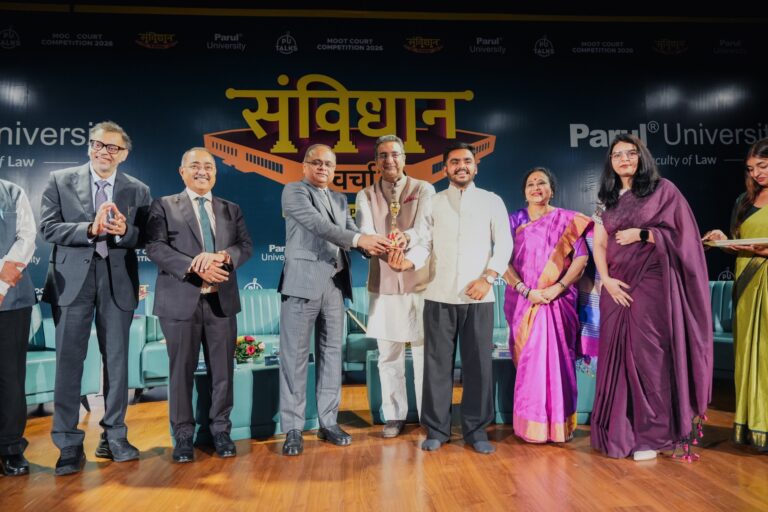
When a team of Parul University students won a national IT award, they did it by pointing AI at a surprisingly hard problem: sorting waste. It is a problem that matters enormously, and one AI is increasingly able to solve. Here is how.
Why Waste Sorting Is Such a Big Problem
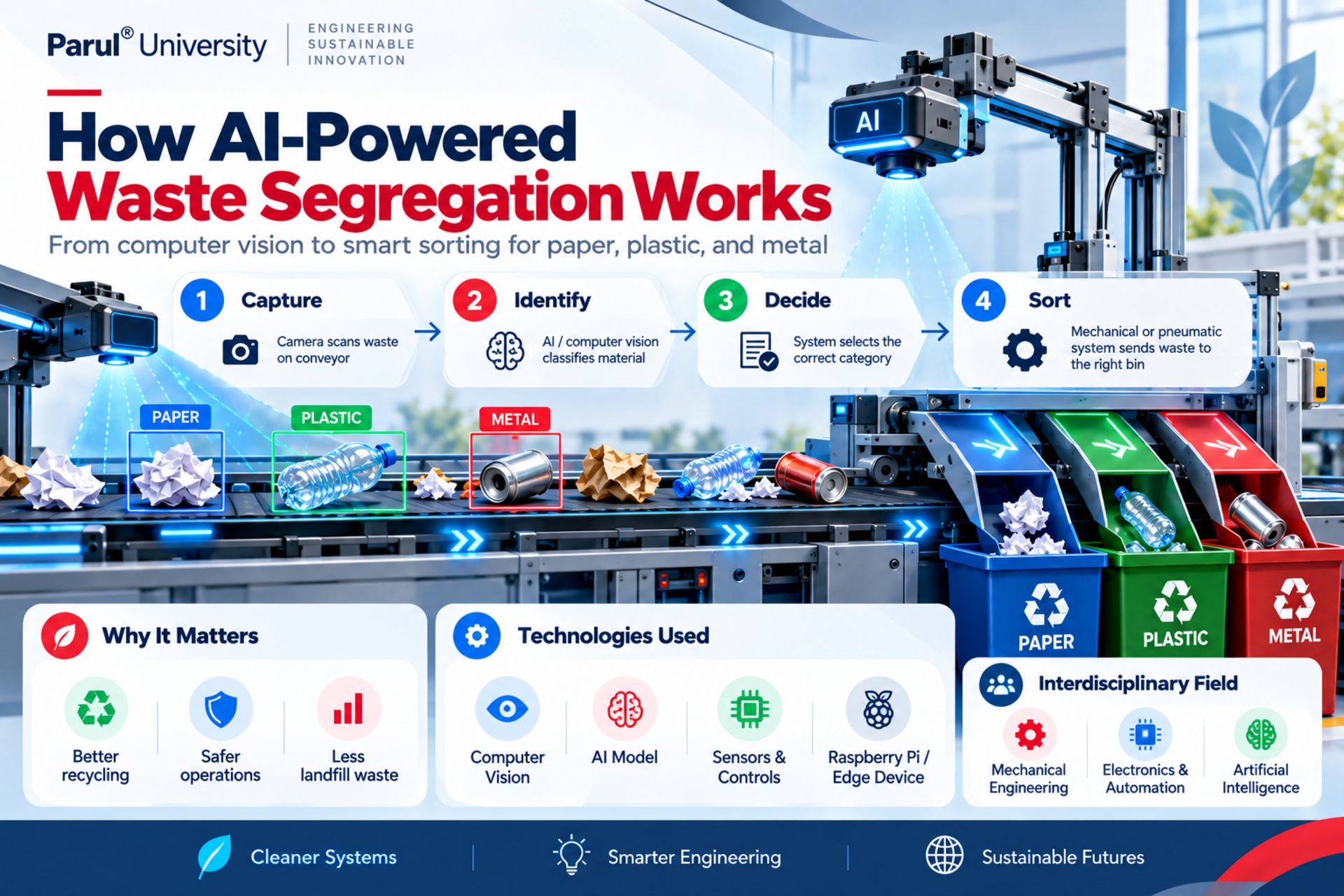
Waste management through recycling is getting in demand. The process of recycling depends on the careful separation of materials. Materials like paper, plastic, metal and glass are separated. The reason of segregation is that these materials need different processes. Hence, separate batches are made. Earlier, the separation process was done by humans by hand. It is slow, expensive and hazardous. But with AI and mechanical systems, these problems get solved. The result is that huge amounts of recyclable waste end up in landfill simply because it was never sorted properly.
Better, faster, cheaper segregation is one of the most valuable things technology can offer sustainability.
Why It Matters: Sustainability and Beyond
The impact of getting this right is significant. Smarter segregation means more waste is actually recycled and less sent to landfill, directly supporting a circular economy and the Sustainable Development Goals. It makes recycling operations cheaper and more efficient, which makes them more likely to happen at all. And it removes people from dangerous, unpleasant sorting work. For industry specifically, automated systems can handle high volumes reliably, turning waste management from a cost and a compliance burden into a more manageable, even valuable, process.
An Interdisciplinary Frontier
It is interdisciplinary because it is not related to only one field. It lies at the meeting point of mechanical engineering for physical segregation, electronics & automation engineering for making sensors and controls, and last but not least, artificial intelligence for identifying the materials and giving commands. To get a sustainable solution, the fields are integrated as a team so that justice can be given to modern engineering. It makes it an interesting field of study for students and build something for the world.
As one student team at Parul University showed, you do not need to be a computer scientist to build AI that matters, you need a real problem and the willingness to learn.