Psychology: Programs, Careers & Possibilities at Parul University!
The four psychology programs, and who each one suits
Psychology at Parul University is taught in the Faculty of Liberal Arts, which also houses the department’s psychology lab and the annual Synapsoirée conclave described later on this page. There are four routes, and the right one depends on whether you are starting or specialising, and on the kind of work you want to do.
Psychology: BA (undergraduate)
Most people start with the BA in psychology. The three-year degree constructs the foundations: thinking, feeling, development, and behaviour of people, and how psychologists investigate them. The four-year Honours option includes applied electives and a research and internship option and is a better option if you plan to pursue a master’s degree!
MA in Clinical Psychology
The MA in Clinical Psychology transitions from an understanding of behaviour to mental health assessment and support in supervised casework and psychological testing. It’s appropriate for individuals looking for careers in the hospital, clinic, and rehabilitation environments. The story continues further down the page about the licensing of clinical psychologists, so if you are looking to practice as a clinical psychologist, read on before enrolling.
MA in Counselling Psychology
MA in Counseling Psychology is a graduate program that emphasises the therapeutic relationship and concerns with mental health and well-being in everyday life, not diagnosis, in one of the following settings: schools, community, wellness practices, and corporate well-being roles. If you are a person who enjoys working with people face-to-face and is not interested in assessment or diagnosis, you should select it.
MA in Industrial Psychology and Human Behaviour
The MA in Industrial Psychology is a psychology program with a focus on the workplace: hiring, training, performance, leadership, and employee well-being. It is the pathway to HR, learning and development, and talent and organisational functions and is the most aligned to a traditional corporate career.
Beyond the classroom and the brochure!
The training follows the same three phases in all four programs, and it aids in picturing these phases before making a selection. The first part is foundations: the big theories, how the mind and behaviour are measured, and research/statistics skills that transcend pop psychology. The second phase is specialisation in the clinical, counseling, and industrial pathways, which branch out toward assessment, therapy methods, or organisational application. The third part of the process, the most important and the one most often overlooked, is supervised practice: actual client contact, cases, or workplaces with a qualified supervisor. That’s the supervised phase at which knowledge turns into skill, and a program’s value should be evaluated on the amount of actual supervised experience it can provide, rather than by its module names. Each program has its own detailed teaching schemes and curricula, which are published on the individual program pages.
The future direction!
Psychology is a build-over-time field, not a campus-placement-day field, and it is worth being clear-eyed about that. Very few people finish a bachelor’s and step straight into a high-salary role, and anyone promising that is not being straight with you. What a psychology education actually gives you is a set of durable paths that compound with further study and supervised experience. Usually, graduates move in four directions. Some go clinical, into assessment and mental-health support in hospitals, clinics, and rehabilitation settings, usually after a master’s and the relevant practice pathway. Some go into counseling and well-being in schools, communities, private practice, and corporate wellness. Some apply psychology to organisations, in human resources, talent, learning and development, and organisational roles, which is the most direct corporate route. And some go into research, academia, and further study. The specific job titles for each program are listed on its own page.
There is also a fifth path that is easy to miss: building your own practice or venture. A counselling practice, a wellbeing service, or a mental health product is a business, and students who think that way can draw on the university’s startup and incubation ecosystem through PIERC. The aim of a psychology education here is not only to be hired but also to be able to create and run your own path if that is where you want to go.
Before signing up, you must know about clinical licensing and its importance.
This is the one most important thing to get right and very few program pages explicitly state this. The term “Clinical Psychologist” is a registered professional title in India granted under the Rehabilitation Council of India (RCI) that has its own licensing process. In the past, that route has been taken through an RCI-recognised qualification in clinical psychology, not just a general master’s degree. A clinical psychology master’s degree is a solid academic and practical base for many but is not necessarily the same as RCI registration. If you are interested in practicing and registering specifically as an RCI clinical psychologist, you should check the current recognised pathway and the status of any specific pathway with the university’s admissions team and with RCI before making a decision.
What to choose?
A shortcut solution: If you are at the twelfth standard level, then you can begin with the BA, and if you are sure to pursue your study in a master’s, then you can opt for the four-year Honours course. But at the master’s level, the question isn’t the prestige but the work. Select Clinical if your preference is for assessment and mental health treatment facilities, and you are willing to complete the licensing process. If you are looking for direct and constant therapeutic and well-being work, you should select counselling. If you are interested in psychology within organisations, and wish to pursue the most traditional corporate pathway, then industrial is the best option. If you are really in the dark, it’s best to ask the department what each cohort does; don’t just pick the title if you don’t know.
The department behind the degree!
A psychology program is only as good as the environment around it. At Parul University, that environment includes a dedicated psychology lab for behavioural assessment, and PU Talks and academic conferences that bring working psychologists onto campus. The clearest example is Synapsoirée, the department’s annual psychology conclave.
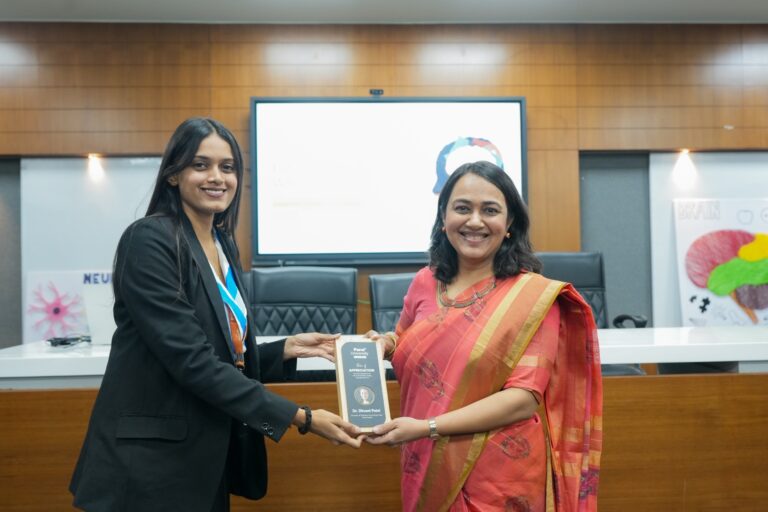
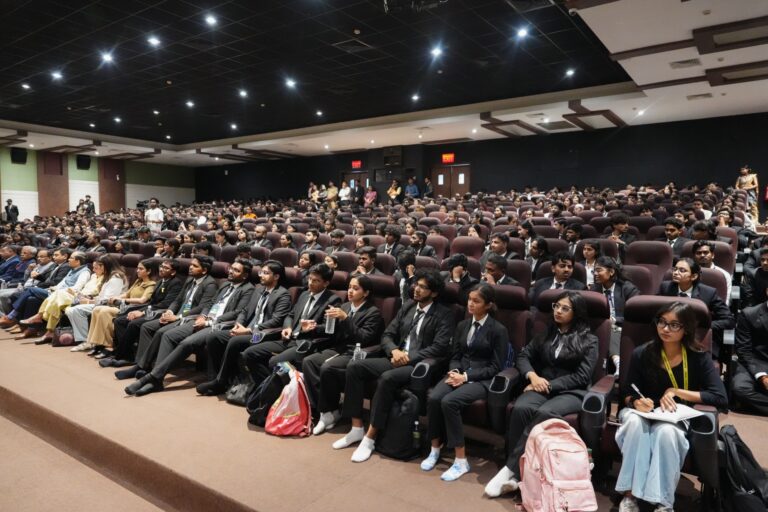
Synapsoirée 2.0, held over six days in October 2026 and timed with World Mental Health Day, brought fourteen specialists to campus across cyberpsychology, clinical and counselling practice, criminal and sports psychology, neuroscience, cognitive science, and more. Students heard directly from practitioners such as cyberpsychologist Dr. Nirali Bhatia, former IHBAS director Dr. Nimesh Desai, and trauma specialists Dr. Riri and Dr. Gunjan Trivedi, and worked through hands-on therapy methods including REBT and CBT. The full conclave coverage, with a page on each speaker, sits alongside this guide as evidence of how active the department is.
All four programs sit within the Faculty of Liberal Arts, which you can explore for the wider academic environment, the labs, and the other disciplines psychology students learn alongside.