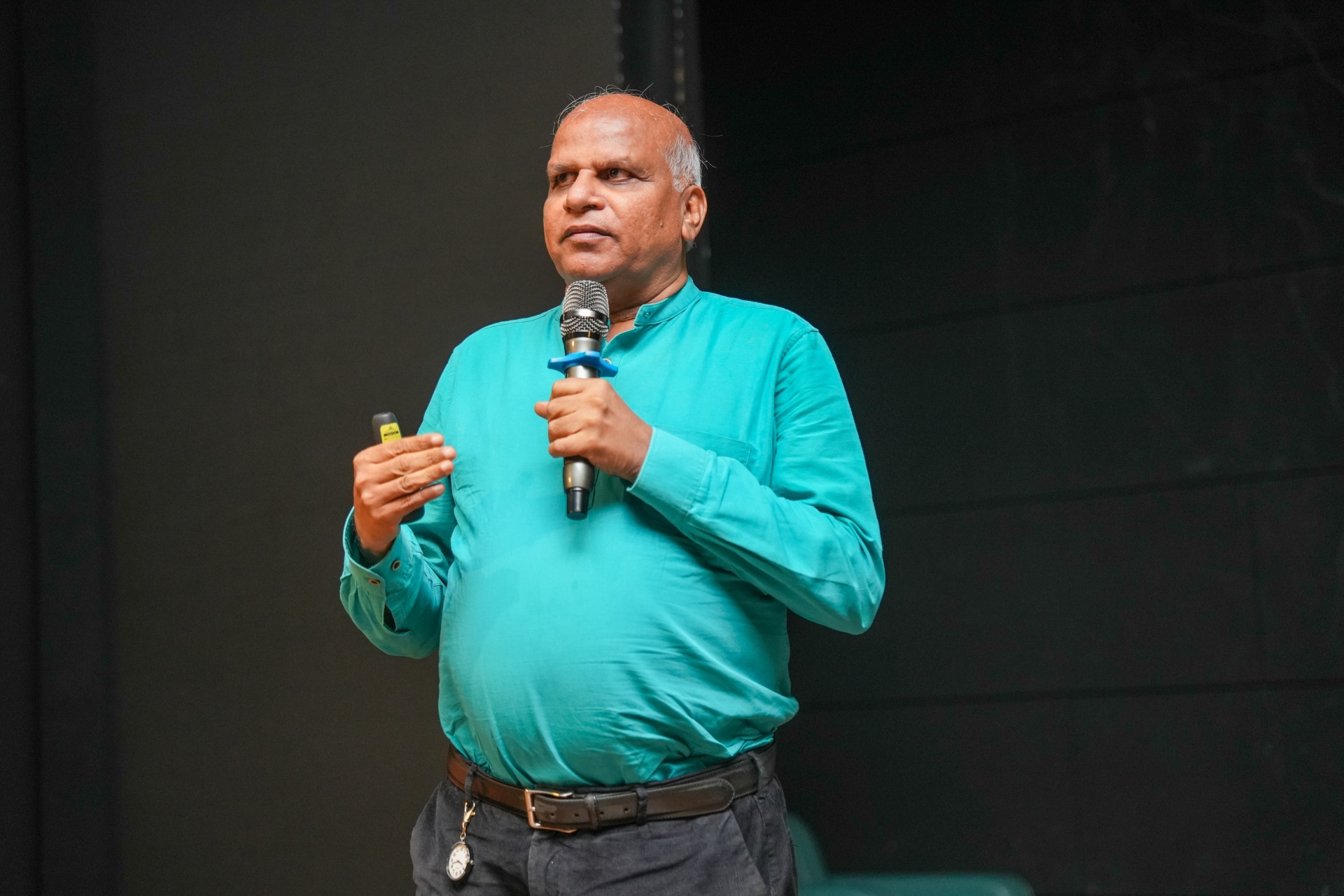
Open a door, and it speaks to you. The direction it swings and the space it reveals tell you where to go before a word is said. That small observation opened Yatin Pandya‘s session at the Young Ideas programme hosted by the Faculty of Architecture and Planning at Parul University, and it framed an argument that reaches far past doors: architecture is more than buildings. It is the design of experience.
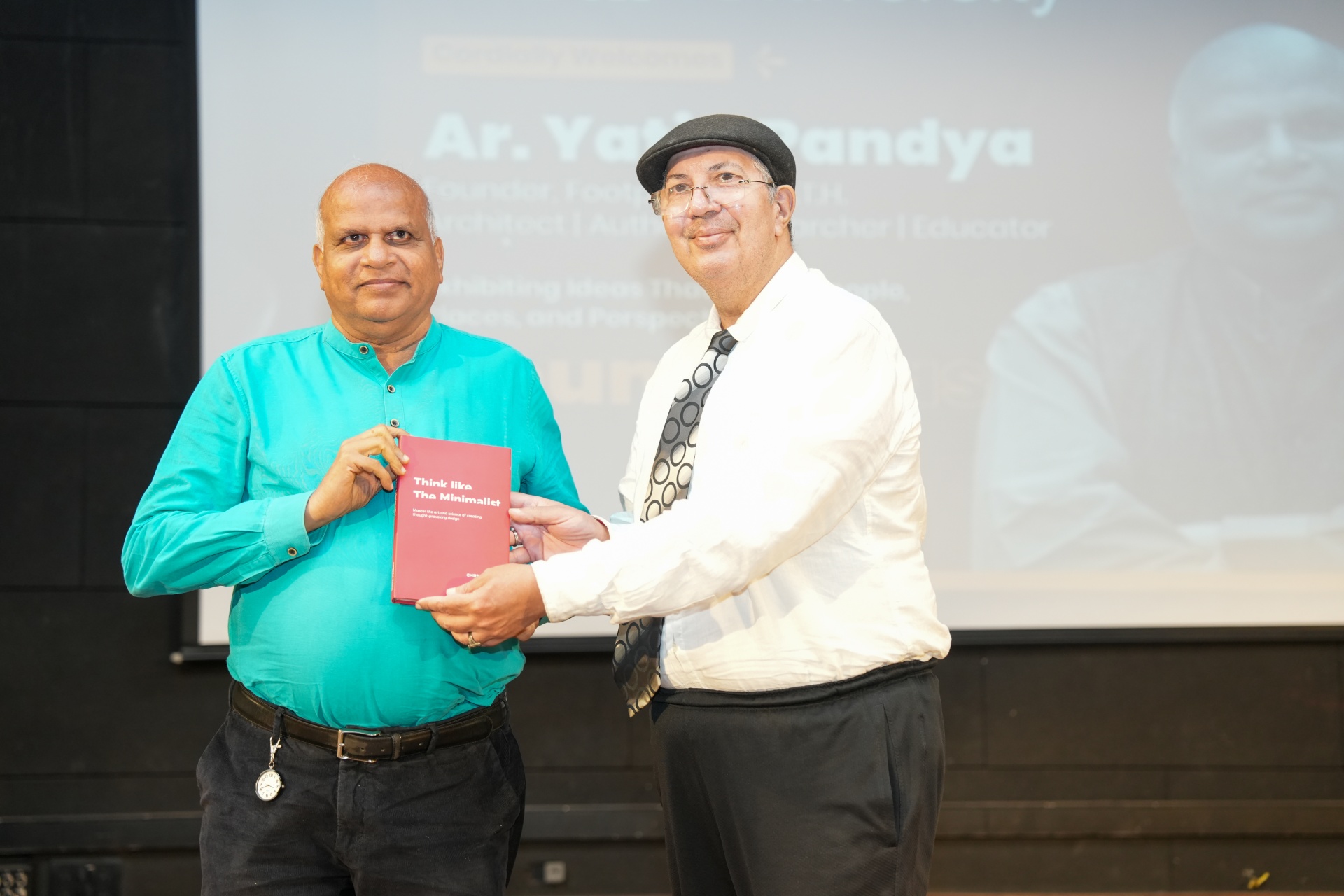
Yatin Pandya is the founder of Footprints E.A.R.T.H.. He is India’s renowned architect, researcher, and author. He has spent years working on sustainable development, housing, and the holistic conservation of heritage. His session was a combination of his experience, skills, and his core belief: A building is an object to be admired!
Reality of Design Failures, Successes & Sustainable Futures – Ar. Siddharth Majumdar at Parul University!
Architecture as a Dialogue
Every architect, Yatin Pandya explained, encodes ideas into a building: movement, emotion, behaviour, and the purpose of a space. Every user then decodes those ideas through their own memories and experiences. That two-way exchange is what he called a spatial narrative.
“Architecture is actually a dialogue between the designer and the person experiencing the space.”
– Yatin Pandya, founder of Footprints EARTH
The implication humbles the designer. A building is not finished when it is constructed; it is completed differently each time a person walks through it. An architect starts the conversation but leaves the door open for visitors to experience the space in their own way.
Yatin Pandya made the everyday version of this vivid. People do not remember a building through its dimensions, he said. They remember how it made them feel. A narrow passage can create curiosity, an open courtyard can bring calm, and a staircase can slowly prepare a visitor for the space above. These emotions are not accidents; they are designed intentionally through the handling of light, proportion, and sequence.
Designing Futuristic Spaces – A Look Inside Parul University’s Architecture Exhibition!
Why an Architect Must Learn More Than Architecture
Yatin Pandya told a story to explain why software and textbooks are not enough. A student approached an architect to learn design. The architect sent him to learn sculpture. The sculptor sent him to dance because sculpture is expression and movement. The dancer sent him to music, because dance needs rhythm. The musician sent him to poetry because music expresses emotion in words. The poet gave the simplest instruction: observe life, because creativity comes from understanding the world.
The point is that a good architect needs art, culture, music, emotion, and a sharp eye for how people actually live. The richest ideas, Yatin Pandya said, come from ordinary streets, markets, villages, temples, and stepwells, not from famous buildings copied off a screen.
“Architecture is not about designing objects. It is about designing experiences.”
Good Designers Ask Better Questions
Architects often hunt for the single right answer. Yatin Pandya argued the opposite: every project has many possible solutions, and the architect’s real job is to understand the site, users, climate, and budget well enough to ask the right question of each design.
“Is it appropriate for this place, these people, and this situation?” – Yatin Pandya, founder of Footprints EARTH!
That single question, asked honestly, quietly rules out most of the shortcuts a young designer is tempted by. An imported style that ignores the climate fails it. A striking form that confuses the people meant to use it fails them. Held to that test, good design stops being about impressing other architects and starts being about serving the people who will actually live with the result.
Curiosity, in this framing, is a professional skill. Watching how people walk, where they pause, and how they naturally use a space teaches more than copying an image ever could. Software can draw a building, he reminded students, but it cannot teach how people experience one.
Seeing Versus Perceiving!
To show how differently people read the same thing, Yatin Pandya projected abstract images and asked what the audience saw. The answers diverged completely. The eye collects information, he explained, but the brain assigns meaning, and that process is perception. He then showed a paragraph with the letters inside each word scrambled, and the whole auditorium read it easily, because the brain recognises patterns and fills gaps. People experience buildings the same way, each bringing their own memories, which is why no two experience a space identically.
Design That Serves, Not Just Impresses
Yatin Pandya defined sustainability as using resources wisely to create the maximum positive impact with the least damage to nature, and illustrated it with solutions that were clever because they were simple. In one, children’s playground equipment was linked to a water pump, so that as children played, water was pumped into storage tanks for the community, with one activity serving two purposes and requiring no extra energy. In another, solar power preserved medicines in remote areas without reliable electricity. He refused to call these high-tech, describing them instead as smart solutions built around local needs.
The distinction matters for a young designer chasing impressive technology. The playground pump is not sophisticated engineering; it is sophisticated thinking, a designer noticing that energy children already spend could do a second useful job. That is the habit Yatin Pandya wanted students to build: solving a real problem for real people with the least intervention, rather than reaching for the most advanced tool available. Good design, in this view, is measured by who it serves, not by how clever it looks.
Learning to Read the Built World
Yatin Pandya pushed students to study buildings for how they are experienced rather than how they are photographed. He compared structures from different regions of India and asked students to place each one by design alone, showing how climate, culture, materials, and lifestyle naturally shape architecture. He warned firmly against copying attractive international designs, because every place has its own identity and good architecture should strengthen it rather than erase it.
His case studies made the same argument through built work, drawing on memorials and public spaces admired less for their form than for how they move the people who pass through them. A memorial, in this reading, is not a monument to be looked at but a sequence to be walked, engineered to produce reflection. The lesson for a student is that the most valuable references are rarely the famous buildings. They are the ordinary streets, markets, and everyday spaces where people reveal how they actually use the built world.
Students who are passionate about architecture & planning must explore Parul University’s Bachelor of Design – Building and Infrastructure and Master of Planning programmes, which combine creativity, architectural excellence, technology, and real-world learning to help you design sustainable buildings, long-lasting infrastructure, and progressive cities. Master it through live projects, expert mentorship, immersive studios, impact trainings, and industry-ready experience.
The Six Decisions Every Architect Makes
Beneath the philosophy sat a practical framework. Yatin Pandya distilled design into six decisions, each shaping how a building feels to use.
- Selecting the site and positioning the building on it.
- Deciding the overall form and mass of the structure.
- Planning movement and circulation through the space.
- Choosing the architectural elements.
- Selecting materials and construction techniques.
- Designing the surface treatment and details.
Each looks technical, but each shapes the emotions of the people using the building. Architecture becomes meaningful, Yatin Pandya stressed, only when the six work together toward a memorable experience. He also rejected the split between tradition and modernity, arguing that tradition is knowledge that survived because it still works, a view that echoes Snehal Shah’s insistence on climate fundamentals at the same event.
Where This Way of Thinking Is Taught
A perspective like this is not absorbed from a single lecture. It is built through studio work, site visits, and sustained exposure to architects who think this way about space.
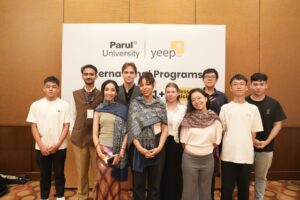
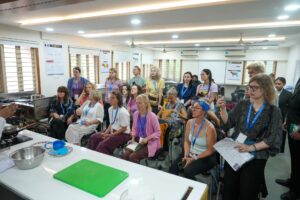
The Faculty of Architecture and Planning at Parul University brought Yatin Pandya, Charanjit Singh Shah, and Snehal Shah to its Young Ideas programme for exactly that reason. Its students spend their semesters documenting real neighbourhoods, studying stepwells and temples, and observing how people move through space rather than only drawing plans, which is the practical form of everything Yatin Pandya argued for.
Frequently Asked Questions
Who is Yatin Pandya, the architect?
Yatin Pandya is an Indian architect, researcher, and author, and the founder of Footprints E.A.R.T.H. He works in sustainable architecture, affordable housing, heritage conservation, and socially responsible design, and spoke at Parul University's Young Ideas session on architecture as human experience.
Define Yatin Pandya’s design experiences and their correlation with objects?
He explains that people can experience a building only when they are moving through it and how it makes them feel. They don’t admire it as an object; they remember the core experience. A good in his POV shapes emotion, movement and behaviour via a spatial narrative that allows each user to experience it in their way.
Define the core 6 decisions every architect makes?
According to Ar. Yatin Pandya, the entire process includes the selection of the site & positioning of the building, followed by deciding its form & mass, planning movement and circulation, architectural elements, and designing surface treatments & details.