Ayurvedic eye care is the branch of Ayurveda (traditionally part of Shalakya Tantra) devoted to nourishing, protecting, and soothing the eyes through medicated therapies. It has become strikingly relevant: as faculty noted during an international program at Parul University, screen time has driven a modern epidemic of dry, fatigued eyes. Here is a clear, educational guide.
Why Ayurvedic Eye Care Matters Now
The timing is hard to ignore. Long hours on phones and computers, worsened in the post-pandemic era of remote work, leave eyes dry, strained, and tired, because we blink less and lubricate less when we stare at screens. In Ayurveda, the answer is deep, consistent nourishment of the eyes, and its eye-care traditions, developed long before screens existed, turn out to address a very modern complaint. The aim of these therapies is to keep vision comfortable and the eyes well-lubricated, framed within the Ayurvedic understanding of eye health.
Netra Tarpan: Nourishing the Eyes
The best-known Ayurvedic eye therapy is Netra Tarpan (“eye nourishment”). In the classical method, a practitioner builds a small, watertight ring of kneaded dough around the eye to form a reservoir, then fills it with warm, medicated ghee, allowing the eyes to bathe in it for a set time. The medicated ghee (Ghrita) is traditionally understood to provide sustained moisture that supports the eye’s natural tear film, which is why it is associated in Ayurveda with relief for dry, tired eyes. It is a precise clinical procedure: the classical method is time-consuming and needs a trained assistant, which is exactly the problem one modern innovation set out to solve.
A Modern Innovation: Making It Accessible
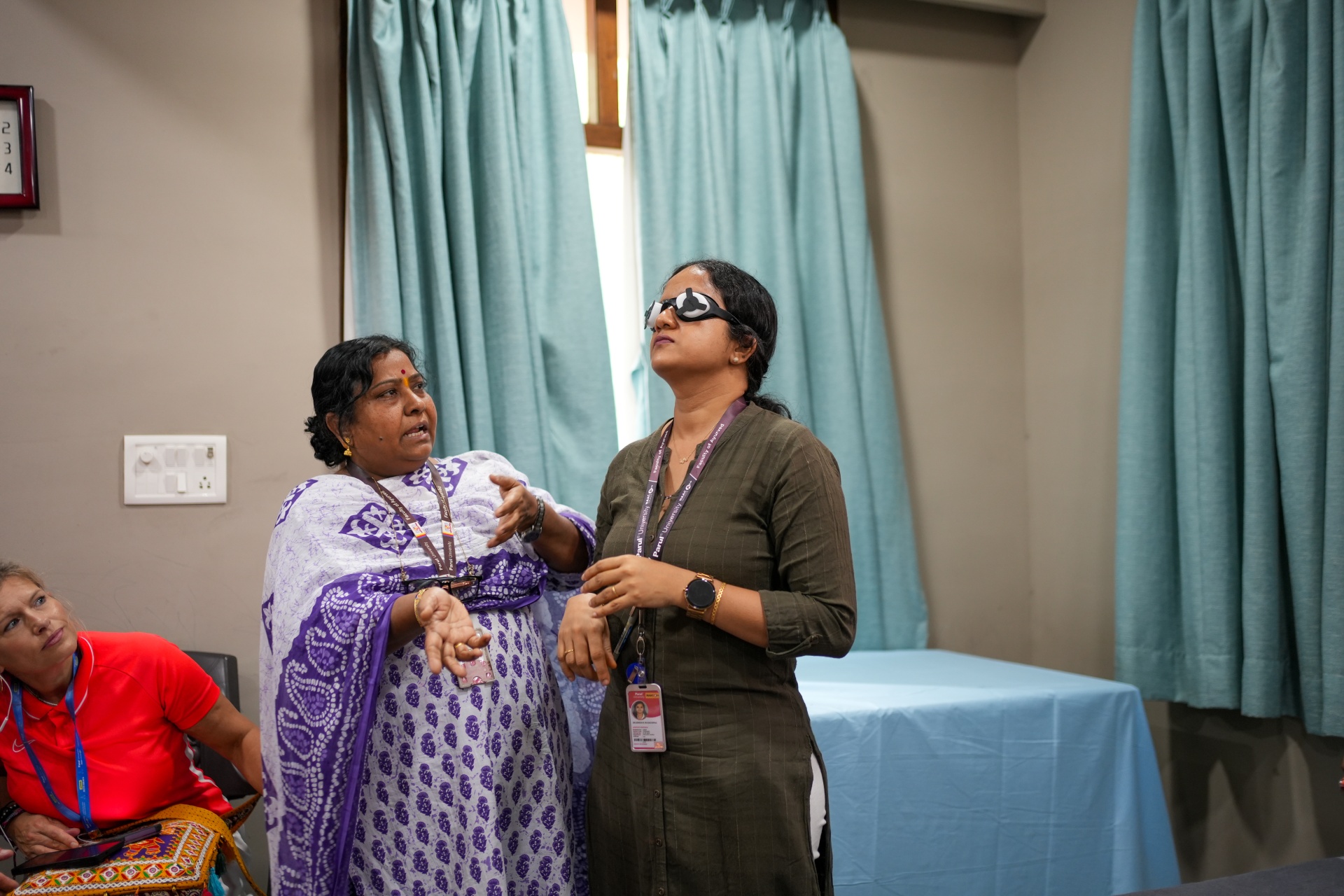
A notable development shared during the Parul University program shows tradition evolving. Because the classical dough-ring method is slow and requires an assistant, the university’s team developed a patented device, in effect a medicated-ghee cup or goggle, that lets a person apply the treatment themselves, without an assistant and without wasting the medicated ghee. Designed with screen-induced dry eyes in mind, it is a practical example of an ancient therapy being adapted for modern, everyday use. (This is described here as a documented innovation from the program, not as a medical-outcome claim; any eye therapy should be used under professional guidance.)
Other Ayurvedic Eye Therapies
Ayurvedic eye care extends beyond Netra Tarpan. Two others demonstrated during the program:
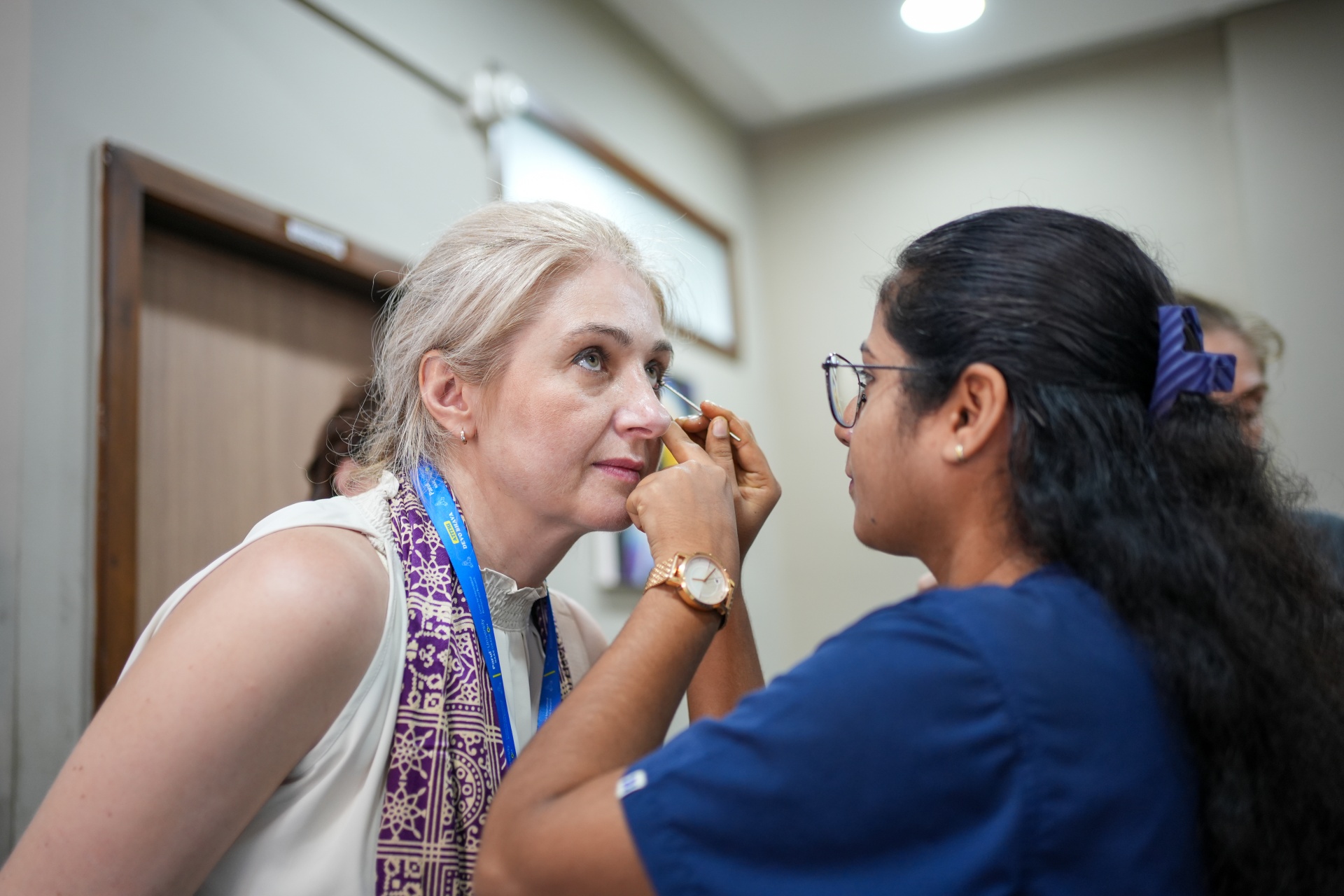
- Ayurvedic Kajal (collyrium), not the cosmetic kind, but a therapeutic paste traditionally prepared from medicinal soot (using ingredients such as Triphala) bound with medicated ghee and honey, applied to help soothe and maintain the eye’s protective layer.
- Parisheka (therapeutic eye irrigation), a gentle pouring of a room-temperature herbal decoction (Kashay) or milk over the eye, used traditionally for irritation and inflammatory conditions, always kept cool or barely lukewarm, never hot, with temperature carefully controlled to protect the sensitive eye.
Each is a clinical procedure requiring a trained practitioner, especially given how delicate the eye is.
An Important Note on Safety
This is essential: the eye is extremely delicate, and Ayurvedic eye therapies are clinical procedures performed by trained specialists, not DIY home remedies. Temperature, the choice of medicated preparation, and technique are all carefully controlled by the practitioner for safety. Never attempt to pour any substance into or over your eyes on your own. Anyone with eye discomfort, dryness, or any eye condition should consult a qualified eye-care professional, and seek Ayurvedic eye therapies only through a registered practitioner. And how Abhyanga therapy is good for massage with oil.
Frequently Asked Questions
How do you explain Ayurvedic eye care?
Ayurveda has solution for almost every issue. Today with increasing screen time, eye issues are also increasing. Ayurvedic eye care is the branch of Ayurveda focused on nourishing, protecting, and soothing the eyes. It is done by using medicated therapies. traditionally part of Shalakya Tantra. It includes treatments such as Netra Tarpan (medicated-ghee eye nourishment), Ayurvedic Kajal, and Parisheka (eye irrigation), all performed by trained practitioners, and is increasingly relevant for screen-related eye strain.
What is Netra Tarpan?
Netra Tarpan (“eye nourishment”) is an Ayurvedic eye therapy in which warm, medicated ghee is retained over the eyes within a small dough reservoir for a set time. In Ayurveda, the medicated ghee is understood to provide sustained moisture that supports the eye’s tear film, and it is traditionally associated with relief for dry, tired eyes. It is a clinical procedure performed by a trained practitioner.
Can Ayurveda help with dry eyes from screens?
Ayurveda has long-standing eye-care therapies, such as Netra Tarpan, traditionally used to nourish and soothe dry, fatigued eyes, which many find relevant to modern screen-related strain. These are traditional therapies, not proven medical treatments, and must be done under professional guidance. Anyone with persistent dry eyes should also consult an eye-care professional.