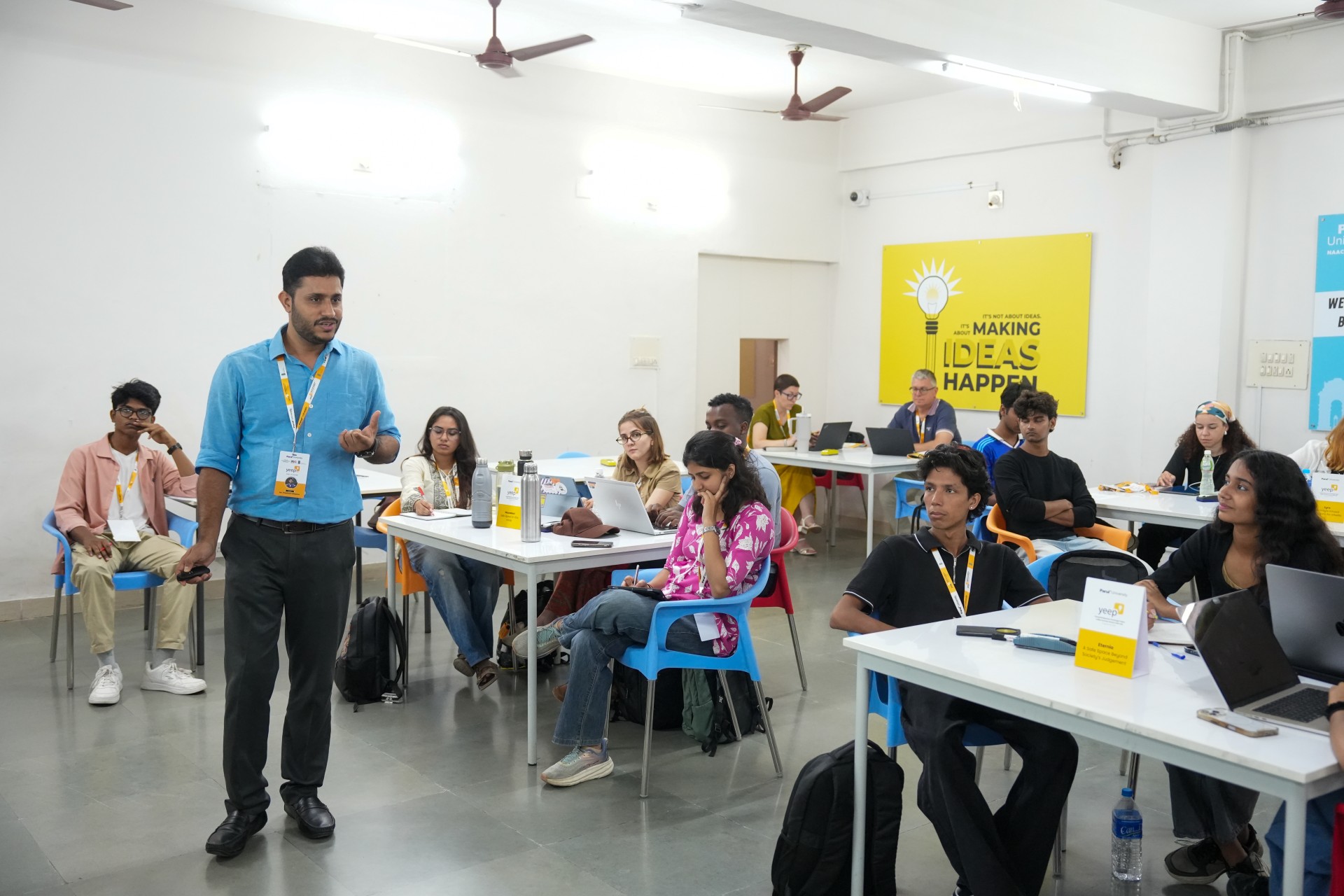
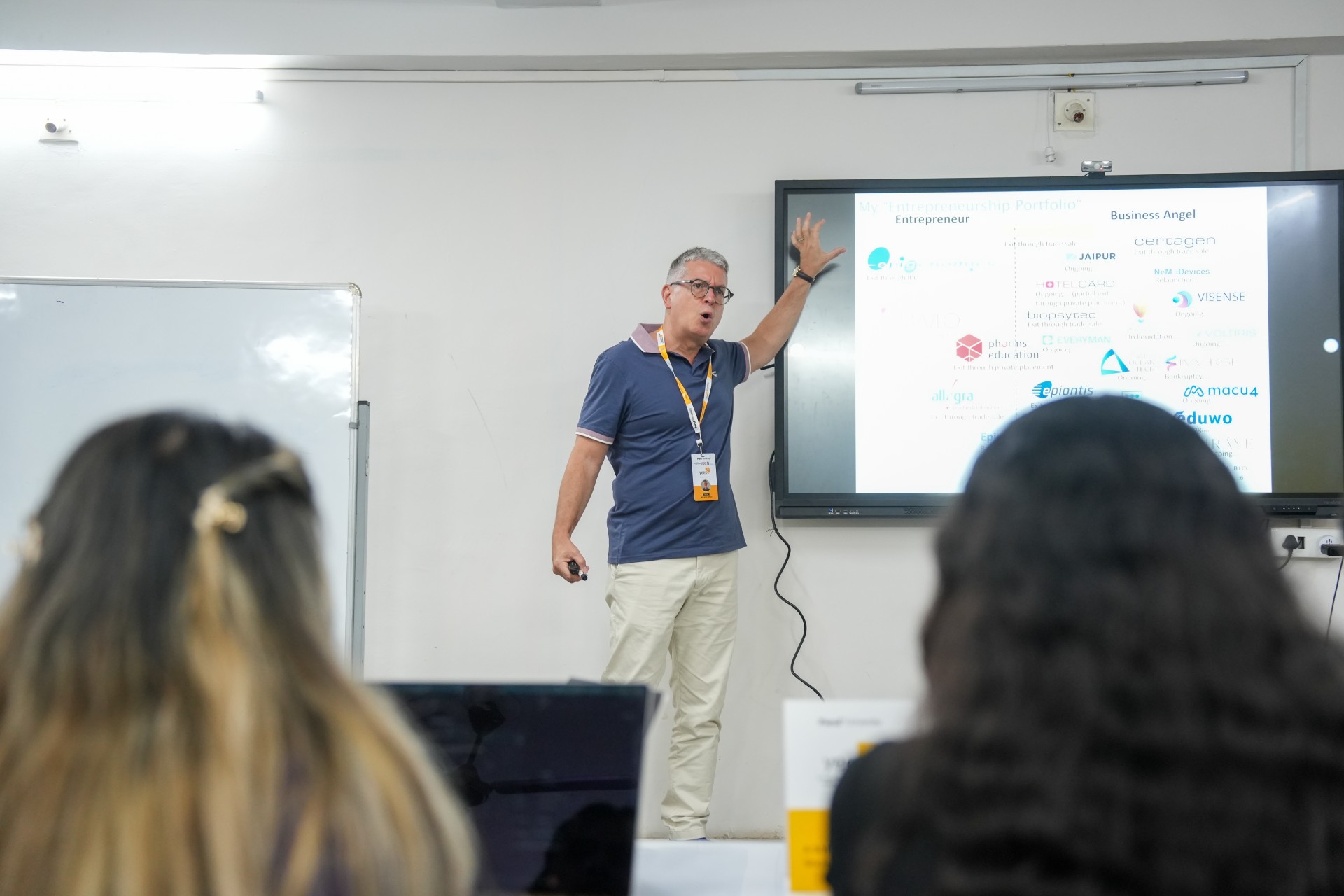
If Apple and Tata can make expensive mistakes, so can any founder, and the first step to avoiding them is humility about your own idea. At the Young Entrepreneur Exchange Program (YEEP) 2026 at Parul University, Mr. Prashant Khanna and Mr. Aron Braun used famous failures to teach student founders the mistakes that quietly kill good startups. Here are the most important ones.
Mistake 1: Confusing a Solution With a Real Need
Founders fall in love with their product and forget it is only a solution, not a need. A healthy drink packed into a metal can is a physical product; it is not, in itself, a human need. The actual issue needs to be addressed. The real need is the job, pain or gain that exists. When you think that your solution is the solution for the need, the mistake arises, and the blocking comes when you stop asking whether anyone wants the provided outcome or not, and the product starts to drift away from the customers.
Mistake 2: Trusting Polite Feedback
People are polite. They will say they love your idea, and then never buy it in the store.
– On the YEEP best-practices session
It is not viable to ask for opinions on your idea; it can sound like a good idea, but it can be dangerous. To avoid hurting your feelings, they might response might be positive, eg., they might say that they liked your product, but in reality they might not spend a rupee on your product.
Opinions are cheap; behaviour is truth. The only reliable signal of demand is what people actually do, whether they hand over money, not what they say to be kind.
Mistake 3: Misjudging Human Psychology
The Tata Nano is the classic example. Tata built an extremely affordable car to give people who owned only motorbikes shelter from the rain, a real, practical benefit. But owning a car is not only about staying dry; it is about status, pride, and looking successful. Because the Nano became known as the cheapest car in the world, few wanted to be seen driving one. The engineering was sound; the misread was psychological. Understand what your product means to people, not just what it does.
Mistake 4: Being Ahead of Your Time, or Ignoring the User’s Situation
Apple once launched the Newton, a small handheld computer operated with a plastic pen. It was costly, bought only by specialists, and quickly withdrawn, a rare Apple failure. The technology was not bad; it was ahead of its time, and it did not account for what an ordinary person actually needed to do with such a device day to day. Years later, Apple applied the lesson and the iPad became a huge success. Timing, and a real grasp of the user’s situation, matter as much as the idea.
Mistake 5: Ignoring the Small Things
When Airbnb started, some twenty companies were doing almost exactly the same thing. Nearly all failed; Airbnb survived, and much of the difference came down to small things done right, such as the quality of the photographs of the rooms. The same lesson appears in a photo of an ATM mounted too high on a wall, or a bathroom so cramped it is unusable: the technology works, but if it ignores how a real human positions themselves and uses it, it is useless. Success often hides in getting the small details exactly right.
The Mindset That Prevents All of These
The common cure, Braun told students, is to celebrate finding mistakes rather than fearing them. Every fault you discover early saves you from building the wrong thing later, so speed of learning is everything. Forget your ego, stop loving your idea too much, learn to love finding your mistakes faster, and focus your energy on understanding the humans you are trying to help. That mindset, more than any single tactic, is what separates founders who adapt from those whose startups quietly fade.
How Parul University and PIERC Help Founders Avoid These Traps
These mistakes are far cheaper to catch with a mentor than in the market, which is exactly what Parul University’s PIERC provides: experienced mentors, real customer feedback, and a 70,000-plus student campus to test on before scaling. It is part of why PIERC has supported 300-plus startups generating over Rs 60 crore in revenue. Founders build this judgement in management and entrepreneurship programmes and through PIERC.
Also Read: The Assumptions Should Be Tested and Calculated For Business
Frequently Asked Questions
What are the most common startup mistakes?
Common mistakes include confusing a solution with a real customer need, trusting polite feedback instead of actual buying behaviour, misjudging the psychology behind a purchase, launching before the market or technology is ready, and ignoring small details of how people actually use a product. Most trace back to not truly understanding the customer.
Why can customer feedback be misleading?
Because people are polite and often say they love an idea to avoid hurting your feelings, then never buy it. Opinions are unreliable signals of demand; the only trustworthy signal is behaviour, whether people actually pay for the product. Founders should test with real transactions, not just ask for reactions.
Why did the Tata Nano fail?
The Tata Nano was engineered as an affordable car, but its makers misjudged the psychology of ownership. A car signals status and success, not just practical shelter, and because the Nano became known as the world’s cheapest car, many buyers did not want to be seen in one. It is a classic lesson in understanding what a product means to people.
How does Parul University help founders avoid these mistakes?
Through PIERC, Parul University gives founders mentors, real customer feedback, and a large campus market to test on, so flawed assumptions are caught early and cheaply. This mentorship-driven approach supports an ecosystem of 300+ startups generating Rs 60 crore-plus in revenue, and is open to students and external founders alike.