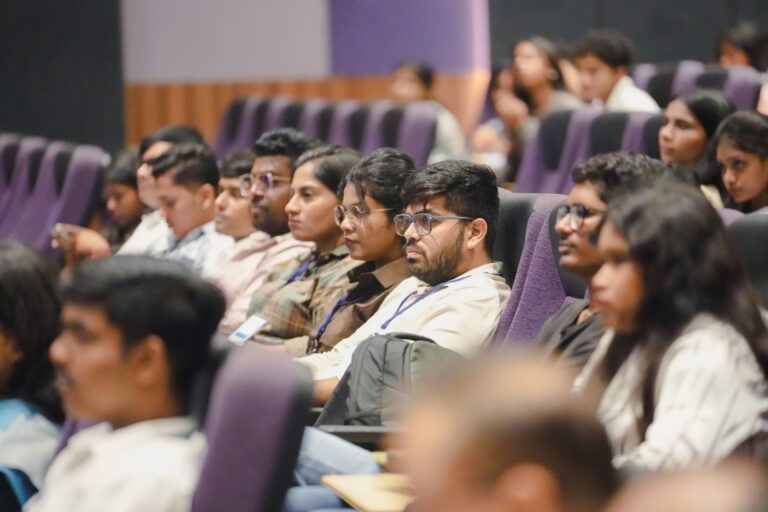
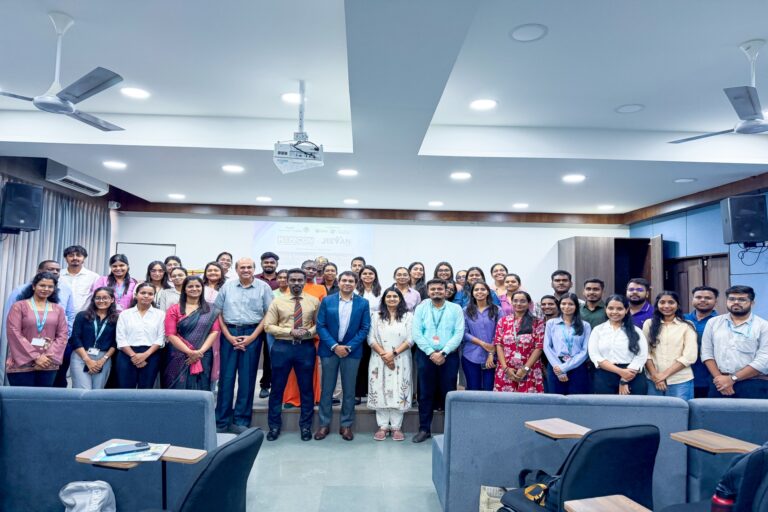
Behind every business idea sits a stack of assumptions: about what customers will buy, how the market behaves, what the rules allow. Most are untested, and a plan built on wrong assumptions is a waste of time no matter how detailed it is. At the Young Entrepreneur Exchange Program (YEEP) 2026 at Parul University, Mr. Aron Braun of Bern University of Applied Sciences taught founders how to test those assumptions before betting on them.
What Is a Hypothesis?
Prioritising What to Test First
You cannot test everything; time is limited, so you must test the right things first. Braun gave a simple two-part filter. First, how important is the assumption: if it is wrong, will your entire business collapse? Second, how sure are you: is it near-certain, or do you have real doubts? Test first the assumptions that are both critical and uncertain, the ones that could destroy your business and that you are not sure about. Avoid testing easy things just to collect comforting results; that only cheats you and makes no real progress.
How to Run an Experiment
A good test is written down before you run it. State the hypothesis, the action you will take, how you will measure the result, and what outcome would count as success. Then run it, and judge honestly. The strongest test of demand is not an opinion but a transaction: if you present a product and parents say they love it but do not open their wallets, your hypothesis was wrong, no matter how warm the words. Every result, positive or negative, is then used to improve the idea, and finding a wrong assumption early is progress, not failure.
Speed and Honesty Win
The founders who succeed are the ones who test the riskiest assumptions quickly and cheaply, and who are honest about the results. Each wrong assumption discovered early saves the money and months you would have wasted building on it. This is the discipline behind lean, validated learning, and it pairs directly with idea validation and design thinking.
How Parul University and PIERC Build This Discipline
Parul University’s PIERC is built for exactly this kind of fast, real-world testing. Founders can test assumptions on a campus of 70,000-plus students and refine them with mentors before scaling, part of why PIERC’s ecosystem has supported 300-plus startups generating over Rs 60 crore in revenue. Students learn the method in management and entrepreneurship programmes and apply it through programmes like YEEP and PIERC.