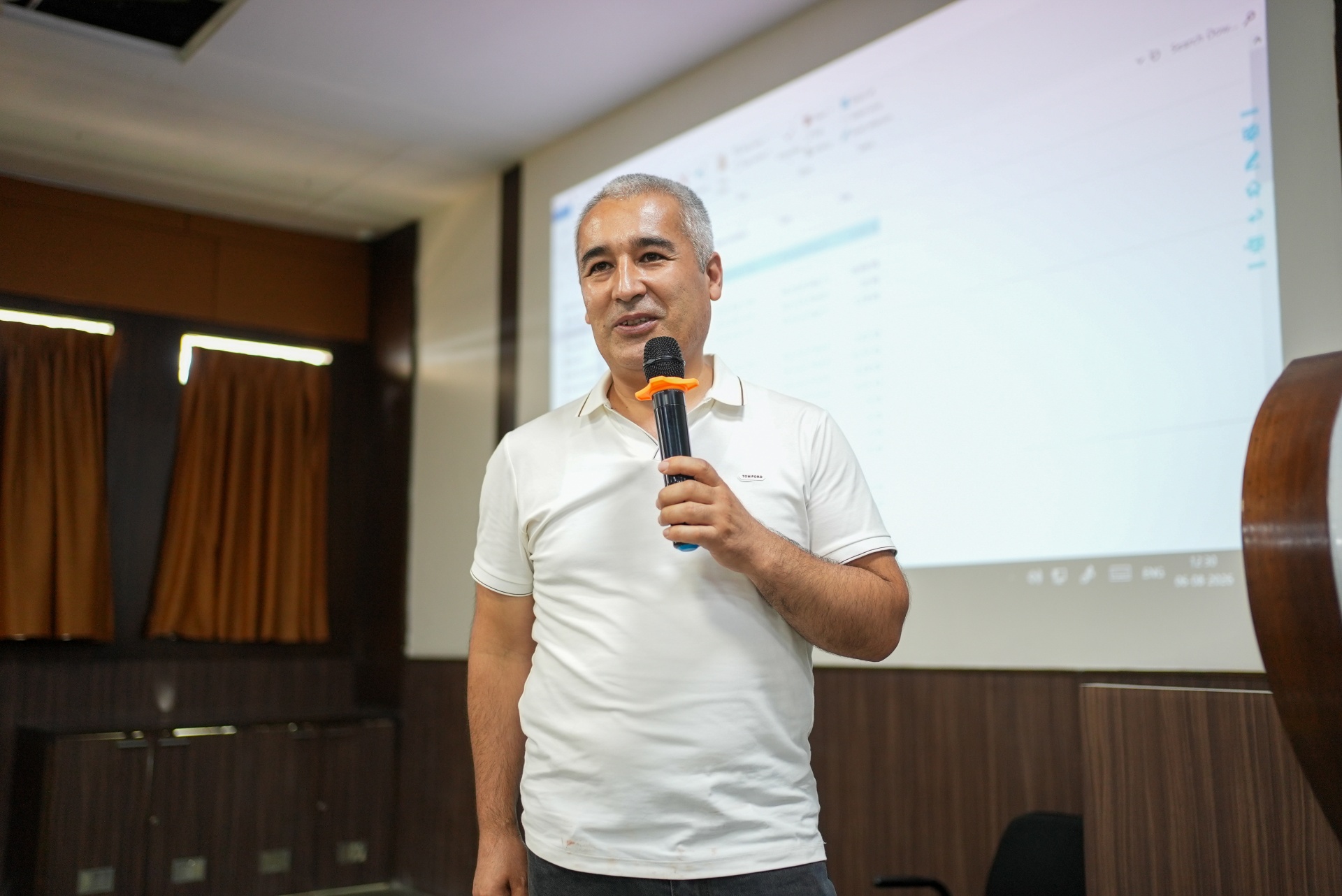
When a patient arrives after a catastrophic accident, no one yet knows what is bleeding or how badly. During International Week at Parul University, Dr. Bahtiyor of Namangan State University, Uzbekistan, took medical students inside the high-pressure world of emergency surgery and the disciplined method that saves lives within it.
Why Emergency Surgery Is Different?
In elective surgery, a patient arrives with a diagnosed condition, a hernia, gallstones, and a plan. The emergency room is full of unpredictability. To be precise, emergency surgery is the fastest way of diagnosing and treating acute conditions that can kill a patient or may damage an organ. Dr. Bahtiyor elaborated on his view that time becomes the most dangerous factor, as whenever an ambulance arrives, the surgeons do not yet know exactly what the issue is. Be it internal bleeding, liver damage, broken bones, or severe head injuries, in those first minutes, the objective is to start early detection, faster stabilisation and on-the-spot surgery!
The ABCDE Approach
To bring order to that chaos, emergency teams follow a strict, universal framework known as the ABCDE approach, a primary assessment that stabilises a patient before anything else. Each letter is a priority, handled in order:
- A for Airway: This is the very first step, wherein it secures the airway and protects the cervical spine, only if any trauma is suspected.
- B for Breathing: Assess oxygenation and address any difficulties found in breathing.
- C for Circulation: It controls and stops bleeding, sets up IV access, and manages shock!
- D for Disability: A neurological check, often using the Glasgow Coma Scale.
- E for Exposure: This step covers the examination of the full body, while keeping the patient warm enough to save them from hypothermia.
The golden rule of resuscitation is to manage the most life-threatening problems first, without delaying necessary surgery.
Fast Diagnosis: The Tools That Matter!
Surgeons cannot see beneath the skin, so in an emergency they depend on diagnostic tools to make rapid decisions. Dr. Bahtiyor emphasized laboratory studies (blood counts, electrolytes, liver and kidney function, and coagulation tests), imaging (ultrasound is vital for detecting fluid in the abdomen or trauma), and CT scans (to examine the acute abdomen, trauma, and vascular disease). He warned bluntly that if equipment fails or staff cannot interpret results quickly, the patient pays the highest price.
And the decisions are hard:
Is the patient stable?
Is the condition life-threatening?
Could conservative treatment work instead of surgery?
Even after a successful operation, postoperative care matters enormously: intensive ICU management, ventilation, hemodynamic support, and strong antibiotics.
Advice for Young Doctors: Start in the Emergency Room
Dr. Bahtiyor closed with career advice worth its weight in gold. He strongly urged medical students to spend the first five years of their careers working in an emergency hospital. Elective surgery is calm and predictable; emergency surgery forces a young doctor’s brain to process information at lightning speed and to handle shock, blood loss, and chaos with a steady hand. Survive and learn in the emergency department for five years, he argued, and you build an unshakeable foundation of skill and confidence, one that lets you work anywhere in the world with composure. Explore Ayurveda programs at Parul University, including the Bachelor of Ayurvedic Medicine and Surgery (BAMS), Doctor of Medicine-Ayurved (MD), and Master of Surgery-Ayurved (MS), and develop your foundation in clinical care, specialized medicine, and Ayurvedic surgical practice.
FAQs
What’s the objective behind the ABCDE approach?
It’s a universal approach for stabilising an emergency patient. A stands for Airway, B for Breathing, C for Circulation, D for Disability, and E for Exposure. Life’s most threatening problems are easily managed by this framework!
What’s the difference between emergency surgery & planned surgery?
Planned surgery treats a condition with clear instructions and a plan. Emergency surgery is treated separately, with unpredictable and life-threatening conditions, often with a time slot of 20-30 minutes. It demands rapid diagnosis, faster stabilisation, and immediate surgery!
Why are young doctors more inclined towards working in the emergency departments?
They’re young and starting out, so they choose exposure. And in such departments, rapid decisions under pressure are made and executed. The doctors are trained to handle shock, blood loss, and chaos very calmly. Spending their early years in an emergency department helps them build a stronger foundation of skill and confidence.