Discover how B.Tech Aerospace Engineering develops the knowledge and skills needed to explore careers in space systems, satellites and drone technology.
The way we travel, explore space, and use technology for security is changing with new developments in aerospace engineering. From satellites that support communication to drones used for mapping and defence, aerospace technology is becoming a key part of modern industries. For students interested in flight, machines, and innovation, a B.Tech Aerospace Engineering degree can create opportunities in multiple technology-driven fields.
India’s space sector has seen increasing participation from private companies, with more than 200 space startups working on areas such as satellite technology, launch systems, and space applications. (PIB) This growth shows how aerospace engineering knowledge is becoming useful beyond traditional aircraft roles.
How Is Aerospace Engineering Creating New Career Paths in Space Technology?
Space technology is not limited to government missions. Engineers also work on satellites, spacecraft systems, launch vehicles, and communication technologies. Aerospace engineers contribute to designing and improving systems that help space missions work safely.
A B.Tech Aerospace Engineering course builds knowledge in areas like aerodynamics, propulsion, aircraft structures, and flight systems. These concepts are useful in developing technologies used in space exploration and satellite applications.
Some career areas in space technology include:
• Spacecraft Design Engineer :
Helps develop and improve satellite components and operations.
• Satellite Technology Engineer:
Works on designing and testing spacecraft structures and systems.
• Propulsion Engineer:
Works on engines and systems used for aircraft and spacecraft movement.
• Research Engineer:
Studies new aerospace technologies and improves existing systems.
With the growth of space applications, aerospace graduates can explore opportunities in research, manufacturing, and technology development.
Why Are Drones Becoming an Important Career Area for Aerospace Engineers?
Drones, also known as unmanned aerial vehicles (UAVs), have become useful in many industries. They are used for surveying, agriculture, logistics, photography, disaster management, and defence operations.
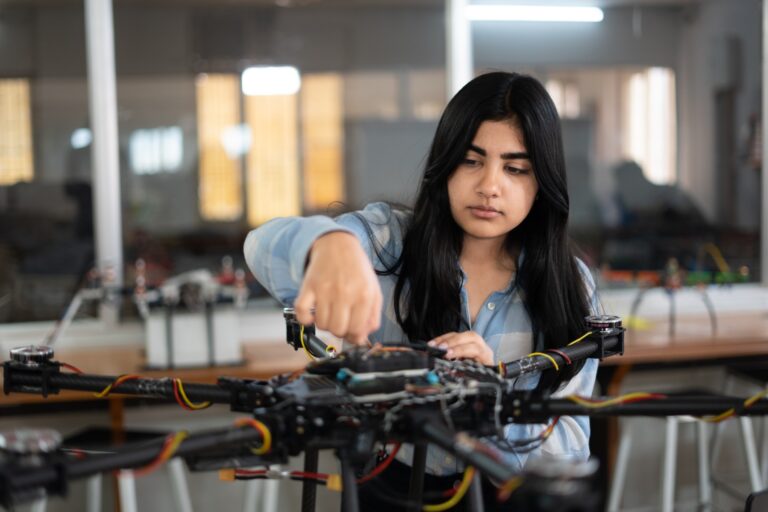
Aerospace engineers play an important role in drone development because drones need proper design, stability, control systems, and efficient performance. Students with knowledge of flight mechanics and aircraft systems can work on improving drone technology.
Important areas where aerospace engineers contribute include:
• Drone Design and Testing:
Creating UAV structures and checking their performance.
• Flight Control Systems:
Developing systems that help drones operate accurately.
• Autonomous Technology:
Working with sensors and software for automated flight.
• Drone Manufacturing:
Improving materials and production methods.
As drone use grows, students with aerospace skills can explore careers in this developing field.
How Does Parul University Prepare Students for Aerospace Engineering Careers?
A strong foundation in aerospace concepts helps students understand the technology used in aviation, space, and defence. The B.Tech Aerospace Engineering program at Parul University focuses on important areas such as aerodynamics, aircraft structures, propulsion systems, flight mechanics, and aerospace applications.
The programme helps students learn the principles behind aircraft and aerospace systems through technical subjects and practical learning. Students can develop an understanding of how aerospace technologies are designed, analysed, and improved.
Through academic learning and skill development, students pursuing aerospace engineering can prepare for career opportunities related to aircraft technology, space systems, and emerging areas like drones.
Get Complete Details From Expert
What Skills Can Help You Grow in Aerospace Engineering?
Aerospace careers require more than textbook knowledge. Students need to develop technical abilities and problem-solving skills to understand real engineering challenges.
Some important skills include:
• Design and Simulation Skills:
Help in creating and testing aerospace models.
• Programming Knowledge:
Supports automation and analysis tasks.
• Technical Understanding:
Builds knowledge of flight systems and engineering concepts.
• Research Skills:
Helps students explore new aerospace developments.
Practical projects, internships, and continuous learning can help students improve these skills and understand industry requirements better.
What Is the Future Scope After B.Tech Aerospace Engineering?
Aerospace engineering is expanding into many areas beyond aircraft. Space missions, drone technology, defence systems, and advanced manufacturing are creating new possibilities for engineers.
Students completing a B.Tech Aerospace Engineering degree can explore careers in industries connected with aviation, space technology, drone development, research, and defence applications.
As technology continues to develop, engineers who keep upgrading their knowledge can find more opportunities in this changing field.
Building A Future with Aerospace Engineering
Aerospace engineering gives students a chance to work on technologies that influence how people travel, explore space, and use advanced systems. With the right skills, practical learning, and curiosity to understand new technologies, a B.Tech Aerospace Engineering degree can become the starting point for a career connected with the future of flight and innovation.