Compare curriculum, aerospace labs and practical exposure to choose the right university.
But choosing B.Tech Aerospace Engineering just because the sector looks exciting is not enough. The university you choose will decide what kind of machines, software, laboratories and projects you get to work with during four important years.
What Should You Check First in the B.Tech Aerospace Engineering Curriculum?
Start with the subjects. A good curriculum should first build your engineering basics before moving into advanced aerospace topics.
Students should normally get exposure to areas such as aerodynamics, aircraft structures, propulsion, flight mechanics, engineering mathematics and design. Subjects related to drones, simulation, materials and modern aerospace systems can also become useful as technology changes.
Do not simply count how many subjects are listed. Check how the subjects move from basic concepts to actual application.
For example, learning aerodynamics in class is useful. But understanding how airflow behaves through simulation, experiments, or design work makes the learning much stronger.
Which Aerospace Labs and Facilities Should You Look For?
Aerospace engineering is difficult to understand only through textbooks. Students need to see how engineering ideas behave in practice.
Before selecting a university, check whether students get access to facilities such as:
• Aerodynamics facilities:
To understand airflow, lift, drag and aircraft behaviour.
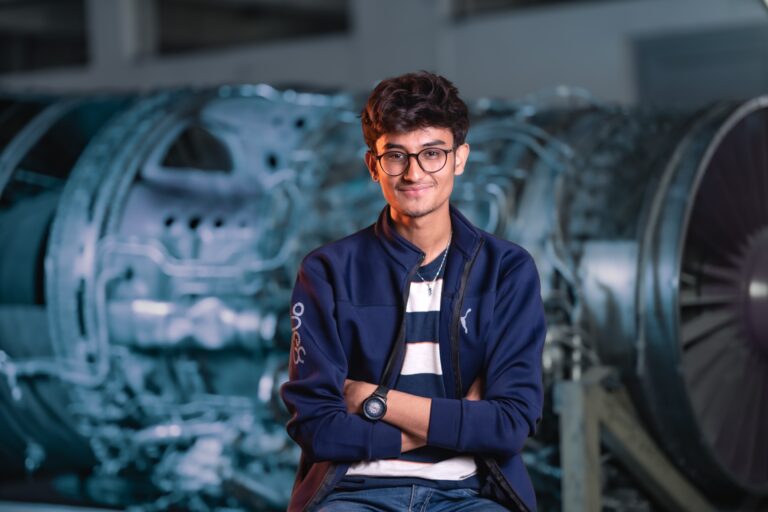
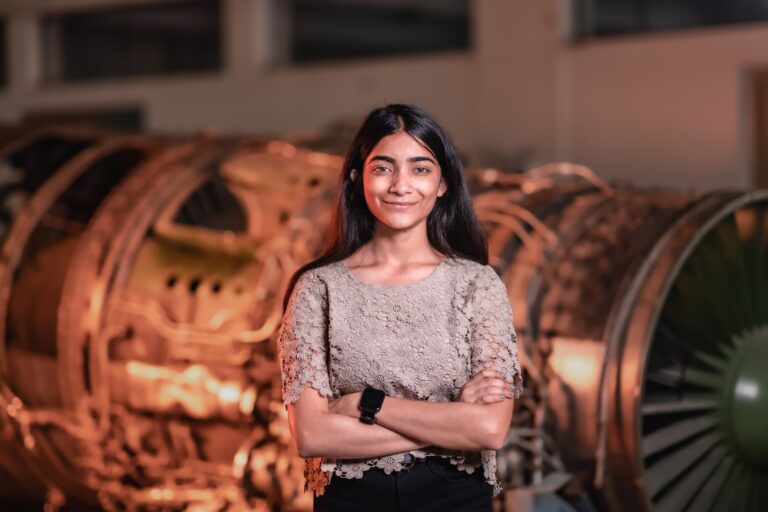
• Propulsion laboratories:
To study how engines and propulsion systems work.
• Flight simulation facilities:
To understand aircraft movement and flight conditions.
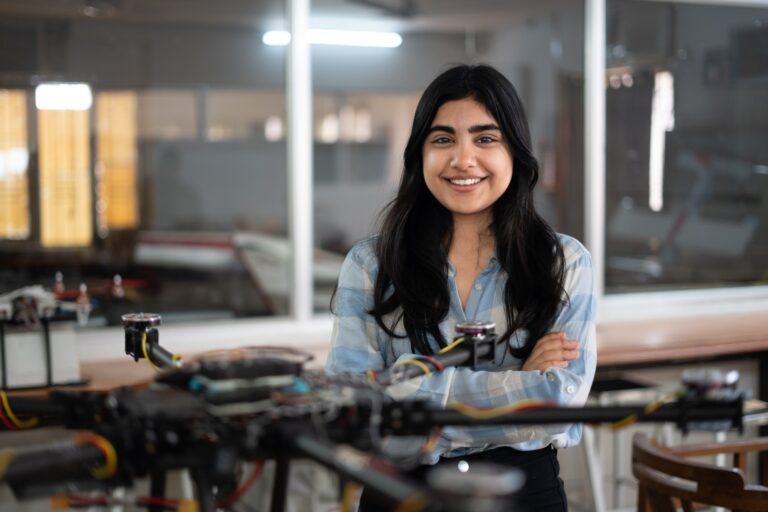
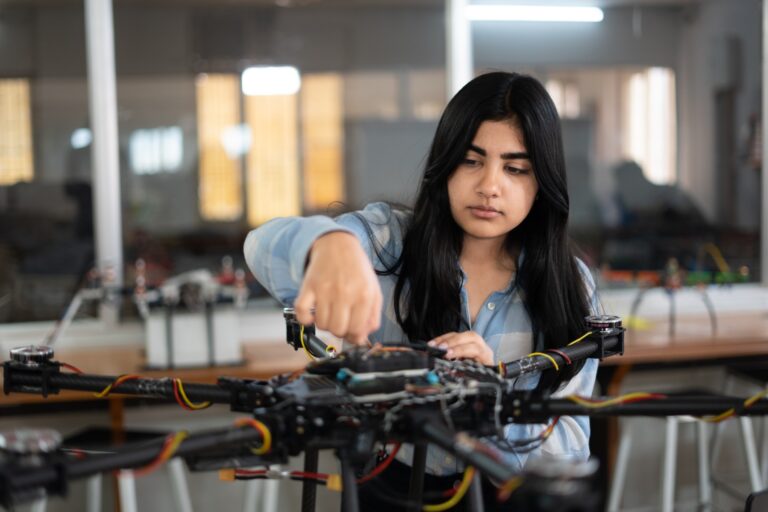
• Drone and UAV facilities:
To design, test or study unmanned aircraft systems.
• Engineering software:
To practise modelling, simulation and aerospace design.
Also ask one important question: Do undergraduate students actually use these facilities? A laboratory has little value if students only see it during demonstrations.
How Much Practical Learning Should the Course Provide?
Aerospace engineering becomes clearer when students build something.
Small projects may include aircraft models, drone components, simulations or structural designs. Bigger projects can combine electronics, programming, aerodynamics and mechanical design.
Project work also teaches something that examinations may not teach easily: failure. A design may not work in the first attempt. A simulation may give unexpected results. Students then have to identify the problem and try again.
This type of learning is useful because real engineering work also involves testing, correction and improvement.
Why Should Industry Exposure Matter While Choosing a University?
Industry exposure helps students understand where classroom knowledge is actually used.
Look for opportunities such as:
- internships and industrial training
- expert lectures and technical workshops
- industry-linked student projects
- aerospace competitions and design activities
- research and innovation opportunities
Do not judge exposure only by the names shown on a website. Ask what students actually do through these opportunities.
An internship where a student works on a technical task may provide more learning than an activity where the student simply observes operations.
Get Complete Details From Expert
How Can Faculty and Research Opportunities Affect Your Learning?
Aerospace engineering covers many areas. One professor may work on aerodynamics, another on propulsion, structures, drones or computational methods.
Check whether faculty members have relevant academic or practical experience and whether undergraduate students get chances to participate in research or technical projects.
This becomes more important if you already have an interest in areas such as spacecraft, drones, aircraft design or propulsion. Working with faculty on projects can help you understand whether you want to enter industry or continue with higher studies.
Why Consider Parul University For B.Tech Aerospace Engineering?
Parul University’s four-year B.Tech Aerospace Engineering programme is designed around aircraft, spacecraft and related aerospace systems. Students receive theoretical as well as practical exposure through propulsion labs, flight simulation centres and aerodynamic testing facilities. It also provides opportunities for project-based learning and work connected with drone and UAV research.
For a student comparing universities, these details are useful because they show the type of learning environment available beyond normal classroom teaching. Students can explore the official B.Tech Aerospace Engineering programme for updated curriculum, eligibility, fees and admission information.
What Should You Check Before Taking the Final Admission Decision?
Do not choose only because aerospace engineering sounds exciting. Visit the campus if possible. Look at laboratories. Ask what projects current students are doing. Check the curriculum carefully. Understand internship support and speak with the admission team about opportunities available specifically to aerospace students.
Most importantly, think about what you want to build during your B.Tech years. It may be an aircraft model, a drone, a simulation or even the first step towards working on a spacecraft system someday. A university should give you the space, guidance and tools to start that journey.
If aerospace is the field you want to explore, you can begin by looking deeper into Parul University’s B.Tech Aerospace Engineering programme and understanding how its curriculum and practical facilities match your career plans.