Explore how strength, mobility, balance and functional assessments help physiotherapists measure recovery.
According to a February 2026 report by the Press Information Bureau, 23.8% of people aged 60 years and above in India have at least one limitation in performing daily activities. (PIB) This shows why improving physical ability is an important part of healthcare.
When someone suffers an injury, the first thing they want is relief from pain. However, feeling less pain does not always mean that the body has recovered completely.
A person may feel comfortable while sitting but still struggle to walk or climb stairs. This is why students pursuing a Bachelor of Physiotherapy must learn to understand rehabilitation beyond pain relief.
Why Is Pain Relief Not the Only Sign of Recovery?
Pain is an important part of understanding a patient’s condition. However, it cannot give the full picture of recovery.
For example, a patient recovering from a knee injury may report less pain after a few treatment sessions. But the patient may still have weak muscles or difficulty bending the knee.
A physiotherapist needs to understand whether the patient can move safely and complete daily tasks.
Sometimes, pain may reduce before strength returns. In other cases, movement may improve while some discomfort remains.
Students must understand these differences because rehabilitation focuses on helping patients return to their normal activities, not simply reducing symptoms.
What Other Signs Help Measure Progress During Rehabilitation?
Physiotherapists observe different physical abilities to understand whether treatment is helping a patient.
Some important signs include:
• Muscle Strength:
Checking whether the patient can use muscles with better control and strength.
• Joint Movement:
Understanding whether joints can bend, straighten, and move more freely.
• Balance:
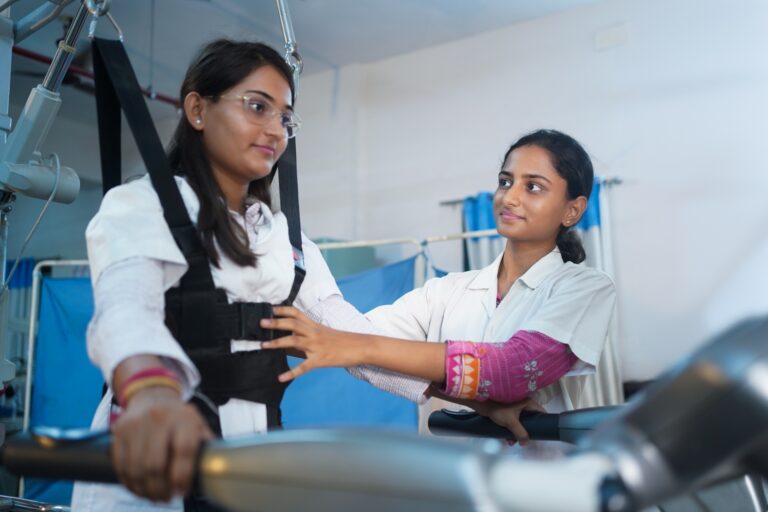
Observing whether the patient can stand or walk without losing balance.
• Walking Ability:
Checking changes in walking speed, distance, and movement patterns.
• Daily Activities:
Understanding whether the patient can dress, sit, stand, or climb stairs with less difficulty.
These observations help physiotherapists understand progress that patients may not notice themselves.
For students, learning these assessment methods is an important part of clinical education.
How Can Two Patients with Similar Pain Show Different Recovery Progress?
Consider two patients recovering from similar ankle injuries.
The first patient experiences very little pain but struggles to balance on the injured leg. The second patient reports mild discomfort but can walk more comfortably and complete basic movements.
Both patients are showing progress in different ways.
A physiotherapist must consider muscle strength, joint movement, balance, and the patient’s personal recovery goals before making treatment decisions.
This teaches students an important lesson. Two patients with similar injuries may require different rehabilitation plans.
The aim is not to compare patients but to understand what each person needs to recover safely.
Get Complete Details From Expert
How Do Physiotherapy Students Learn to Track Patient Improvement?
During a Bachelor of Physiotherapy, students learn how to assess physical movement and understand changes in a patient’s condition.
Some important learning activities include:
• Physical Assessment:
Learning to examine muscles, joints, posture, and movement.
• Exercise Planning:
Understanding how suitable exercises support strength and mobility.
• Progress Recording:
Learning to document changes in physical abilities during treatment.
• Patient Communication:
Asking patients about difficulties they face during everyday activities.
Students also learn why regular assessment is necessary. When progress is slower than expected, the physiotherapist may need to review the patient’s condition and treatment plan.
These skills help students connect classroom knowledge with practical patient care.
How Does Parul University Prepare Students to Understand Rehabilitation Progress?
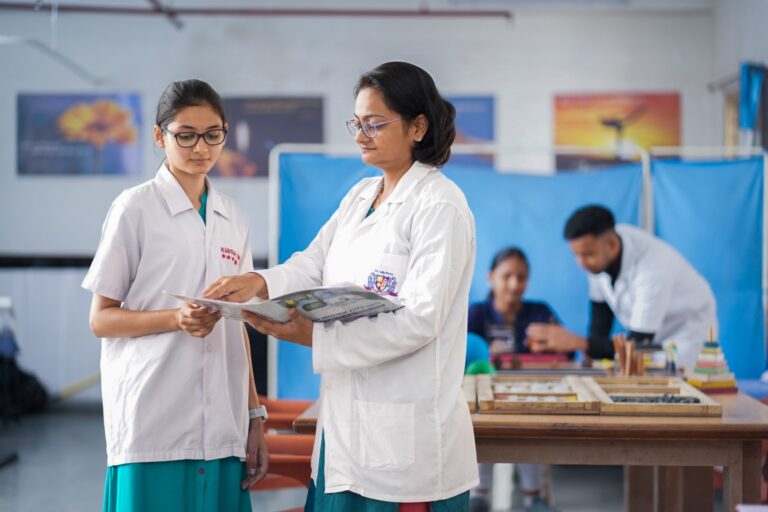
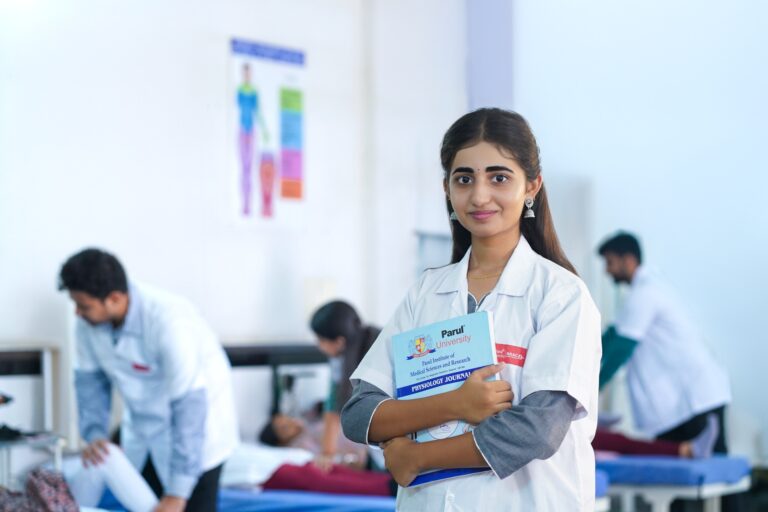
The Bachelor of Physiotherapy programme at Parul University combines classroom learning with practical clinical training.
The five-year programme covers anatomy, physiology, biomechanics, and therapeutic procedures. These subjects help students understand body movement, physical problems, and rehabilitation methods.
Parul University also provides practical learning through laboratories, clinical settings, and hospital-based exposure. Students can observe patient conditions and understand how physiotherapy treatment is planned.
With guidance from experienced faculty and healthcare professionals, students can develop assessment, communication, and patient-care skills. The programme also includes internships and field training to support practical learning.
This exposure helps students understand that successful rehabilitation involves both physical improvement and patient confidence.
Why Does Patient Confidence Matter During Rehabilitation?
Physical recovery can sometimes be slow. A patient may feel nervous about walking after a fall or using an injured limb again.
Even when strength improves, fear can make movement difficult.
Physiotherapists need to listen to these concerns and help patients work towards safe, realistic goals.
For students, this means understanding the person receiving treatment, not just the injured body part.
Helping Patients Move Forward
A patient who can walk to the nearby shop again or climb stairs without assistance may experience a meaningful change in daily life.
Students interested in making these improvements possible can explore the Bachelor of Physiotherapy at Parul University and gain the knowledge and practical skills needed for patient care.