There is a structural distinction between certifications that test recall and certifications that test capability, and it explains why a small number of credentials are treated seriously by employers while many are not. Red Hat’s certification programme sits firmly in the second category, and understanding why is the key to both valuing and preparing for it.
This guide sets out what the certifications are, what they test, how they relate to each other, and which roles they support. It is written for students considering the pathway rather than for practitioners already inside it.
What Makes Red Hat Certification Different
A conventional certification exam presents questions and possible answers. A candidate who has memorised sufficient material can pass without ever having administered a system, which is precisely why hiring managers treat many certifications sceptically.
Red Hat exams are performance-based. The candidate is placed on a live system and given tasks to complete, and the assessment is whether the system afterwards does what was required. The RHCSA exam is delivered as a single half-day session of this kind. There is no partial credit for knowing the theory. Either the configuration works, or it does not.
Two consequences follow. Preparation cannot be done by reading alone, since the only route to passing is repeated hands-on practice on real systems. And the credential means something specific to an employer: not that the holder has studied Linux administration, but that they have performed it under time pressure and produced a working result.
There is no partial credit for knowing the theory. Either the system works at the end of the exam, or it does not.
RHCSA: The Foundation
The Red Hat Certified System Administrator credential, exam code EX200, is the entry point and the prerequisite for what follows. It validates the core system administration skills required to run a Red Hat Enterprise Linux environment.
The scope covers the working substance of the role: essential command-line tools and file handling, user and group administration, storage configuration, networking, service management, security and permissions, and, in current versions, basic container management. These are the tasks a systems administrator performs routinely rather than a survey of Linux as a subject.
Red Hat’s own preparation route runs through Red Hat System Administration I and II, coded RH124 and RH134, or the Rapid Track course RH199, which combines them for candidates with existing experience. Comparable hands-on experience is an alternative, since the exam tests capability rather than course attendance.
It is described as an entry-level certification, which is accurate in the sense of being the first step in the sequence and misleading if taken to mean easy. It is also relevant well beyond systems administration itself, being useful to database administrators, developers and support engineers who work on Linux systems without administering them full time.
RHCE: Not What It Used to Be!
This is the point where a great deal of published guidance is out of date, and getting it wrong wastes a candidate’s preparation time.
The Red Hat Certified Engineer credential was historically an advanced systems administration certification, positioned as the senior counterpart to RHCSA. It is no longer that. In its current form, exam code EX294, RHCE is focused on automation using Ansible.
A candidate is required to automate Red Hat Enterprise Linux administration tasks using Ansible playbooks, roles and modules, working across multiple systems. The credential now certifies that its holder can manage infrastructure programmatically rather than by hand, which reflects how the industry itself has changed. RHCSA remains the prerequisite, so the sequence is administration first, then automation of that administration.
For anyone planning a pathway, this reframing matters considerably. RHCE is now squarely a DevOps and automation credential rather than a senior sysadmin one, and candidates preparing for it on the basis of older descriptions will study the wrong material. If you’re as passionate about building your career at the intersection of AI & DevOps, enrol on Parul University’s B.Sc IT in Artificial Intelligence or B.Tech CSE course and get to work for globally renowned software companies!
Specialist Certifications After RHCE
Beyond the two core credentials, Red Hat offers specialist certifications in particular technologies, which is where a pathway becomes tailored to a career direction rather than generic.
- OpenShift Administration (EX280): Operating Red Hat’s enterprise Kubernetes platform, aimed at those running container platforms in production.
- OpenShift Development (EX288): Building and deploying applications onto that platform, aimed at the developer side of the same technology.
- Advanced Ansible Automation (EX374): Deeper automation work beyond the RHCE level.
- Server Hardening (EX413) and Identity Management (EX362): Security-focused specialisms covering system hardening and enterprise identity and access.
Exam codes and structures are revised periodically as products change, so the current definitive list is always the Red Hat certification catalogue rather than any secondary source, including this one.
How to Prepare for a Performance-Based Exam
The core format is fundamentally different from multiple-choice certification; the preparation differs too, and candidates who prepare as though for a written exam tend to fail.
- Build a practice environment and live in it: Virtual machines running the relevant Linux version, configured and reconfigured repeatedly. The exam tests whether you can perform tasks, so preparation means performing them until they are routine.
- Practise without documentation, then with it: Official documentation is generally available during the exam, but searching for everything consumes time that is not available. The working target is knowing most tasks outright and knowing where to look for the rest quickly.
- Work to time: The constraint is as much speed as knowledge. Practising tasks untimed builds false confidence, because a candidate who can complete every task slowly will not finish.
- Break things deliberately: Misconfigure a service and repair it, since diagnosis under pressure is the underlying skill and cannot be learned from working systems alone.
- Verify your own work: The exam assesses outcomes, not intentions. Developing the habit of checking that a change actually took effect, rather than assuming it did, is what separates a pass from a near miss.
The useful side effect is that this preparation is genuinely transferable. Unlike revision for a recall-based exam, which produces knowledge that fades, preparing for a performance-based certification produces working capability that persists because it was built by doing.
Which Certification Supports Which Role
Certifications map onto job families reasonably predictably, and knowing the mapping prevents wasted effort.
- RHCSA: Systems administration, infrastructure support, and technical roles requiring Linux competence as a component. It is also the base that everything else assumes.
- RHCE: Automation-oriented roles including DevOps and infrastructure engineering, where configuration management across many systems is the daily work.
- OpenShift certifications: Container platform roles, whether operating the platform or developing on it, which is where a substantial part of current enterprise application deployment sits.
- Security specialisms: Hardening, compliance and identity management roles within infrastructure security.
A certification is evidence of validated skill, and it improves prospects. It does not guarantee employment, and it does not substitute for experience. Its function is to make a claim credible to someone who has not seen you work, which is exactly the position a recruiter is in when reading a graduate’s application. Certification plus demonstrable hands-on practice is considerably stronger than either alone.
How Students Can Access These Pathways?
The obstacles for a student are cost and environment. Enterprise software and the infrastructure to practise on are not trivially available, and self-funding both alongside a degree is difficult. Academic programmes exist partly to remove that barrier: Red Hat Academy provides participating institutions with curriculum, enterprise-grade learning environments and certification pathways for their students.
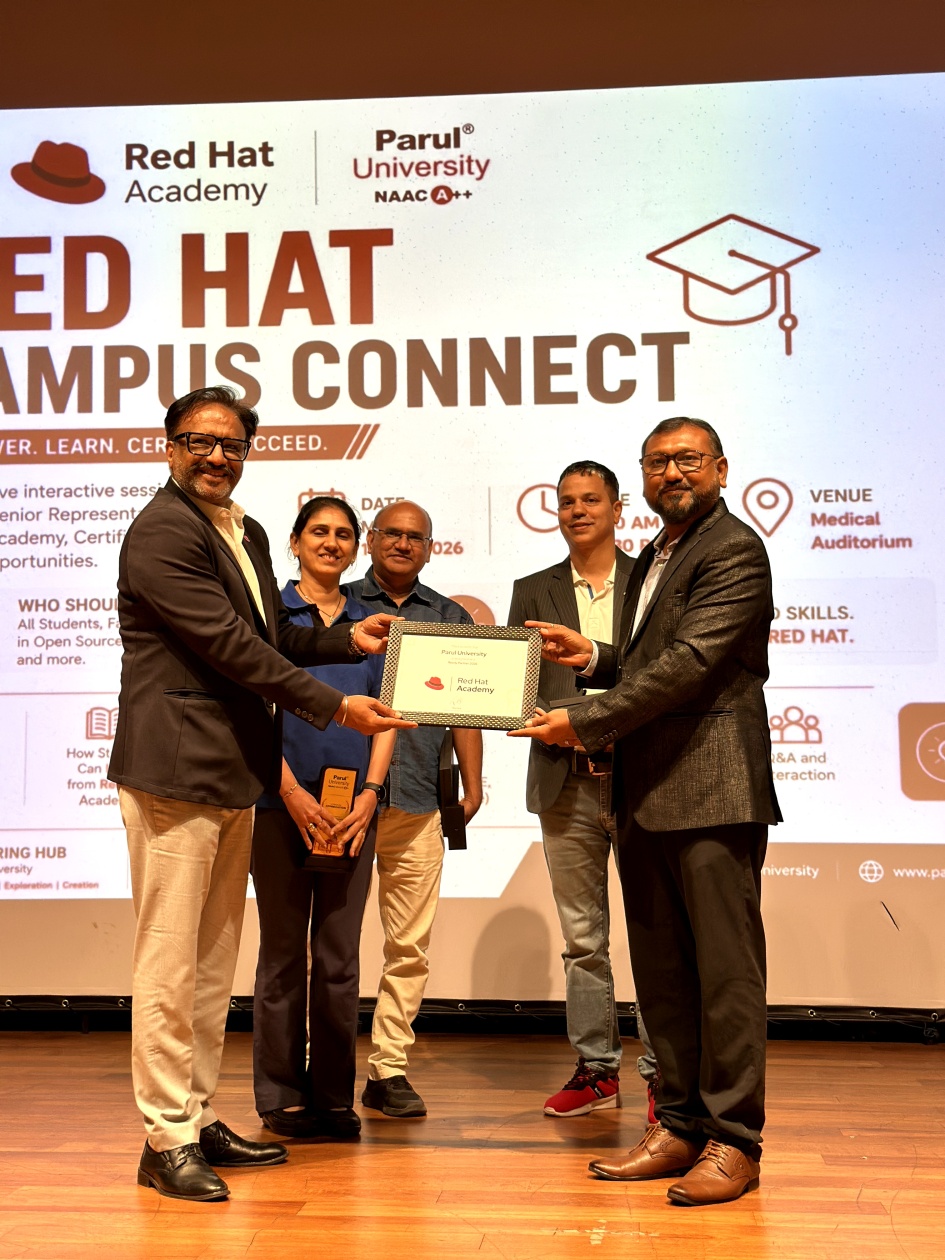
Parul University’s Tinkering Hub runs such a partnership, described in detail in the Red Hat Academy at Parul University article, which, according to the university, has brought more than 2,000 students into the ecosystem. The practical value for a student is straightforward: access to the environment and the pathway during the degree rather than after it, which is the difference between graduating with a credential and starting to work toward one afterwards.
Frequently Asked Questions
What is Red Hat certification and why is it respected?
Red Hat certification validates practical skills in Red Hat Enterprise Linux and related technologies through performance-based exams. Rather than answering multiple-choice questions, candidates work on a live system and are assessed on whether their configuration achieves the required outcome. This means the credential evidences demonstrated capability rather than memorised knowledge, which is why employers in infrastructure roles treat it more seriously than recall-based certifications.
What is the RHCSA certification ?
RHCSA, the Red Hat Certified System Administrator credential, exam code EX200, validates the core skills needed to administer a Red Hat Enterprise Linux environment. It covers essential command-line tools, file handling, user and group administration, storage, networking, service management, security and basic container management. It is delivered as a single half-day performance-based session and is the prerequisite for RHCE.
What is the difference between RHCSA and RHCE?
RHCSA validates core Linux system administration performed directly on systems. RHCE, in its current form under exam code EX294, validates the automation of that administration using Ansible, requiring candidates to write playbooks, roles, and modules to configure systems programmatically. RHCE was historically an advanced system administration credential and is frequently still described that way, but it is now an automation certification. RHCSA remains its prerequisite.
Can students take Red Hat certifications during their degree?
Yes, where their institution provides access. The barriers for an individual student are the cost of enterprise software and the difficulty of building a realistic practice environment. Red Hat Academy provides participating institutions with curriculum, enterprise-grade learning environments and certification pathways for enrolled students, which allows certification to be pursued alongside a degree rather than after graduating.