
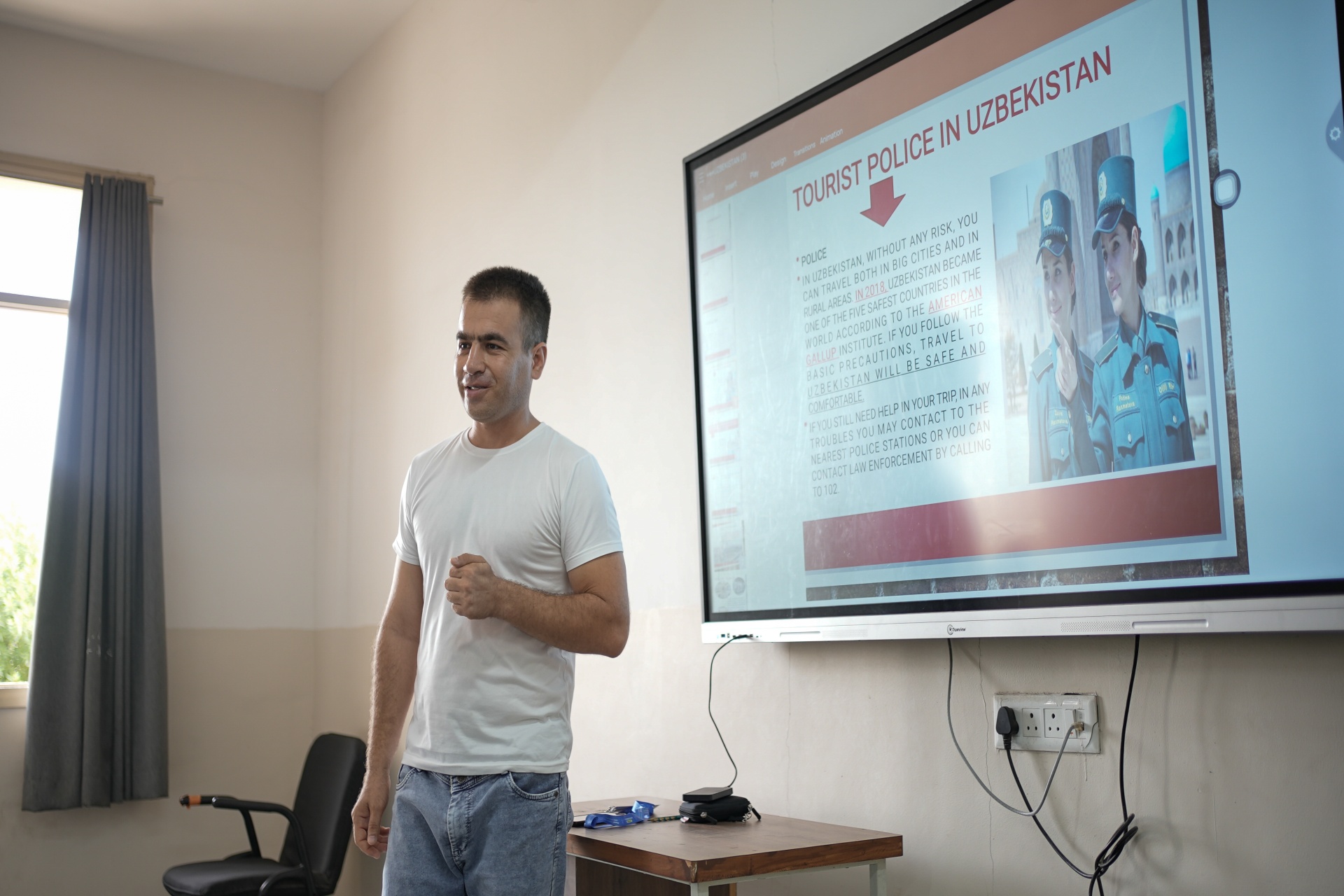
Most business students focus on the product: designing it, pricing it, marketing it. But as Mr. Samadiy Khusrov of Asian Technology University, Uzbekistan, reminded MBA students at Parul University, none of that matters if the product cannot reach the customer reliably and affordably. That is logistics, and understanding it is essential to understanding how businesses actually compete.
Logistics Is Not Just Transportation
People think logistics is just delivering through trucks. But it is not true. It goes beyond. It has much more to offer. Logistics is all about getting a product at the right place, at right time, in right condition and at a controlled cost. Hence, the tasks include monitoring the movement, storage, loading, and inventory handling. Estimating the overall cost, information, and coorditnation through out the supply chain at all points. Without delay the raw materials should reach the manufacturers, and finish priduct to customers. If a delay happens it can lead to loss or hurt the production, process and sales chain. It can be said that logistics is a connection between production and demand, shaping the efficiency and competitiveness of the company. Today, logistics relies on information too, they need information where the shipment is, how much stock will be transported or is available and when a delivery is due lets managers make timely decisions.
Also Read: The Power of Consistency, and Learn a New Language
The Main Types of Logistics
International Week,was not only about understanding different cultures. The sessions also had lectures or discussions on logistics. Prof. Khusrov discussed about logistics and the types. The main types of logistics are:
1. Outbound logistics: the work is to move the finished product from factories to end place.
2. Inbound logistics: here the raw materials, components, and supplies are moved into a business, that can be a manufacturing place or any other such place.
3. Reverse logistics: this is related to handling returned, damaged, repaired, recycled or replaced products back through the chain.
4. Third-party (3PL) and fourth-party (4PL) logistics: it is about outsourcing to specialist providers (3PL) or having a provider who coordinates with a large network of multiple providers (4PL)
5. Green logistics: reducing environmental impact through fuel efficiency, route optimisation, and better packaging.
6. International logistics: the added complexity of crossing borders, customs, documentation, regulations, and different transport systems.
Why Businesses Need Efficient Logistics
The need becomes obvious when production and consumption happen in different places, raw materials from one region, manufacturing in another, customers spread across many markets. Logistics is the link between them. Done well, it helps a business control inventory, cut unnecessary transport and storage, improve delivery times, serve customers reliably, and even expand into new markets (which requires a dependable distribution network first). Done poorly, it causes delays, excess inventory, damaged goods, and lost sales. And it is vulnerable: fuel prices, infrastructure, traffic, border procedures, labour, weather, and geopolitical disruptions can all affect it. Managing those risks is part of a manager’s job.
Central Asia: A Lesson in Connectivity
Prof. Khusrov used his own region to make logistics tangible. Central Asia sits between the major markets of Asia and Europe, creating opportunities for trade and transit, but the region is landlocked, making road, rail, border, and corridor connectivity especially important. Uzbekistan is a particularly interesting case because it is double-landlocked, so goods bound for international markets often depend on routes through neighbouring countries. That makes transport infrastructure, border procedures, regional cooperation, and alternative routes crucial for any business operating there, and it shows how logistics shapes not just individual deals but regional economic development itself.
The Tashkent Mobile Phone Case: Turning Logistics Into a Calculation
To make the economics concrete, Prof. Khusrov posed a case: transporting mobile phones from Tashkent to a destination 500 kilometres away. The exercise unfolded through a series of manager’s questions.
- How much product is moving? If one box holds 20 phones and the order is 1,000 phones, that is 50 boxes, and the box dimensions and weight matter, because a vehicle is limited by physical space as well as weight.
- What size of truck? Small, medium, or large trucks all differ in cost and utilisation. And distance must be counted carefully: a 500 km delivery with an empty return is effectively a 1,000 km journey.
- What makes up the total cost? Transport charges, fuel, driver costs, tolls, loading and unloading, documentation, insurance, packaging, and handling.
The pay-off is the per-unit view. In his hypothetical example, if a shipment costs Rs 36,500 in total for 50 boxes, that is Rs 730 per box, and with 20 phones per box, just Rs 36.50 per phone. The lesson: a manager must understand cost at the unit level, not merely stare at the total transport bill.
Cost Is Only One Factor
Many might think that cost is not the only factor. But reality is that it is one of the most important factors. It should be noted that cheapest option not always a reliable option to got for. It is seen and observed that most of the times the cheapest option leads to slow delivery, not a feasible option when fast delivery is required. But it can an option when delivery need are flexible. When deciding the mode of transport, think of the urgency, customer needs, product durability, and profit margin. A shipment can go through road, rail, or air but the above mentioned factors shall be considered.
Smart managers also use load consolidation (combining shipments to fill unused space), backhaul (finding cargo for the return trip so the truck is not empty), and even loading strategy (top, front, or back loading to use space efficiently). The real question, Prof. Khusrov stressed, is never simply “which is cheapest?” but “which offers the best balance of cost, time, capacity, reliability, and business value?”
How Logistics Cost Impacts Business Value
The mobile-phone case carried a deeper lesson about value. A logistics cost of Rs 36,500 may look small against the total value of 1,000 phones, but if the distributor works on a thin profit margin, that same cost can swallow a large share of the profit. This is where cost-benefit analysis matters: a manager must weigh transport cost against the potential cost of delay, lost sales, inventory holding, product damage, and customer dissatisfaction. Sometimes, paying more for faster, more reliable transport is the financially sensible choice.
The lowest transportation cost is not necessarily the lowest overall business cost.
– A key principle of logistics management
Two Worlds: European vs American Logistics
Finally, Prof. Khusrov compared two very different systems. European logistics operates across a tightly connected group of countries, making cross-border coordination and multimodal transport (road, rail, maritime, and inland waterways) central, with strong attention to sustainability. American logistics is shaped by the sheer size of the United States and the long distances between production and consumption centres, so highways and trucking dominate, supported by rail, waterways, pipelines, and air freight for different cargo. The takeaway: there is no single logistics model that fits everywhere. Geography and business requirements decide the infrastructure and transport mode, a vital lesson for any future manager.
Check Out: Get the support from CIRR, when you enrol in international programmes.
Frequently Asked Questions
What is logistics in business?
Usually, terms like supply chain, logistics seem to be similar. But they are not. Logistics is about the process of getting the product reach the right place, at the right time, in proper condition at the right cost. The work is to handle movement, storage, loading, unloading, and coordinate across the supply chain. It is not limited to transportation activity. It goes beyond in a way that it can affect a company's efficiency. And logistics is part of supply chain.
What are the different types of logistics?
International week session also discussed about logistics. The main types of logistics are inbound (materials into business), outbound (finished goods), reverse(recycle and return), third party and fourth party (outsourced), green and international logistics.
Why is the cheapest transport not always the best choice?
Because the lowest transport cost is not the same as the lowest overall business cost. It is not usually the best because it can lead to delays in delivery. Which in turn lead to incurring more cost or less sale, or loss. The one that is costlier can protect a valuable order. The choice should be made base on cost, reliability, profit margin, and the risk of delay, damage or customer dissatisfaction.