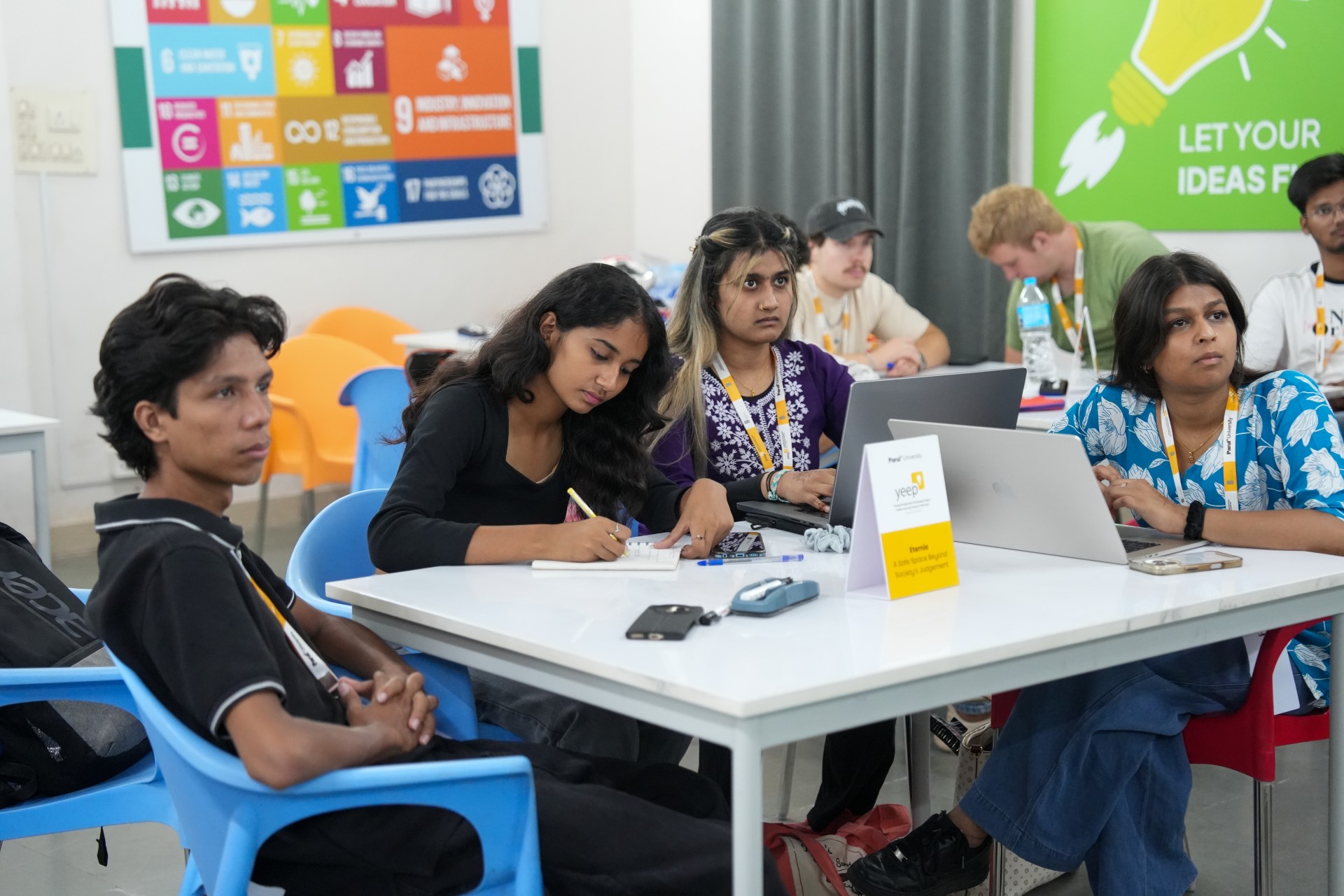
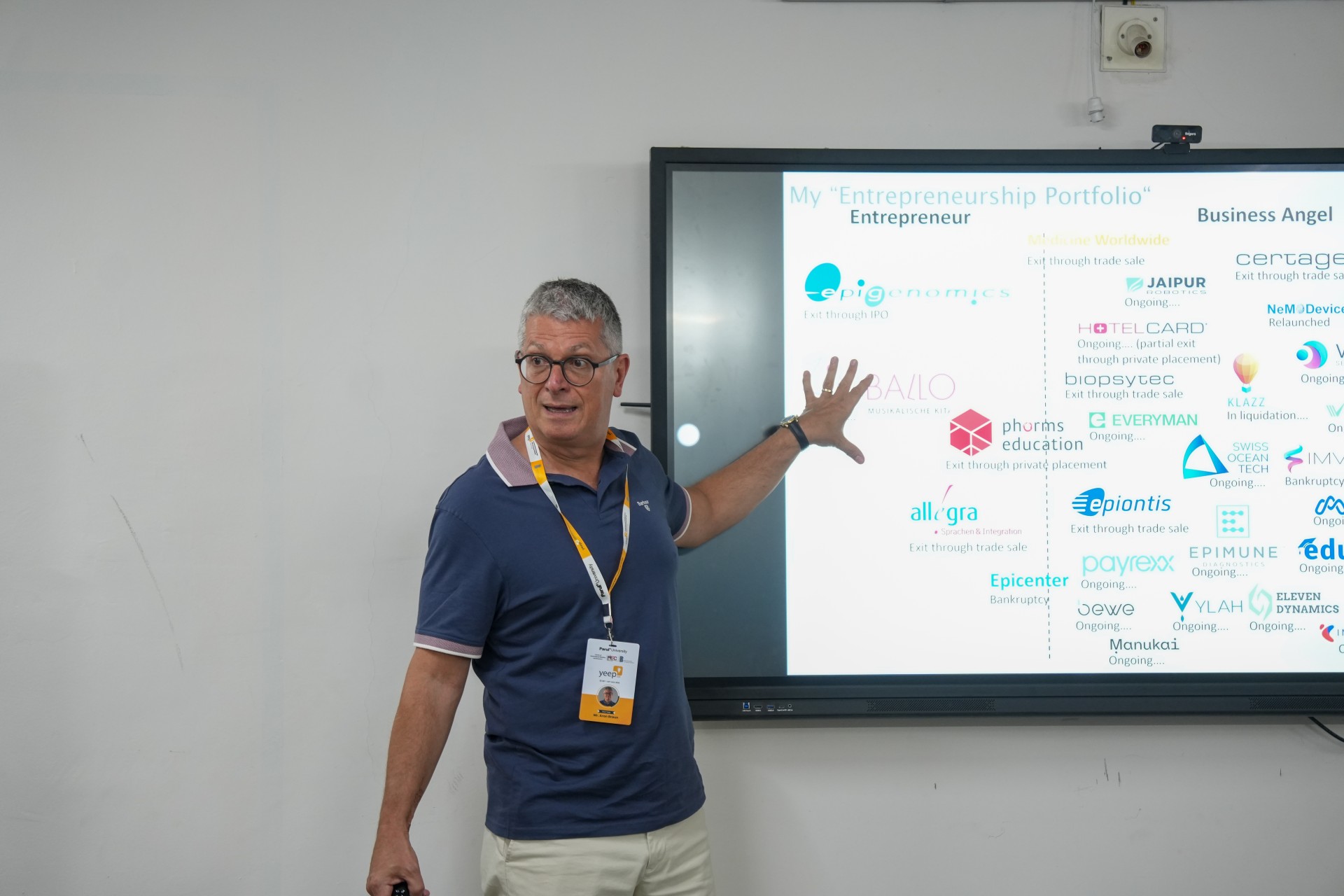
The top reason for any startup failure is a lack of demand. Founders are busy in their own set of ideas and that’s when they fail validating their ideas. How you commit your time, energy and money is the central step of validating ideas. Hence, as known as Evidence-based Validation & Decision. This was the central theme of YEEP – Young Entrepreneur Exchange Program 2026 at Parul University. It was led under the expertise & mentorship of Mr. Aron Braun of Bern University of Applied Sciences, wherein his team researched, interviewed and validated their ideas before building any ideas!
What Is Startup Idea Validation?
Validation is the process of gathering real evidence that a genuine market of people wants your solution and will pay for it, before you build the full product. It replaces the dangerous assumption “I think people will love this” with the far safer “I have shown that people do.” Done well, validation either gives you the confidence to build or saves you from an expensive mistake, and both outcomes are wins.
Step 1: Desk Research
Validation starts at the desk. The secondary research begins at Desk wherein studying information, market reports, competitor products, industry data and existing case studies are reviewed properly. It is indeed fast and inexpensive and it tells you what problems are real and how to solve them perfectly. This phase prepares you for asking real questions to the target audience!
Step 2: Customer and Expert Interviews
The heart of validation is talking to people, and there are two kinds of conversation. Customer interviews put you in front of the people you hope to serve, to understand their real problems in their own words, rather than pitching your solution. Expert interviews put you in front of someone who has worked in the field for years; they take effort to arrange, but you learn a great deal very quickly. The golden rule is to – Listen more than you talk and to ask about problems and behaviour without seeking praise or validation!
Talk to a person who has worked in the field for years. It takes time to set up, but you learn a lot fast.
– From the YEEP Research Session.
Step 3: Field Work and Market Testing
Research and interviews only take you so far; eventually you must test in the real world. Field work means going to where your customers actually are, observing how they behave, and testing whether they respond to your solution. At YEEP 2026, teams spent a dedicated field work day visiting real settings and running market tests, and returned with something invaluable: concrete evidence of what real people actually want, which let them improve their prototypes and build products people would genuinely use. A simple Minimum Viable Product, a lean, working version of the idea, is often the best tool for this real-world test.
The Process of Validation
- Whether the problem is real: Do people actually experience the problem you think they do, and how much does it matter to them?
- Whether your solution fits: Does your proposed solution address that problem in a way people find valuable?
- Whether they will pay: Is there real demand, and will people pay a price that makes the business viable?
- What to change: The specific improvements your prototype needs before a wider launch.
#YEEPEntrepreneurship2026 – Pitch it better with Structure, Template & Delivery!
How Do Parul University and PIERC Build Validation Into the Process?
Parul University treats validation as a discipline, not an afterthought. Through PIERC and programmes like YEEP, founders are guided to research and test demand before building, and the campus itself, with 70,500-plus students, acts as a ready market to test products and gather feedback before going wider. This validation-first culture is part of why PIERC’s ecosystem has supported 300-plus startups generating Rs 60 crore-plus in revenue. Students learn the methods in management and entrepreneurship programmes and apply them live through PIERC.
FAQs
What is a startup idea validation?
Validation of an idea is the process of gathering evidence based information and solution driven approach before finalising the full product. By doing this, it diminishes assumptions and helps you with research, proofs, interviews, real-world testing and gives you confidence to save you from an expensive mistake.
Define the core difference between desk research & field research?
Desk research begins by reviewing the information that exists already such as market reports, competitor data, case studies and research papers. Field research is the one where action begins via real time interviews, observations, and actual observations.
What’s the role of Parul University in validating founder ideas?
Parul University’s PIERC programmes like Young Entrepreneur Exchange Program (YEEP) 2026 help founders to research and test demand before building and growing. The campus hosts 70,500 students and so the validation comes from the real audience as well. From first validation to the ecosystem of 300+ startups, they’ve generated 60 crore plus in revenue!