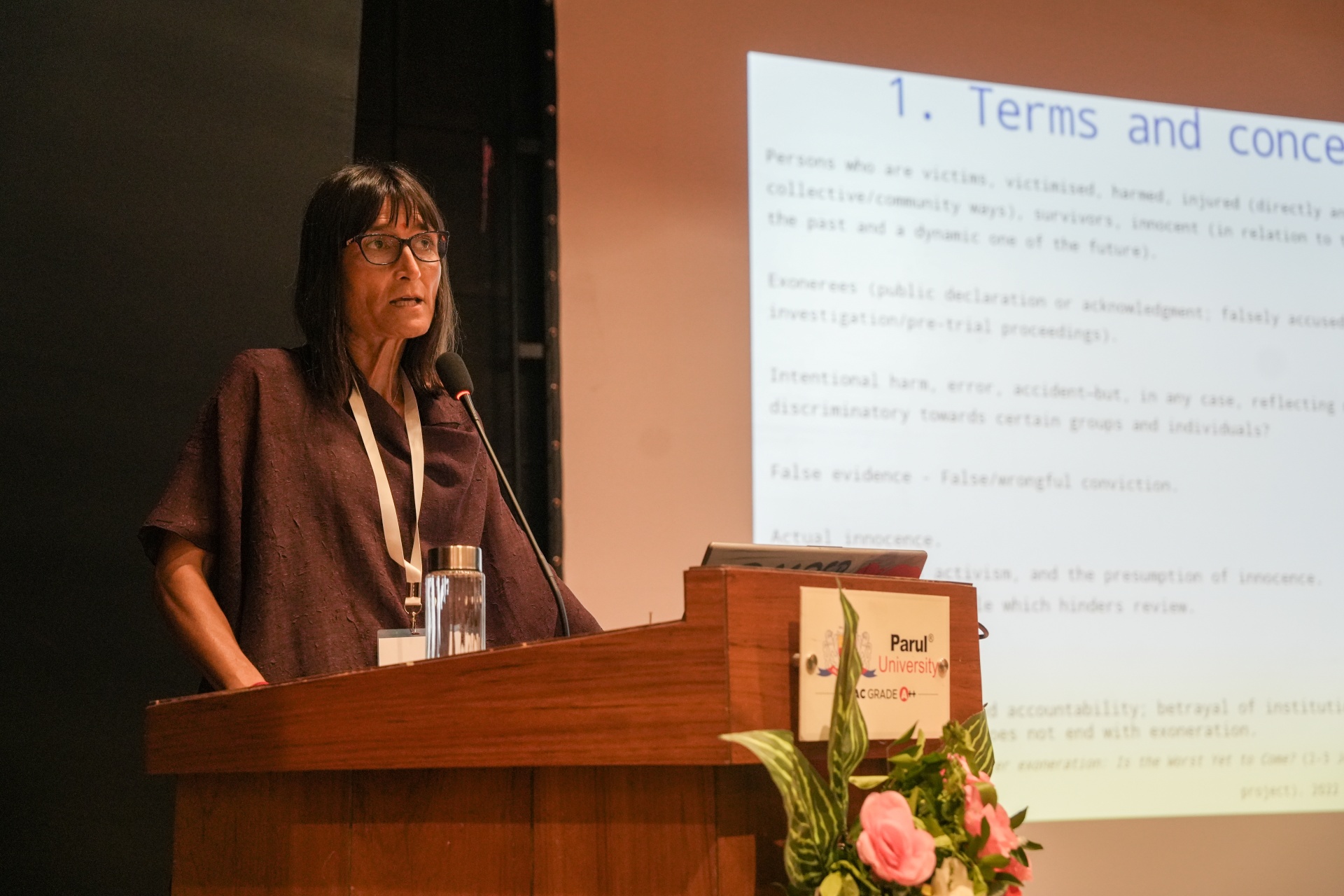
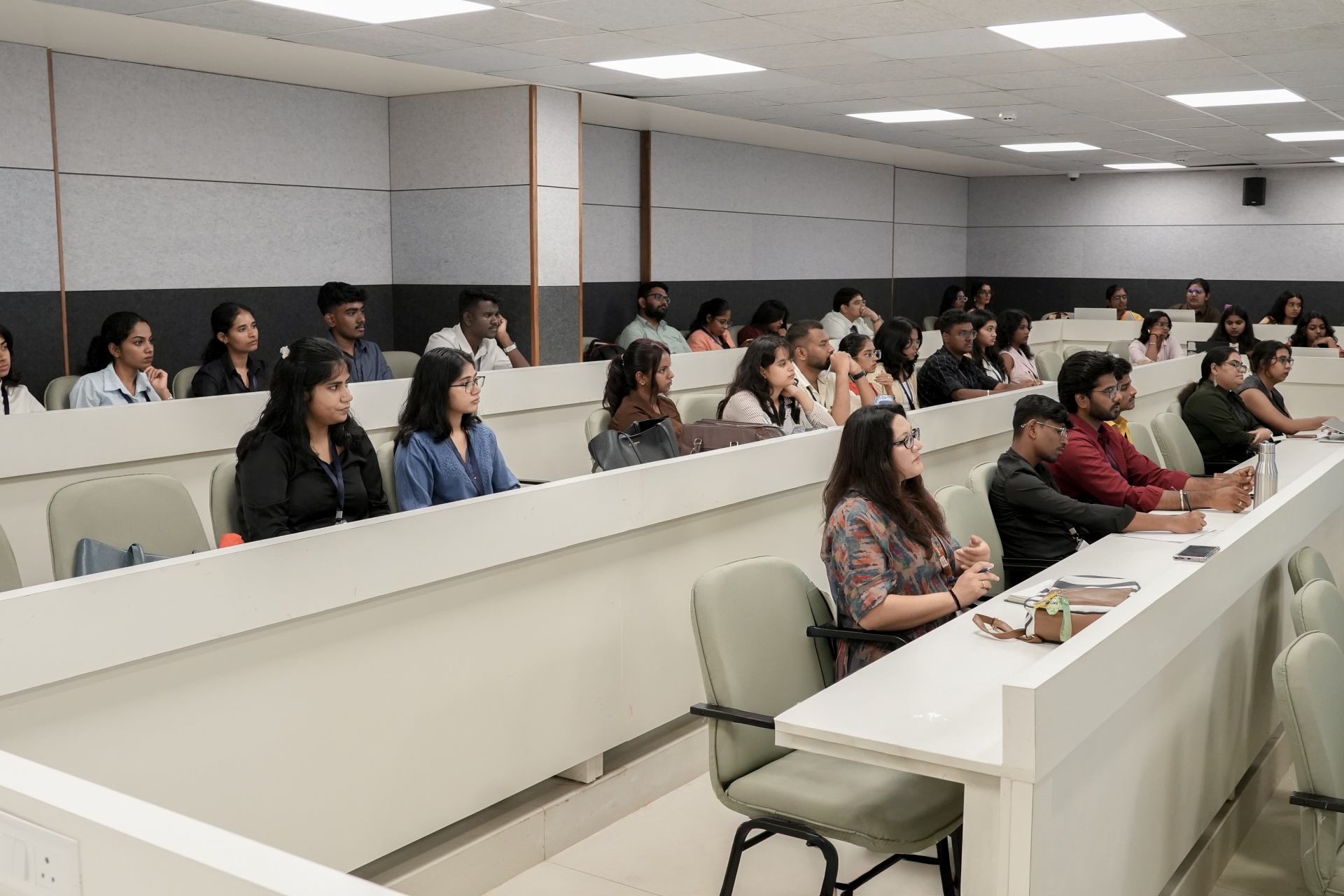
Not all serious harm is treated as crime. That insight sits at the heart of green criminology, and it was the theme of a keynote by Prof. Dr. Nigel South, Emeritus Professor at the University of Essex and one of the field’s founding figures, at Parul University’s ICGCV 2026. Here is a clear introduction.
What Is Green Criminology?
Green criminology examines crimes and harms to the environment, ranging from pollution to wildlife trafficking and deforestation to corporate negligence. Criminology is a view on the world, or a perspective, as Prof. South described it, not a theory, and green criminology extends this view beyond threats to human welfare to threats to the natural environment, ecosystems, wildlife, and natural resources. But its research extends beyond law-breaking crimes to those that are not necessarily criminal, such as environmental pollution, corruption of the environment, and corporate practices that may fall outside the bounds of criminal law and cause catastrophic harm. The field, which began with the late-twentieth-century work of scholars such as Michael Lynch, acknowledges a simple truth: Human societies are not somehow separate from nature, and therefore when people harm nature, they harm themselves.
In which division of the world will Southern green criminology succeed?
Much of Prof. South’s keynote focused on Southern Green Criminology, an effort to redress a historical imbalance. Criminological theory has been dominated by a European and North American perspective for decades. Southern Green Criminology aims to move that lens to reflect the lived experiences, knowledge systems, and cultural contexts of the Global South and of indigenous communities specifically, who have traditionally been marginalised from the scholarship discourse. Prof. South emphasised a note of “academic caution” and indicated that these views should be approached with critical thinking and debate, not uncritical acceptance, in order to make the fields evolve through evidence and debate.
Interrogating the Sustainable Development Goals
Prof. South asked the provocative question, “Is ‘sustainable development’ sustainable?” He claimed that these SDGs (SDG 15 – life on land and SDG 16 – peace, justice, and strong institutions) are very close to the heart of green criminology and require political will, institutional cooperation, and the challenge of structural inequality for their implementation. Often, sustainable development is sold as limitless growth coupled with justice and a clean environment; but in the case of unstable areas or poor governance, this can be empty. In fact, he said, justice and security are inextricable from true sustainability: When the environment deteriorates, inequality increases, populations are forced to move, and conflicts over limited resources inevitably arise.
Slow Violence and Eco-Victimology
One of the keynote’s most important ideas was that environmental harm demands a rethinking of who counts as a victim, a field Prof. South called eco-victimology. When a factory poisons a river, the victims extend far beyond a single jurisdiction: climate refugees, indigenous communities losing ancestral land, and the ecosystems themselves. He used the concept of “slow violence” to explain how much ecological destruction unfolds, not as a dramatic, newsworthy event, but as a slow, largely invisible poisoning of soil, water, and air over decades. India, he noted, faces many such quiet crises: pollution, deforestation, illegal mining, wildlife trafficking, and hazardous waste, showing that environmental degradation is not merely a regulatory failure but a systemic social harm.
The Paradox of Green Technology
In a striking turn, Prof. South cautioned against treating green technology as an unqualified saviour. Producing renewable-energy infrastructure, electric vehicles, solar panels, and digital networks requires large amounts of mined raw materials, placing new pressure on fragile ecosystems so that, in a sense, parts of the earth are damaged to save it. He linked this to India’s growing e-waste crisis, driven by rapid technological turnover and products designed to become obsolete. The answer, he suggested, lies not in rejecting technology but in demanding responsible production, recycling, and a genuine transition to a circular economy in which waste is minimised, exactly the kind of thinking behind research that turns discarded materials into new resources.
The Rise of Ecocide
International law is beginning to catch up. Prof. South described the growing movement to recognise “ecocide,” severe, widespread environmental destruction, as a serious international crime, no longer scrutinised only in the context of war. India is part of this evolution, with judicial conversations around environmental crime gaining traction and courts increasingly recognising internationally proposed definitions. But he was clear that translating rulings into action remains difficult: fragmented legal frameworks, procedural delays, and under-resourced enforcement mean that, in his words, a law without enforcement is only a suggestion.
Green Criminology in Practice: Four India Case Studies
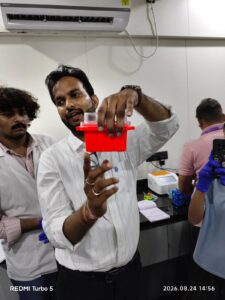
A companion workshop, led by Prof. South with Prof. Dr. Avi Brisman and Dr. Tammy Ayres, made these ideas concrete through student analyses of real Indian environmental harms, each illustrating a key green-criminology theme:
- Agricultural runoff and “Blue Baby Syndrome”: Excessive nitrogen fertiliser polluting groundwater across several states, causing a dangerous infant condition, a harm that spreads across space and time, making it hard to locate a single culprit.
- Illegal gold mining: A small operation that grew into large-scale ecological destruction, leaving toxic contamination in soil and water long after the operators had gone, showing how environmental harm persists for years.
- Interstate wildlife trafficking: A smuggling network moving protected species (all under the Wildlife Protection Act), disrupted through an intelligence-led investigation, showing crimes against voiceless, non-human victims.
- The Bhopal gas tragedy (1984): A case whose health consequences span generations, used to argue for strict liability, stronger regulation, and modern, technology-assisted prevention.
Across these, a difficult question recurred: how do you rank the severity of environmental crimes when ecosystems are interconnected and much damage is irreversible? The answer, the students and scholars agreed, is that you often cannot, which is precisely what makes green crime a “shifting target” for law.
Beyond GDP: Radical Hope
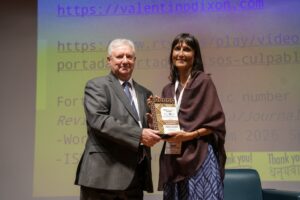
Prof. South concluded by asking whether GDP was the best way to measure progress, as it includes revenue from cutting down forests but fails to consider the ecological cost, and raised the alternative philosophy of “Buen Vivir,” which emphasises living in harmony with nature in contrast to continuous growth. He differentiated passive optimism from active hope, a choice to do the right thing when things are uncertain, and suggested that the only way to address the climate crisis is to have an evidence-based, radical hope. Prof. Dr. Rajendra I Parikh, Dean of the Faculty of Law, Parul University, congratulated him at the end. Interested in exploring environmental justice, criminal law, and emerging areas of legal practice? Explore law programs at Parul University, including Bachelor of Laws (LL.B.), Bachelor of Arts & Bachelor of Laws (Hons.), and Master of Laws (LL.M.) in Business and Corporate Law, and build a strong foundation for a career in law.
FAQs
What is green criminology?
Green criminology is an examination of environmental crimes and harms such as pollution, wildlife trafficking, deforestation, and negligence. It expands the focus of criminology from harm to people to harm to ecosystems, wildlife, and resources at all.
What is meant by ‘slow violence’ in environmental crimes?
Slow violence refers to environmental degradation that happens in a gradual, often invisible way, for instance, when a toxin builds up in the soil and water over a course of many years, rather than in a dramatic event. It can be unnoticed and is often diffuse and quiet until serious damage has been done, making it particularly hazardous and difficult to deal with by means of conventional law.
What is ecocide?
Ecocide is the extreme and widespread harming of the environment. A rising global trend (as discussed at ICGCV 2026) is the inclusion of ecocide as a serious international crime, which can be prosecuted beyond the context of war. These definitions are becoming commonplace in Indian courts.