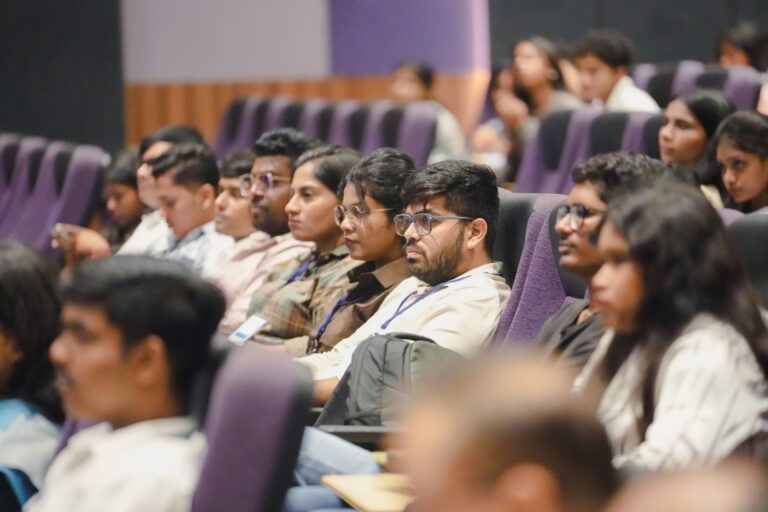
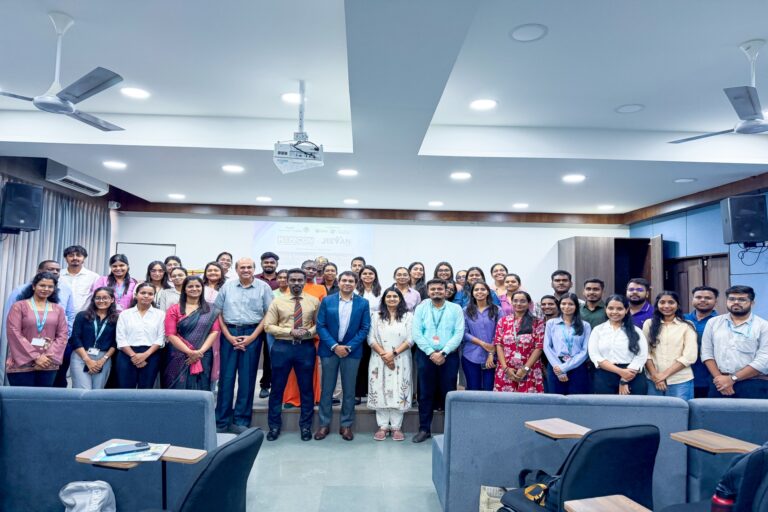
There is a powerful instinct among new founders, especially ambitious ones, to launch big: a full product, a huge market, everything perfect from the first day. At Parul University’s YEEP 2026, a visiting student from Switzerland admitted this was her own instinct, shaped by studying international business, until she heard two founders describe how their businesses actually began. Both started small. It changed how she thought about building. Here is why that lesson matters.
From a Small Idea to Bigger Ambitions!
Start small and that’s when one can gain desired success. It means challenging a big ambition through a small set of conscious choices & decisions. The founders at YEEP 2026 belonged from top industries such as education and fragrances and they inspired students with just one lesson – They began with one product, one customer group, one problem was solved and that’s when the expansion started. The starting point is always very small but it doesn’t mean ambitions can’t be!
The goal can be huge. The first step should be small enough to actually take.
– By an eminent speaker at YEEP 2026, Parul University
Why Starting Big Usually Fails?
Trying to be super perfect on the very first day is truly delusional. This is the reason why most startups fail, it burns invested time, money and energy. The founders should focus on what customers want and they must build a strong connection with them. A grand launch feels productive, but it is often just an expensive guess. Many of the classic reasons startups fail trace back to doing too much, too soon, for too many people.
The Power of One Problem
Focus is a superpower but it can give you profits only when you use it well. When you solve one specific problem for one specific group, other things start settling. You can actually finish & ship your product once your age-group is defined and that’s when you start building credibility, followed by major expansion. A startup that focuses more on helping everyone can never win the market, keep your focus straight and that’s when you can win!
Start Small and Scale Massively!
Starting small isn’t a weakness, it’s a set of conscious choices & decisions. The pattern is really simple – build a small version of your idea, put it out in front of your customer, validate your idea, figure out the exact product market fit, and then move towards expansion. One can earn the right scale by proving that “Small Works”, and that’s how each successful company functions!
Parul University’s Role in Elevating Founders!
This is exactly the discipline programmes like YEEP build through learning by doing . Student teams are pushed to narrow a broad idea into one testable product, take it to real people, and refine it, rather than polish a grand plan in a classroom. Through PIERC, that habit, start small, test, then scale, is treated as a core founder skill.