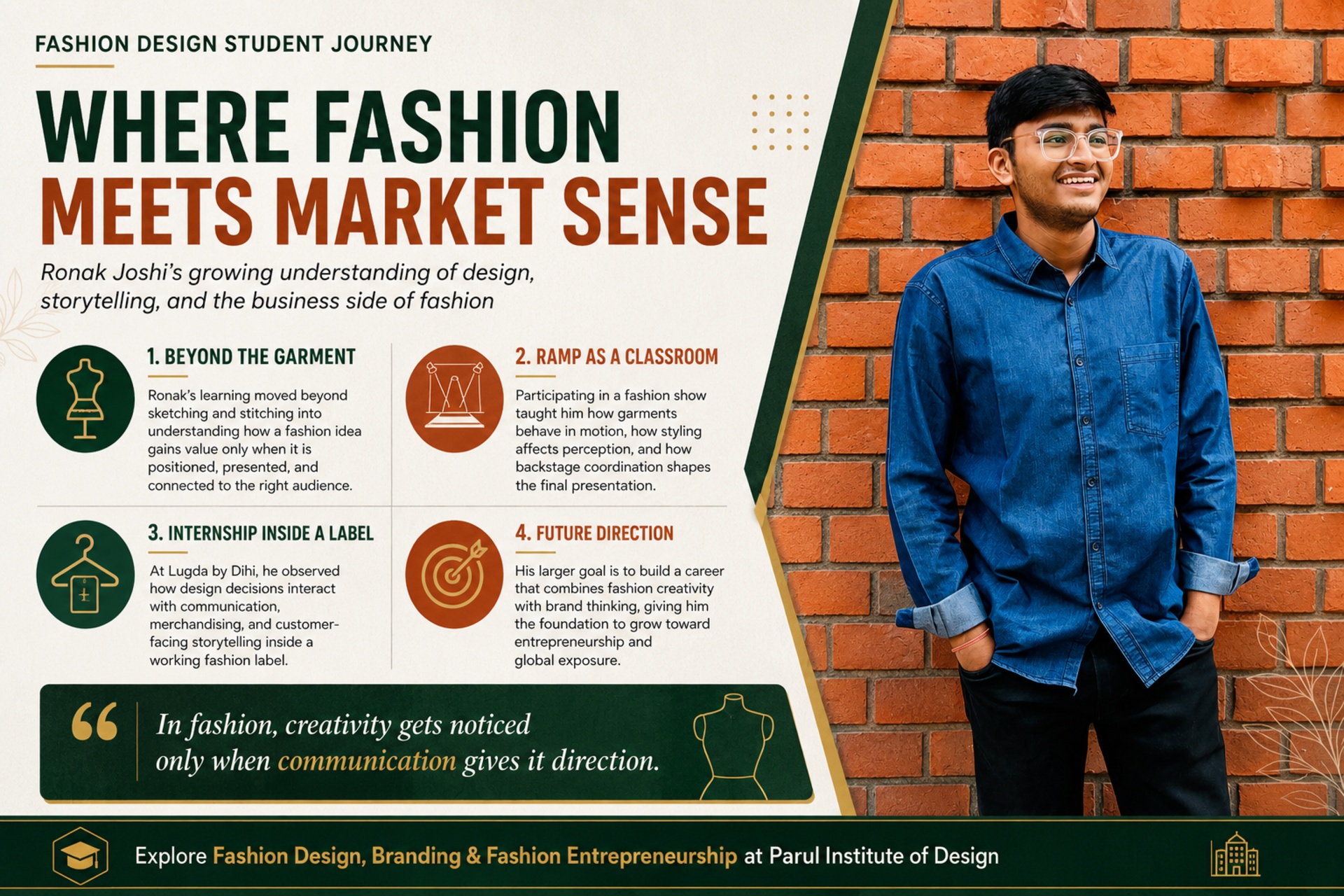
When we usually ask someone, what’s the core role of a fashion designer? They will say a few random words such as “sketching,” “tailoring,” or “someone making garments.” This is the real gap: a design that never reaches the correct audience remains a drawing forever.
Meet Ronak Kishor Joshi, a D.Des Fashion Design student (Semester 6) at Parul Institute of Design (PID), Parul University, who has spent his degree discovering the fuller picture: that fashion lives at the meeting point of creativity and communication, of design and marketing. From Vadodara and a schooling background at Shannen CBSE, he has used his university years to explore the field from several angles at once.
Fashion Design Is More Than the Sketch
Fashion designing isn’t just saving ideas on Pinterest or just basic sketching; it’s a creative discipline. Designing a garment covers idea generation, concept finalization, choosing the right fabric, and shaping a silhouette. But to turn that garment into a reality means figuring out who it is for and how it’s positioned, priced, and produced. Interestingly, designers stop at the creative process and never aim to reach the final destination. Hence, exposure plays a major role, and so Ronak mastered the ecosystem at all levels!
Learning on the Ramp: Lessons from a Fashion Show
One of those experiences was taking part in a fashion show during an earlier semester. A show is where fashion stops being an idea on paper and becomes a live, coordinated performance. It teaches things a classroom cannot: how a garment reads under lights and in motion, how timing and sequencing shape an audience’s response, and how many people—stylists, coordinators, models, and crew—must work in sync for a few minutes on the ramp to land. For a design student, this is a first real lesson in presentation, the understanding that how a creation is shown is part of the creation itself.
Inside a Fashion Label: The Lugda by Dihi Internship
Ronak’s most valuable exposure came through an internship at Lugda by Dihi, a fashion label whose very name reflects its roots: “Lugda” is a Gujarati word for cloth, and the brand, co-founded by Disha and Hiral, is known for weaving Indian art, craft, and sustainability into contemporary womenswear. Interning at a working label like this puts a student inside the real machinery of fashion, where creative vision meets deadlines, customers, and commerce.
His focus during the internship was pointed and practical: to understand how the design and marketing processes work together. That is exactly the right thing for a young designer to study, because it is where many creative careers either take off or stall. He was able to observe how a label moves an idea from the design table toward the customer and how the creative side of fashion connects with its business and communication side. It is the kind of insight that reshapes how a student sees their own future in the field.
Design and Marketing Belong Together in Fashion!
The lesson at the heart of Ronak’s journey is one every aspiring designer should absorb early: in fashion, design and marketing are two halves of one process, not separate departments. Design creates value; marketing communicates it. A beautiful collection that no one understands or discovers will not sell, and a brilliantly marketed product with no real design substance will not last. The strongest fashion brands, including craft-led labels like the one where Ronak interned, succeed precisely because their storytelling and their design come from the same idea.
A design creates value. Marketing makes sure the right people ever get to feel it.
– On the business of fashion
For a designer, marketing literacy is not a distraction from creativity; it is what gives creativity reach. Understanding a customer, a brand’s story, pricing, and presentation lets a designer make better creative decisions, not fewer. This is why forward-looking design education encourages students to understand the whole journey of a garment, from concept to customer, rather than only the drawing.
Importance of Practical Exposure in Design Education!
Ronak’s path truly showcases how design is best learned by doing internships and by working on real-time projects under fashion designers. A classroom helps you with a foundation, but industry exposure teaches you a set of principles that preps you for the corporate world. A fashion show teaches the real presentation, but an internship allows you to work on that single idea which will lure everyone’s attention. This blend of academic learning and exposure is what turns a design student into an industry-ready professional.
Global Ambitions: A Foundation for the World!
With his undergraduate journey progressing, Ronak is already looking ahead and thinking globally. He plans to pursue further studies abroad to experience a different academic environment and gain wider exposure to the international fashion industry. It is an ambition his time at Parul University has helped build rather than limit: a strong creative foundation, real industry exposure, and the confidence that comes from having already stepped beyond the classroom. For students with global aspirations, Parul University’s international ecosystem and partnerships are designed to help them take exactly this kind of next step, carrying the university’s grounding with them onto a wider stage.
The Importance of Doing a Fashion Degree!
A fashion design education opens onto far more than a single job title, and understanding the range helps a student aim well. A designer’s skills apply across the industry:
- Fashion and apparel designer: Creating collections for labels, studios, or one’s own brand.
- Stylist and creative direction: Shaping how looks are presented for shoots, shows, and campaigns.
- Fashion marketing and branding: The very bridge Ronak explored, connecting design to customers through storytelling, campaigns, and brand strategy.
- Merchandising and product development: Deciding what gets made, in what quantities, and at what price, where design meets business most directly.
- Entrepreneur and label founder: Building a brand of one’s own, exactly the path taken by founders like those behind the label where Ronak interned.
The thread running through all of these is the same one Ronak has been pulling on: the designers with the widest options are those who understand both the creative and the commercial sides of fashion. Marketing literacy does not narrow a designer’s path; it multiplies it.
A Journey of Exploration
Ronak Kishor Joshi’s story is still being written, and that is the point. From schooling to a D.Design fashion design degree, he has treated his education as a core invitation to explore fashion from all sides. In doing so, he has mastered the art of turning his hobby into a revenue-driven passion. From fashion design and technology to merchandising, discover your path at Parul Institute of Design with B.Des Fashion Design Technology and M.Des Fashion Merchandising programs and get to work for the trending agencies of India!
FAQs
What’s the importance of marketing in fashion designing?
Be it fashion, design, or any field, marketing is the other side of the coin. Design creates value; marketing communicates it and allows users to pay for it. A designer who’s passionate about storytelling, branding, and presentation truly makes their work commendable!
What is the importance of doing a fashion design internship?
A fashion design internship teaches how a label and couture truly work. From moving ideas to finalising fabric to understanding how merchandising communication works, it allows you to work on real-time projects, and that goes beyond a classroom!
What is the D.Des Fashion Design program at Parul University?
D.Des Fashion Design at Parul Institute of Design (PID), Parul University, is a design program that builds both creative and professional skills in fashion. Alongside studio learning, students gain industry exposure through activities such as fashion shows and internships, preparing them for real careers in the fashion ecosystem.