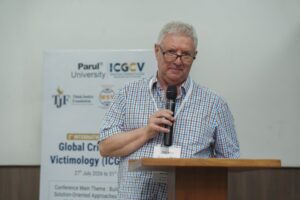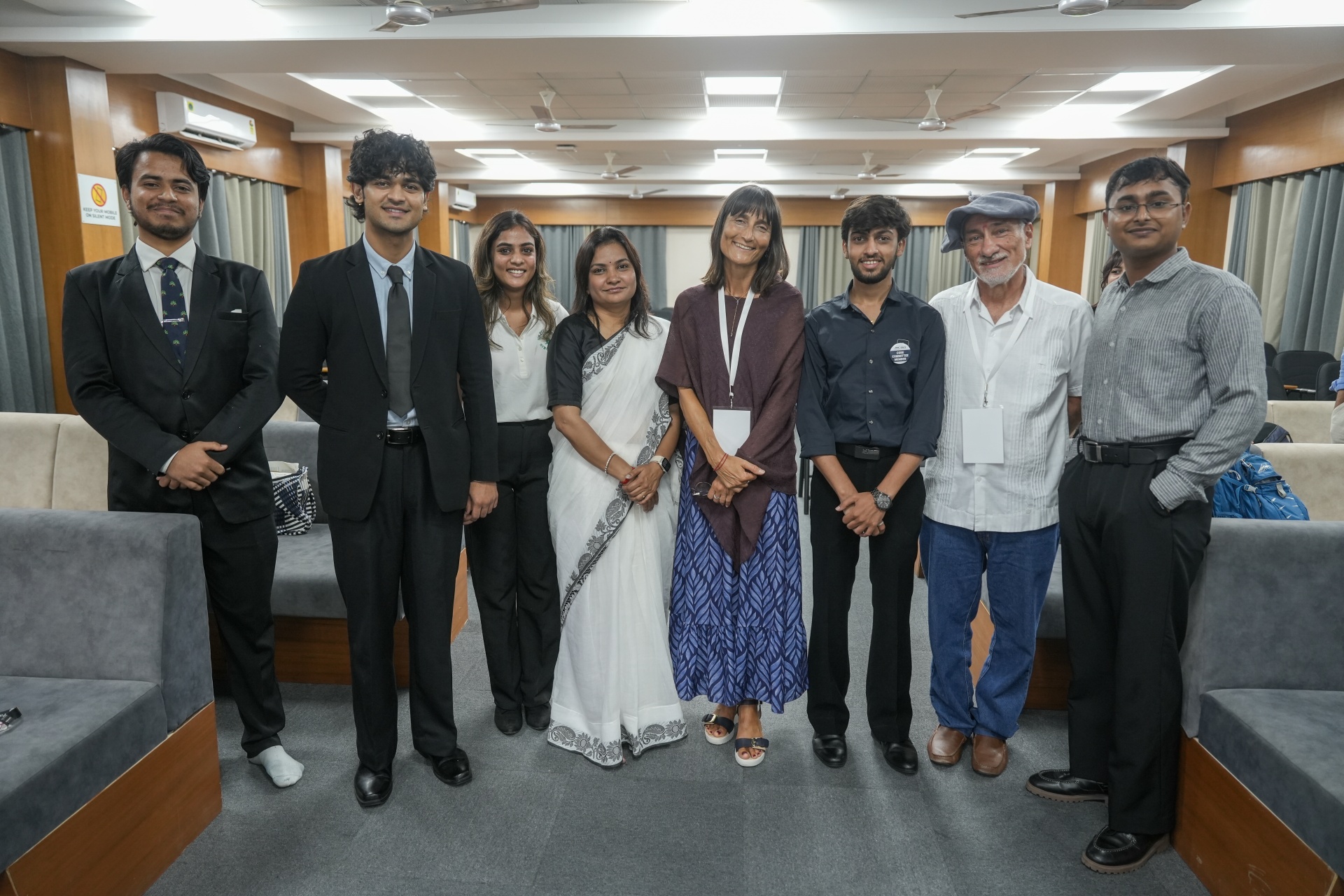
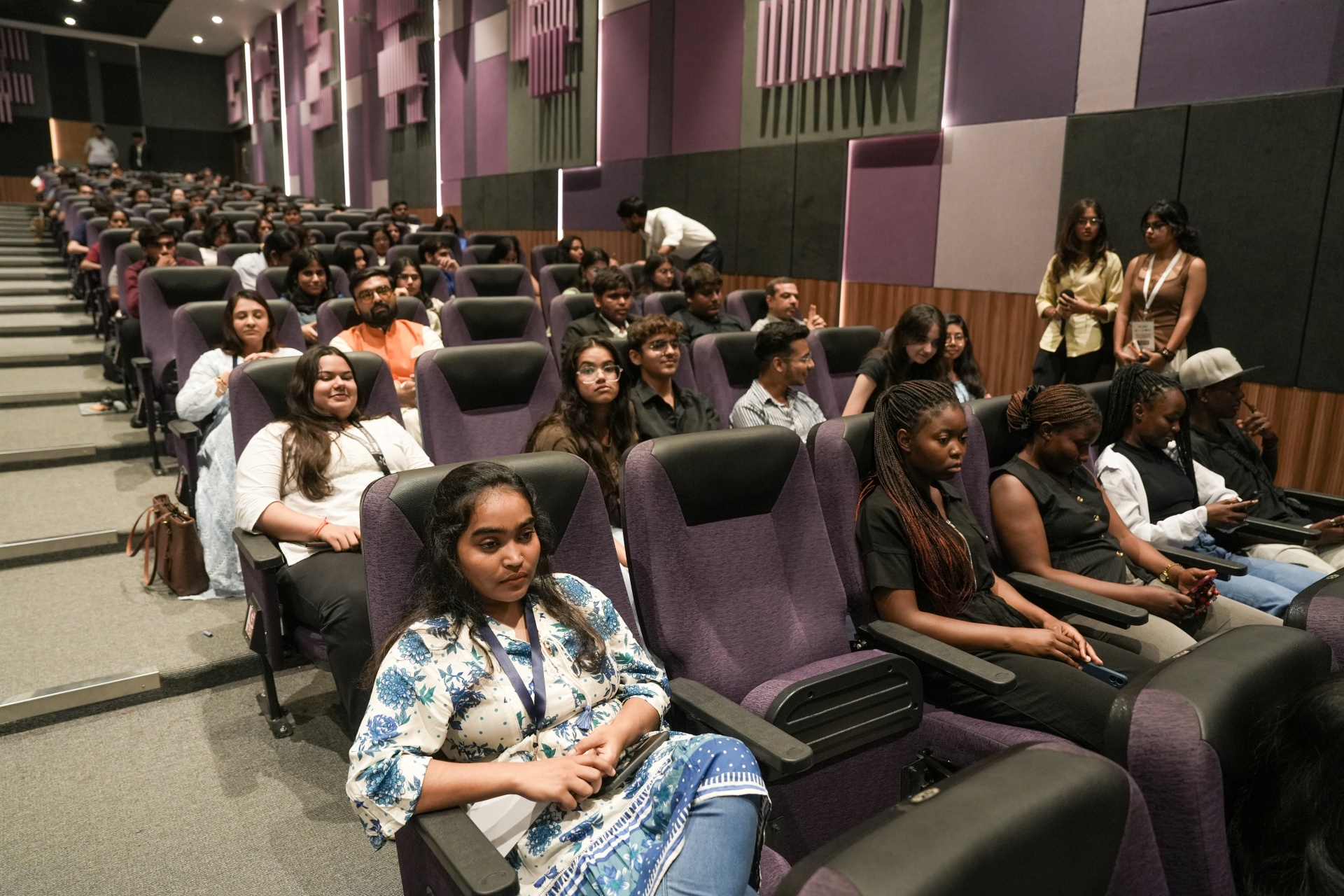
Victimology, the study of victims and their needs, asks us to see harm that conventional justice can overlook. Few examples are as striking as the one Prof. Dr. Gema Maria Varona Martinez, President of the World Society of Victimology, presented in her opening keynote atParul University’s ICGCV 2026 : the victims created by the justice system itself.
The Ripple Effect
Prof. Varona illustrated her argument with landmark Spanish cases she has researched. Rafael Ricardi spent thirteen years imprisoned for a crime he did not commit, convicted largely on faulty identification and cleared only through advances in DNA analysis. The case of Dolores Vazquez showed how public opinion, media narratives, and prejudice can derail an investigation. And Ahmed Tommouhi spent nearly fifteen years imprisoned before compensation and acknowledgement came, and only after prolonged legal battles. Through such cases, she showed that a miscarriage of justice creates multiple victims at once: the wrongly convicted, their families (who become secondary victims), and the original crime’s real victims, left without resolution while the actual perpetrator remains free.
Why Compensation Is Not Enough
A central theme of the keynote was that justice cannot end with a legal exoneration or a compensation check. As Prof. Varona argued, no financial payment can restore years of lost freedom, dignity, and opportunity. Meaningful justice requires more: public acknowledgement of the error, institutional accountability, psychological rehabilitation, guided reintegration, and reforms to prevent future miscarriages. She pointed to the growing global movement, Innocence Projects, conviction review units, and advances in DNA forensics, working to identify wrongful convictions and strengthen accountability, and stressed that this demands interdisciplinary collaboration among lawyers, psychologists, criminologists, and forensic experts.
Restorative Justice: Reclaiming the Conflict
This idea, that justice should repair rather than merely punish, ran through a related session on criminal mediation, led by Prof. Dr. Ulf Christian Eiras Nordenstahl of the University of Flores, Argentina, with Prof. Varona. Drawing on the Norwegian criminologist Nils Christie’s idea of “conflict as property,” Prof. Nordenstahl argued that conventional justice “steals” conflict from the people it affects: when a crime is treated purely as an offence against the state, the victim becomes a mere witness and the offender a case number, and both lose the chance to be heard. Restorative justice reverses this, asking not only “what law was broken?” but “who was harmed, what do they need, and who is responsible for repair?”
An Ancient Wisdom, and a Demanding Practice
Far from being a modern invention, restorative justice echoes practices long used by indigenous communities, the Maori, the Zulu, and the Mapuche, among whom harm is seen as a rupture in the community that the community must help heal. Prof. Nordenstahl described how his teams in Argentina apply these principles through criminal mediation: a trained mediator creates a safe, voluntary dialogue, often seated in a circle so no one holds more importance than another. Its essential requirement is genuine, voluntary willingness; it cannot be forced.
Hard Questions: Mediation and Serious Crime
The session did not avoid the hardest questions. A delegate, Dr. Usman Suleiman Sarki of Nigeria, challenged whether mediation can apply to the gravest crimes, arguing that in contexts facing terrorism and serious violence, punitive deterrence is essential. Prof. Varona validated the concern while reframing it around time: no one expects a victim and offender to meet the day after a crime; such dialogues, where they happen, come years later, and only if the victim wishes it. She cited a restorative program that brought together victims and perpetrators of terrorism across several countries, describing how, for some participants, a direct encounter answered questions they needed answered to move forward. The system’s duty, she stressed, is to offer the opportunity, never to compel it, and a victim who declines is not lesser.
Victim Compensation Rights in India
The conference also brought this conversation home. Mr. Nipun Saxena, an Advocate of the Supreme Court of India, addressed a decade of victim-compensation rights in India and the challenges ahead, a reminder that building victim-centered justice is not only a matter of philosophy but also of concrete legal frameworks, access to justice, and institutional will. Together, these sessions advanced a single message: a justice system is measured not only by whom it convicts but also by how well it sees and repairs harm to every victim, including those it creates.
FAQs
What’s victim-centered justice in detail?
It keeps needs, dignity, and recovery of victims at the heart of the justice process. Instead of focusing on offenders, it asks who was harmed, what they need, and how it can be repaired, rather than overlooking conventional systems.
Define restorative justice in depth?
It’s an approach that focuses on repairing the harm caused by an offence via a mediated dialogue between affected parties. Instead of asking what law was broken and how to punish, it asks who was harmed and who’s responsible for it. How to make things right is the real approach, as drawn from practices long used by indigenous communities globally!
What is “eclipsed victimisation”?
“Eclipsed victimisation,” a concept presented by Prof. Dr. Gema Maria Varona Martinez, refers to the largely invisible harm suffered by people wrongly convicted by the criminal justice system. Even after exoneration, they often endure lasting trauma, stigma, and hardship, yet receive little recognition or support; their victimization “elipsed”, or overshadowed, by the system meant to protect the innocent.