Adhigam Aayam 4.0 at Parul University!
- • A two-day international symposium on learner-centered teaching, held 13 to 14 October 2026.
- • A keynote from George Mason University and a panel on teaching in the age of AI.
- • Two faculty-development workshops: cinema as a reflective tool and gamification.
- • A competition of 27 presentations by 42 educators from 18 higher-education institutions and three schools.
13 to 14 Oct 2026
Fourth edition of the symposium
27 presentations
by 42 educators from 18 HEIs and 3 schools
Keynote by George Mason
Prof. Padmanabhan Seshaiyer, USA
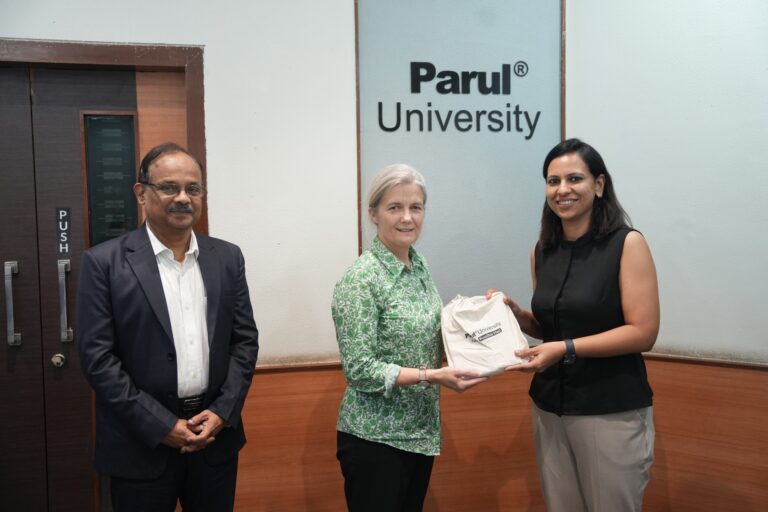
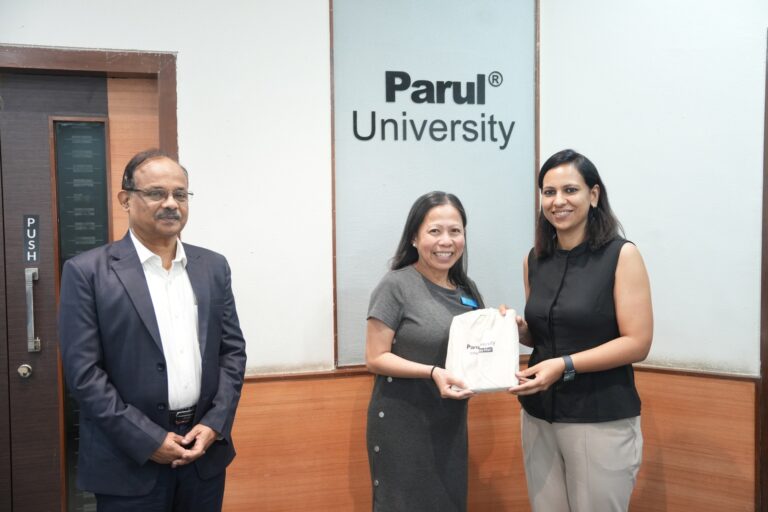
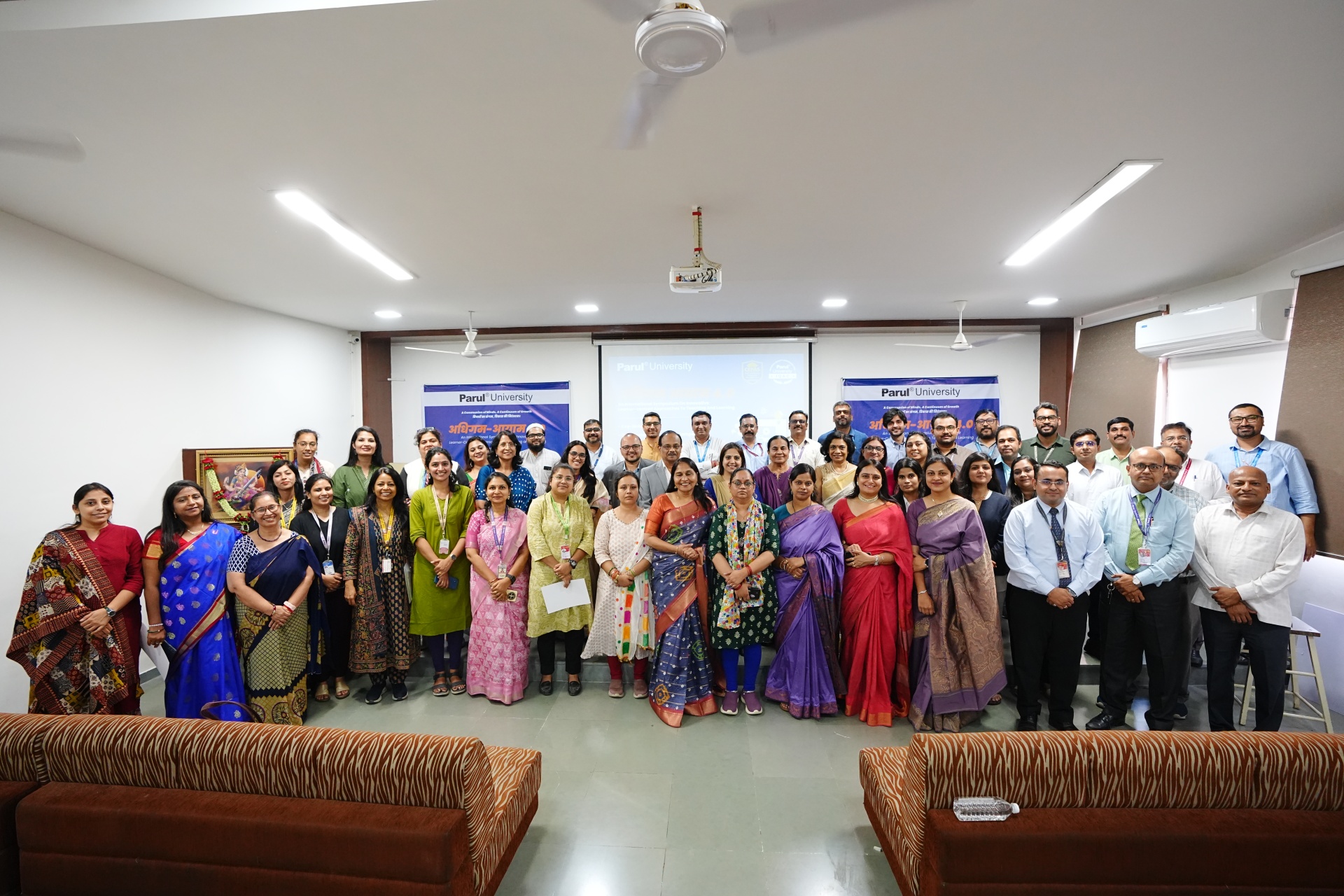
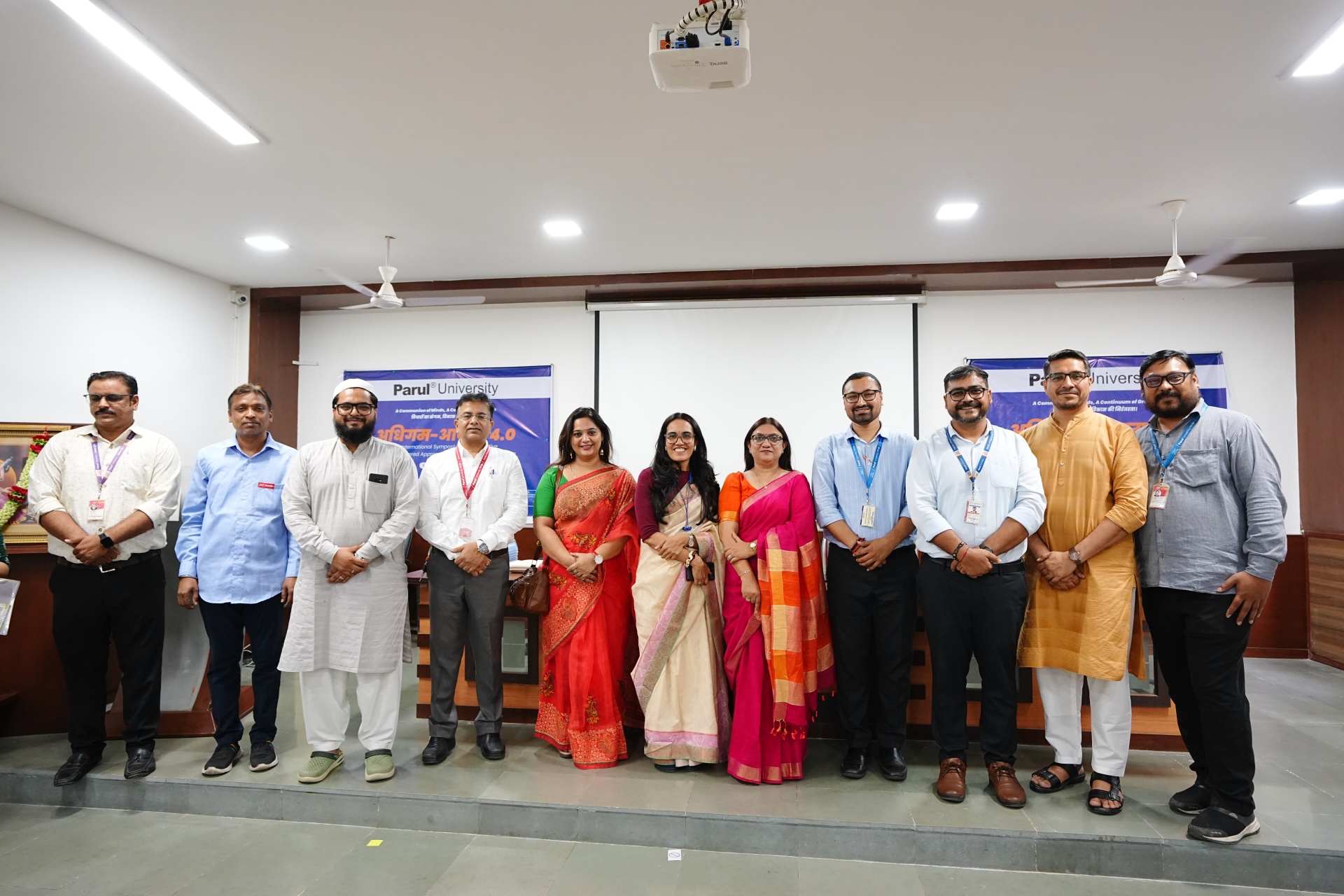
The 4th edition of the International Symposium on Learner-Centered Teaching, titled ‘Adhigam-Aayam 4.0,’ was organized by the Internal Quality Assurance Cell and Centre of Excellence for Pedagogical and Andragogical Sciences at Parul University on 13th and 14th October 2026. The program was made up of two higher-education (HE) faculty-development workshops, a keynote talk by George Mason University (GMU), a panel session on ‘Teaching in the Age of AI,’ and a competition among 27 presentations from educators at 18 HEIs and 3 schools.
What the symposium was about
Adhigam-Aayam is based on one argument: teaching must shift from passive, lecture-based delivery to active, experiential, inclusive, and technology-based teaching, as per NEP 2020 and outcome-based education. The 2026 edition had the tagline “A Communion of Minds, A Continuum of Growth. It’s claimed to give all levels and disciplines of educators both a forum to share and learn from their own and other teachers’ best practices, as well as a forum to learn from postgraduate and professional faculty.
The keynote and the panel
The academic weight of the second day came from its speakers. The keynote was delivered by Prof. Padmanabhan Seshaiyer of George Mason University in the United States on data-driven instructional practices for raising student engagement. The panel that followed took on a question every educator now faces: “Rethinking Teaching, Learning, and Assessment in the Age when Machines Know Everything and Knowledge Is Everywhere.” What do teaching and assessment mean when any fact is a search away and a machine can answer most questions?
| Role | Name | Affiliation |
|---|---|---|
| Keynote | Prof. Padmanabhan Seshaier | Professor and Director, COMPLETE Center, George Mason University, USA |
| Panellist | Prof. Nikleia Eteokleous | Vice Rector for Teaching and Learning, Frederick University, Cyprus |
| Panellist | Dr. Surendrasinh Gohil | Professor and Head of English, Shri Govind Guru University, Gujarat |
| Panellist | Dr. Abhilasha Rakesh Vyas | Cloud Security Professional and AWS Community Builder, GESIA IT Association |
| Panellist | Dr. Rohit Goyal | Dean Academics, Parul University |
| Moderator | Dr. Kavita Varma | Director, CEPAS, Parul University |
Two workshops: films and games
The faculty development pre-symposium workshops took a couple of unexpected turns the day before the main symposium. The first was undertaken by Dr. Anuradha Joshi, Dr. Pawan Toshniwal, and Dr. Saurabh Parmar of PIMSR using cinema as a reflective tool. Using carefully selected Hindi and international media, the participants were exposed to the themes of empathy, mentoring, professionalism, educator identity, and well-being, considering these films as teachable moments to correspond to the outcomes of faculty development. Dr. Kavita Varma, Director of Centre of Excellence for Pedagogical and Andragogical Sciences was assigned the second one, which had the theme of gamification. It involved the concepts of game design, including freedom to fail and speedy feedback, and led the participants through a sequence of story, challenge, rules, strategy, and payoff.
| Track | Workshop | Led by |
|---|---|---|
| Track I | Lights, Camera, Learning! The Pedagogy of Films in Faculty Development | Dr. Anuradha Joshi, Dr. Pawan Toshniwal, and Dr. Saurabh Parmar (PIMSR) |
| Track II | Level Up Your Teaching: Gamification Strategies for Educators | Dr. Kavita Varma, Director, CEPAS |
The competition, by the numbers
The core of the second day was a presentation competition. A total of 27 presentations from 42 participants in 6 groups and 21 individual entries from 3 schools and 18 higher-education institutions were selected. The teachers belonged to the fields of preschool, postgraduate, and professional teaching in medicine, Ayurveda, homoeopathy, physiotherapy, pharmacy, engineering, computer applications, management, mathematics, English, and early childhood education. Their techniques are a map of the journey learner-centred teaching is taking: simulation and experiential learning, AI-based adaptive feedback, learning in groups, learning in teams, emotional intelligence and wellbeing, creative learning (film, microlearning, and art integration), Indian Knowledge Systems (connecting to contemporary teaching), and low-cost inclusion (smartphone labs and fearless maths).
Why it matters?
A teaching symposium is easy to dismiss as inward-looking. This one is the opposite. A university put its own teaching practice up for examination, brought in international voices to challenge it, and judged classroom ideas across a dozen disciplines side by side. For a higher-education system reworking itself under NEP 2020, that is the harder and more useful kind of event, and the reason a faculty-development forum is worth more than its two days.
SOURCE AND CONTEXT. Based on the Adhigam-Aayam 4.0 press note and program schedule (Parul University, 13 to 14 October 2026). Speaker names, affiliations, and the competition figures are as recorded in those documents. No remarks are quoted, as none were recorded in the source. Confirm speaker titles before publishing.
People and organisations
- Parul University Host: Vadodara, Gujarat
- IQAC, Parul University Internal Quality Assurance Cell; co-organiser
- CEPAS, Parul University Centre of Excellence for Pedagogical and Andragogical Sciences; co-organiser
- Prof. Padmanabhan Seshaiyer, Keynote, George Mason University, USA
- Prof. Nikleia Eteokleous Panellist; Frederick University, Cyprus
- Dr. Kavita Varma, Director, CEPAS; moderator and workshop lead