To be a premier institution in Engineering & Technology that fosters excellence in education and research with ethics towards inspiring and developing future technocrats.
- To impart quality educational experience with ethical and human approach and skills to students that enables them to become successful technocrats in their chosen career.
- To nurture scientific temperament and promote research and development activities.
- To provide service to industries and communities through educational, technical, and professional activities.
To be a premier department providing competent and ethical Electrical Engineers capable of finding solutions to societal problems.
M1 – To provide quality education and skills to the students of Electrical Engineering, with a focus to develop critical-thinking and problem-solving skills to face the challenges in their career.
M2 – To promote research activities and lifelong learning required for successful professional career.
M3 – To contribute to the society through technical and professional services that is embedded with ethics and humanity.
PEO 1 – To pursue a successful professional career in Electrical Engineering by utilizing fundamental knowledge and skills in providing modern engineering solutions to real world problems.
PEO 2 – To excel in professional careers by applying analytical and critical thinking, lifelong learning abilities and managerial skills.
PEO 3 – To demonstrate interpersonal skills, leadership ability and team building capacity to achieve organization goals and serve society with professional ethics and integrity.
PO1 – Apply knowledge of mathematics, natural science, computing, engineering fundamentals and an engineering specialization to develop the solution of complex engineering problems.
PO2 – Identify, formulate, review research literature and analyze complex engineering problems reaching substantiated conclusions with consideration for sustainable development.
PO3 – Design creative solutions for complex engineering problems and design/develop systems/ components/ processes to meet identified needs with consideration for the public health and safety, whole-life cost, net zero carbon, culture, society and environment as required.
PO4 – Conduct investigations of complex engineering problems using research-based knowledge including design of experiments, modelling, analysis & interpretation of data to provide valid conclusions.
PO5 – Create, select and apply appropriate techniques, resources and modern engineering & IT tools, including prediction and modelling recognizing their limitations to solve complex engineering problems.
PO6 – Analyze and evaluate societal and environmental aspects while solving complex engineering problems for its impact on sustainability with reference to economy, health, safety, legal framework, culture and environment.
PO7 – Apply ethical principles and commit to professional ethics, human values, diversity and inclusion; adhere to national & international laws.
PO8 – Function effectively as an individual, and as a member or leader in diverse/multi-disciplinary teams.
PO9 – Communicate effectively and inclusively within the engineering community and society at large, such as being able to comprehend and write effective reports and design documentation, make effective presentations considering cultural, language, and learning differences.
PO10 – Apply knowledge and understanding of engineering management principles and economic decision-making and apply these to one’s own work, as a member and leader in a team, and to manage projects and in multidisciplinary environments.
PO11 – Recognize the need for, and have the preparation and ability for
- Independent and life-long learning
- Adaptability to new and emerging technologies and
- Critical thinking in the broadest context of technological change.
PSO1 – Electrical System Development & Maintenance: Apply fundamentals of circuit analysis and design, analog and digital electronics, microcontrollers, and engineering standards to the building, testing, operation and maintenance of electrical systems.
PSO2 – Engineering Problem-Solving: Solve complex engineering problems related to control systems, instrumentation systems, and power systems.
Program details overview
Bachelor of Technology in Electrical Engineering
Parul University’s B.Tech in Electrical Engineering equips students with core and advanced skills to design, develop, and maintain intelligent electrical systems that support industries, infrastructure, and sustainable development.
Electrical energy powers the world, from high-voltage grids to smart appliances. With rapid advancements in automation, renewable power, and smart grid technologies, electrical engineers are playing a central role in global progress.
Here is how you can study this program

Bachelor of Technology in Electrical Engineering
The 4-years Bachelor of Technology in Electrical Engineering offers in-depth knowledge in circuit design, power electronics, control systems, and smart energy technologies. Students gain practical experience through advanced labs, industry-linked live projects, and emerging technologies—equipping them to drive innovation in sectors such as energy, automation, manufacturing, and renewable systems.
Secure your place
Batch Commencing
8th July Onwards
Duration
4 years
Credits
180
Seats
60
Fee
1,75,000/- Per Annum
Language
English
Eligibility Criteria
Candidate shall have passed 12th Science with Physics and Mathematics as compulsory subject with Chemistry/Computer Science/Information practice/Computer with 45% for general and 40% for reserved category in theory or theory + practical from recognized board.
*Tuition Fees may vary depending on the Country/State in which the candidate has passed their qualifying examination.
Bachelor of Technology in Electrical Engineering
Designed for diploma holders or professionals with relevant experience, the lateral entry route enables direct admission into the second or third year of the B.Tech program. This pathway fast-tracks students’ academic journey while providing advanced technical training, hands-on exposure, and practical skills tailored for the electrical and power industries.
Secure your place
Batch Commencing
8th July Onwards
Duration
3 Years
Credits
180
Seats
60
Fee
1,75,000/- Per Annum
Language
English
Eligibility Criteria
Candidate shall have passed Diploma engineering with 45% for Open Category and 40% for( SC/ST/SEBC) and can get admission in 2nd year of B.Tech (Lateral Entry) (Candidate can change the specialization from diploma to degree)
*Tuition Fees may vary depending on the Country/State in which the candidate has passed their qualifying examination.
Bachelor of Technology in Electrical Engineering
Parul University’s global degree offerings allow students to explore cross-cultural learning through international exchange programs and dual-degree collaborations. These programs introduce global best practices, international standards in electrical engineering, and global career opportunities—preparing students for impactful roles in the worldwide energy and automation sectors.
Secure your place
Batch Commencing
8th July Onwards
Duration
2+2 Years
Credits
180
Seats
60
Language
English
Eligibility Criteria
Candidate shall have passed 12th Science with Physics and Mathematics as compulsory subject with Chemistry/Computer Science/Information practice/Computer with 45% for general and 40% for reserved category in theory or theory + practical from recognized board. - testing
*Tuition Fees may vary depending on the Country/State in which the candidate has passed their qualifying examination.
B.Tech. in Electrical Engineering (Work Integrated Program)
This B. Tech. in electrical engineering program is for working professionals, where learners will gain greater understanding of electrical systems, while learning to apply these concepts in practice through their workplace settings. The program is designed to provide learners with the practical application to enhance their technical skills and provide them with industry-relevant training/learning experiences. Additionally, this program also allows for flexibility in terms of job/study balance and supports learners with career advancement within their current organisation, as well as enhancing their ability to solve problems and further create a link between the information learned in class, as opposed to how it is applied in real life by actual people.
Secure your place
Batch Commencing
8th July Onwards
Duration
3 Years
Credits
180
Seats
60
Fee
1,85,000/- Per Annum
Language
English
Eligibility Criteria
Professionals working in Registered Industry/Organization (Central/State)/Private/Public Limited Company/MSMEs located within 50 km radial distance from the institute, Minimum of ONE-year Full Time/Regular Working Experience, A candidate must meet the Lateral eligibility criteria as per AICTE norms, Obtained a minimum 3-year Diploma in Engineering/Technology with at least 45% marks (40% for reserved category) in the qualifying examination.
*Tuition Fees may vary depending on the Country/State in which the candidate has passed their qualifying examination.
Extend Your Learning, Walk Away with Dual Degrees
While you are studying your main degree, you can also study another degree as a dual degree program which provides you an opportunity to explore multiple fields of study. With Dual Degree you can study your main degree in physical mode and your second degree in hybrid mode with adjustable study hours

Why study this program
Be a part of a engaging learning atmosphere that gives you the tools to excel in the career of your choice.
Power the World with Innovation
B.Tech in Electrical Engineering equips students with the skills to design, develop, and manage electrical systems that drive industries, infrastructure, and modern technology.
High-Demand
Electrical engineers are essential in power generation, automation, electric vehicles, renewable energy, manufacturing, and smart grid development.
Practical Learning
Students gain hands-on experience in circuit design, control systems, power systems, and industrial automation through lab-based projects and real-time simulations.
Modern Infrastructure
Parul University offers well-equipped electrical labs for machines, measurements, power electronics, and control systems to support experiential learning.
Advanced Learning at PU
The program covers electrical machines, power systems, renewable energy, signal processing, control systems, and electrical design software like MATLAB and ETAP.

What you can become after studying Electrical Engineering?

Electrical Engineer

Control Systems Engineer

Electrical Design Engineer

Automation Specialist

R&D or Technical Officer

Power Systems Engineer
Here is the Important Information you need to Know
Find out if this is the right course for you.
Find out if this is the right course for you.

Download curriculum
Get a complete overview of what you’ll learn, the skills you’ll build, and how the program shapes your academic journey.


Download teaching scheme
Understand how your learning is structured, from subject flow to timelines, designed to keep your progress clear and consistent.

Download faculty details
Discover the experts behind your education: their experience, specialisations, and the knowledge they bring into the classroom.
Download curriculum
Get a complete overview of what you’ll learn, the skills you’ll build, and how the program shapes your academic journey.
Download teaching scheme
Understand how your learning is structured, from subject flow to timelines, designed to keep your progress clear and consistent.
Download faculty details
Discover the experts behind your education: their experience, specialisations, and the knowledge they bring into the classroom.
Launch your career with our leading placements
We provide you with leading placement opportunities before you graduate, with the best career training and an exposure to leading recruiters.
4-6 LPA
Average Package
2,200+
Recruiters
60* LPA
Highest Package Offered

Give your future career a head start
Explore our facilities & resources for this program
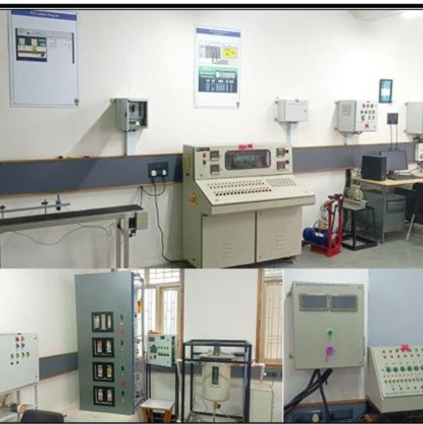
Center of Excellence for Industrial Automation
The Centre of Excellence in Industrial Automation Laboratory provides students with practical exposure to modern automation technologies used in industries. The lab focuses on training in PLC, SCADA, HMI, sensors, drives, and industrial communication systems. It helps students develop hands-on skills in designing and implementing automated control systems. The facility supports student projects, research activities, and industry-oriented training programs. The Centre also promotes innovation and prepares students for careers in industrial automation and smart manufacturing (Industry 4.0).
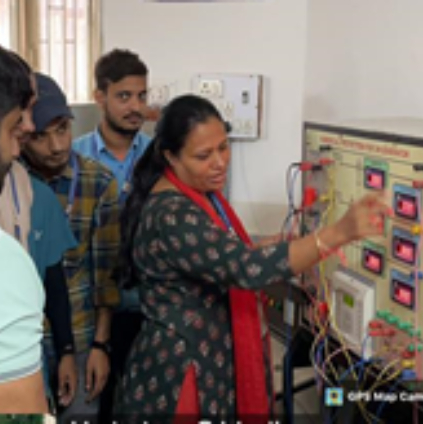
Protection Lab
The Power System Protection Laboratory provides practical knowledge of protection schemes used in electrical power systems. The laboratory helps students understand the operation and coordination of protective devices such as relays, circuit breakers, and fault detection systems. It enables students to study different types of faults and their impact on power system stability and reliability. The lab includes protection training kits and simulation tools for analyzing relay characteristics and protection schemes. It supports hands-on learning, student projects, and research in the field of power system protection and safety.
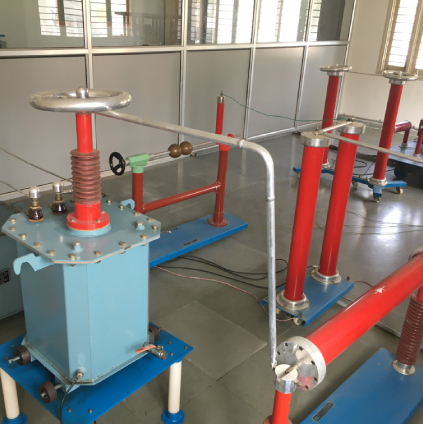
High Voltage Engineering lab
The High Voltage Engineering Laboratory provides practical knowledge of generation, measurement, and testing of high voltages used in power systems. The laboratory enables students to study insulation behavior and breakdown characteristics under high voltage conditions. It is equipped with facilities for performing experiments on dielectric materials, insulation testing, and high voltage measurement techniques. The lab helps students understand safety practices and testing procedures used in electrical power industries. It supports academic experiments, project work, and research related to high voltage engineering.
Scholarships & funding
Financing and supporting your education
Get information on the various scholarships, grants, and student loans you can avail to fund your dream education.

Meritorious scholarships
Recognising academic excellence by providing scholarship opportunities to those who exceptionally pass board and entrance exams
Know more


Sports scholarships
Recognising athletic excellence by providing scholarship opportunities to those who have achieved distinction in sports at State, National, or International levels.
Know more

Alumni scholarships
Fostering lifelong connections by providing scholarship opportunities to the wards of PU alumni to continue the legacy of excellence.
Know more

Defense scholarships
Honoring the families of defense service persons by providing scholarship opportunities to their wards to study at PU
Know more

Stay up to date with Electrical Engineering Trends
What Is Prompt Injection? AI Security in the Age of Agentic AI and MCP
As AI systems move from answering questions to taking actions, they become software that can be attacked. Prompt injection, now ranked the number-one risk to AI applications, is the central threat, and agentic AI and the Model Context Protocol expand the attack surface. Here is what it means, and how to defend against it.
What Engineering Students Actually Build During Four Years of Engineering
During a B.Tech course, students slowly move from simple lab models to working machines, software, structures and final-year projects.
Inside Parul University’s PLC & SCADA Lab at Lakshya 2047 with Schneider Certification Training
This article covers the full-fledged ecosystem of the PLC & SCADA Lab at Lakshya 2047, Parul University. The lab will allow students to avail training on Schneider Electric M221 PLCs, SCADA monitoring, HMIs, & VFDs for processes. Besides this, the centre will even open up its pathways for two premium certifications – Siemens Certified Drives & Automation and ISA Certified Control System Technician!
30+ Questions Answered: Inside Lakshya 2047 Centre for Future Skills at Parul University
Comprehensive FAQ covering Parul University’s Lakshya 2047 Centre for Future Skills, including inauguration, partnerships, all 18 labs, 25+ certifications, cross-faculty programme access, career pathways, and operational details for prospective students, parents, faculty, and recruiters.
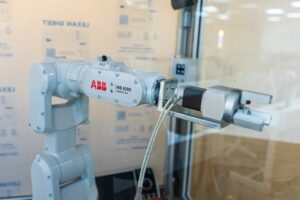
How Parul University’s ABB Robotics Lab Trains Students in Industrial Automation & AI Manufacturing
Parul University’s ABB Robotics & Industrial Automation Lab is providing an ABB IRB-series industrial robot, 25 computer stations for programming and simulation, RAPID training, and preparation for ABB Advanced Robotics and ISA CAP certifications.
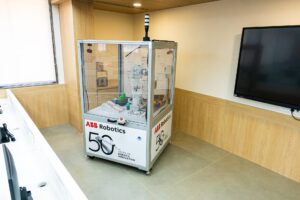
Inside Parul University’s Industrial Drives & Control Lab at Lakshya 2047 for Smart Automation Training
The Industrial Drives and Control Lab inside Parul University’s Lakshya 2047 Centre provides three full industrial control panels, French-imported IoT modules, and heavy-duty 3-phase motor training. Students learn to build control panels from scratch and to operate Variable Frequency Drives.
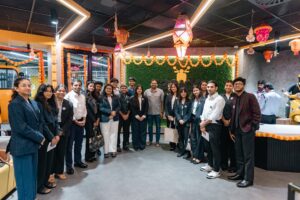
Mr. Rishikesh SR of Rapido, Mr. Sanjeev Kumar Singh of Ather Energy, and Mr. Ankit Rastogi of Angel One on First Principles Thinking, Trust as the Default Operating Mode, and Building Across 350 Cities
Parul University’s students met 3 innovators of India – Mr. Rishikesh SR – Co-founder, Rapido, Mr. Sanjeev Kumar Singh – Chief Operating Officer, Ather Energy, and Mr. Ankit Rastogi – Chief Product Officer, Angel One. Read the full coverage!
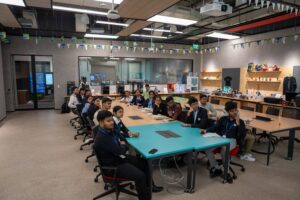
Every Parul University Course Mapped to the IIMUN Hyderabad Leadership Tour Sessions: A Complete Course- Finder Guide for Students Inspired by DRDO, Saina Nehwal, IIIT Hyderabad, Microsoft, Dr Reddy’s, and MCEME.
Eleven sessions. Eleven programme mappings. If Dr Anuj Kumar Varshney’s DRDO session inspired you, the course is B.Tech ECE or M.Sc Physics. If Saina Nehwal’s discipline appeals, look at B.PEd or Sports Scholarship.
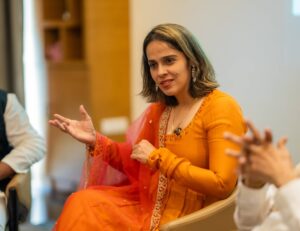
What Parul University Students Asked at the IIMUN Hyderabad Leadership Tour: Every Audience Question and Speaker Response From IIIT Hyderabad, DRDO, and Saina Nehwal Sessions
The IIMUN Hyderabad Leadership Tour was not a lecture series where students sat passively. The 10 Parul University students asked pointed questions across every session. This article compiles the complete Q&A content
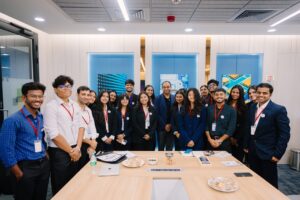
Inside Applied Materials, Marvell Technology India, and Cisco India
In the fully-sponsored trip to Bangalore, Parul University’s 3 students met 3 Top Tech Leaders, Mr. Avinash Avula, Mr. Navin Bishnoi, and Ms. Daisy Chittilapilly. Read the full coverage ahead.

Modernising Renewable Energy Storage Systems in B.Tech Electrical Engineering
Renewable energy is growing fast, but without better storage systems, it cannot work properly. That is why B.Tech Electrical Engineering students are becoming very important.
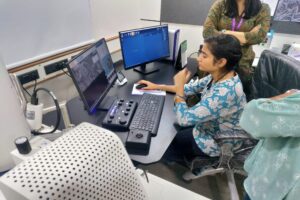
Dielectric Property and Impedance Analysis at Parul University MNRDC – The ZM2376 LCR Meter, Frequency Sweeps, and High-Temperature Electrical Characterisation
Parul University’s MNRDC operates a ZM2376 Scanning LCR Meter manufactured by NF Corporation (formerly Wayne Kerr), Japan, at a cost of Rs.12,86,200. The instrument measures electrical and dielectric properties – resistance, inductance, capacitance, impedance, quality factor, and dissipation factor – across a frequency range of 1 mHz to 5 MHz.

BTECH at Parul University: Building Your Future from Admission to Placement
The BTECH journey at Parul University takes students from admission to successful careers through practical learning, internships, vibrant campus life, and strong placement support. Students gain industry exposure and real opportunities, with achievements celebrated at events like the one where MS Dhoni honoured Parul students for securing placements in top companies.
Expert Faculty Meet Our