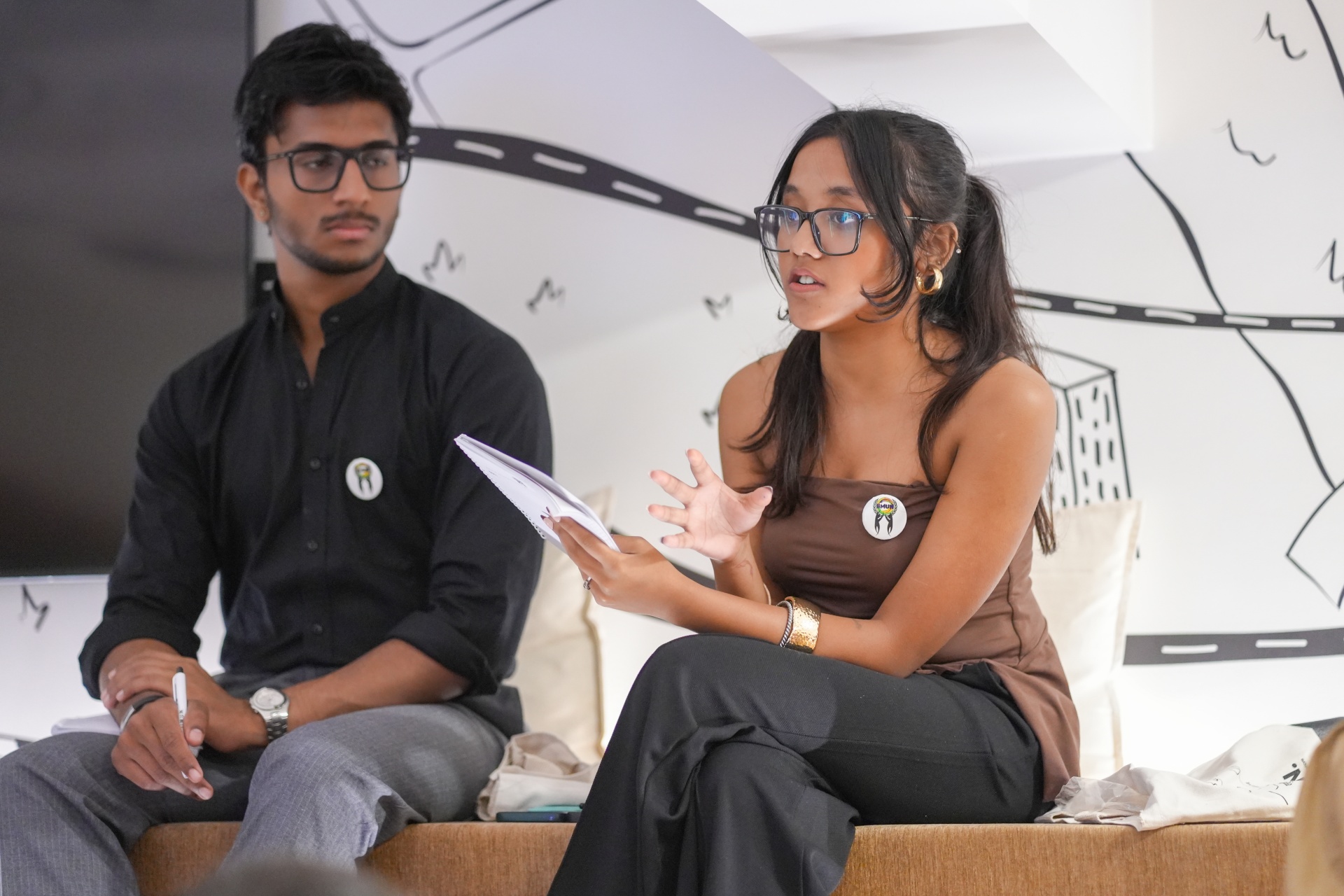
Twelve named industry leaders. Five studios. Three days. One operating principle: a design education is not complete until the students have sat across the table from the people who do the work.
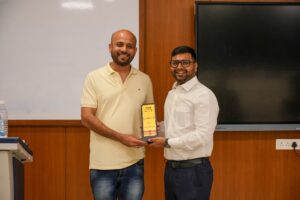
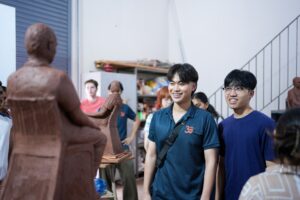
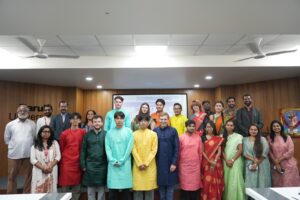
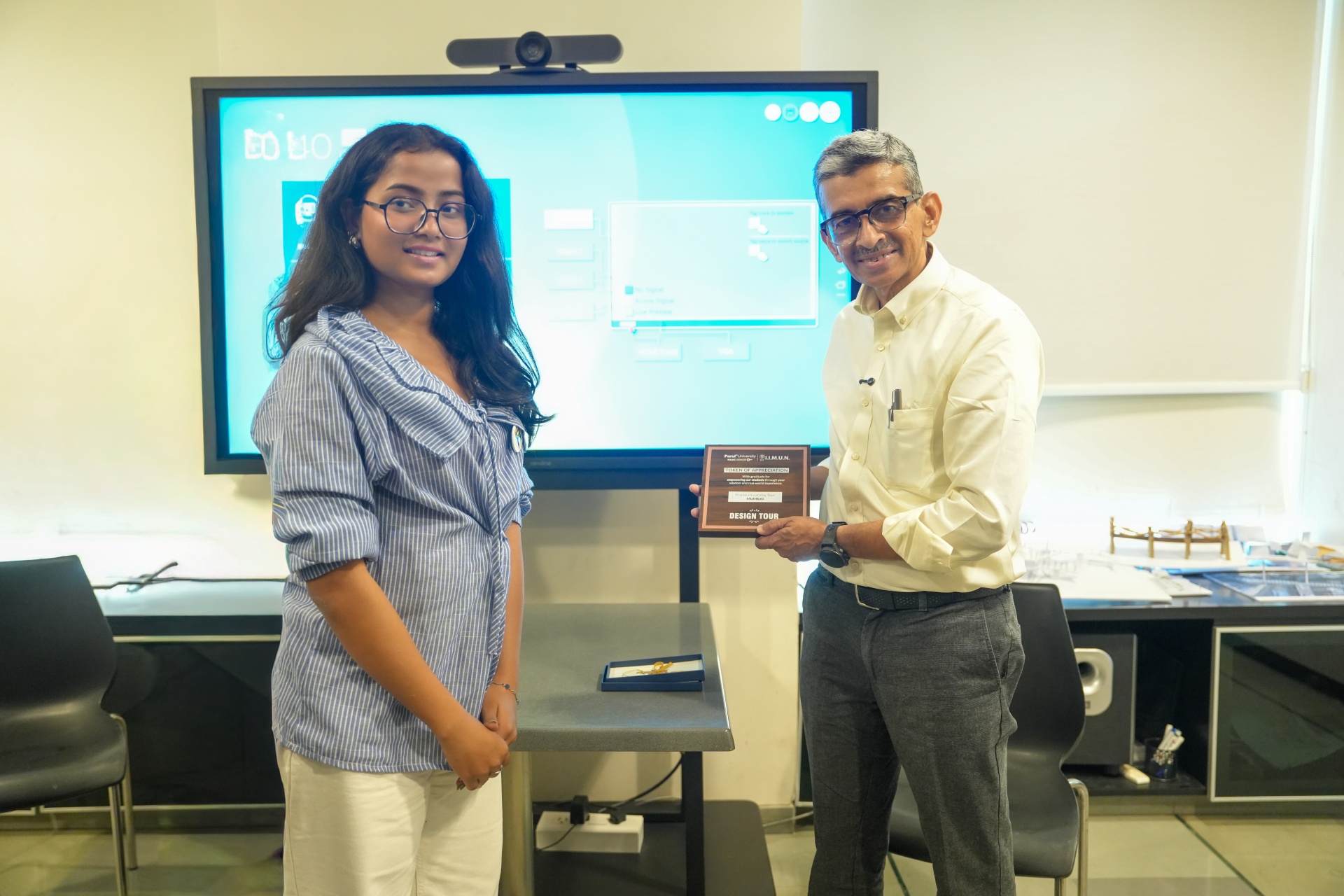
Between 9 and 12 March 2026, a group of students from the Parul Institute of Design travelled from Vadodara to Mumbai for a three-day industry-immersion tour organised through the India’s International Movement to United Nations (IIMUN), an organisation that builds programmes connecting students directly with industry leaders and global institutions.The tour was designed as a structured rotation through Mumbai’s creative industries: students of Fashion Design, Interior Design, Product Design, Animation, and Visual Communication moved between fashion houses, architecture studios, embroidery workshops, design education institutions, and media companies, hearing directly from the founders, directors, and senior creative leaders who run them. This article is the hub for the cluster of articles documenting that tour. It maps the twelve speakers, the disciplines they represent, and the recurring themes that ran across the three days. Detailed articles follow for the five most extensively documented sessions.
Vogue India’s Rochelle Pinto at PID Mumbai Tour!
The twelve speakers and what each session covered
The tour navigated students through twelve sessions across Mumbai. Each session is summarised below in the order in which the students encountered it.
- Rochelle Pinto, Head of Editorial Content, Vogue India (at the IIMUN office): On fashion journalism, ethics, storytelling, cancel culture, decolonising the design imagination, and why a strong dictionary is the foundation of a writer’s craft. Detailed in the dedicated article on the Vogue India session.
- Gayatri Khanna, Founder and CEO of Milaaya Embroideries: On building a global luxury embroidery house from a thirty-artist workshop in her own Mumbai home into a multinational operating across New York, Milan, Paris, and London, and on why hand craftsmanship cannot be replaced by AI. Detailed in the dedicated article on Milaaya Embroideries.
- Kiran Kapadia, Founder of Kapadia Associates: On running a design studio as a service business, the three things you must understand before any project (client brief, client budget, the site), and Mumbai’s urban-design failure of prioritising cars over pedestrians. Detailed in the dedicated article on Kapadia Associates.
- Robert Verrijt, Co-founder of Architecture BRIO: On climate-adaptive architecture across India’s many climates, the influence of Sri Lankan architect Geoffrey Bawa, demountable buildings designed for rising sea levels, and the Billion Bricks shelter project for India’s twenty million rural-housing need. Detailed in the dedicated article on Architecture BRIO.
- Sameer Nair, Former Managing Director of Applause Entertainment: On storytelling structure (unchanged since the cavemen), the OTT revolution that enabled finite, sharp series like Scam 1992, and the studio’s decision to halt traditional animation on Amar Chitra Katha and rebuild the entire pipeline with generative AI. Detailed in the dedicated article on Applause Entertainment.
- Neeta Lulla, Indian Costume Designer: On costumes as narrative devices rather than fashion, the script as the source of design direction, and the role of research, textiles, and craftsmanship in cinema.
- Abha Narain Lambah, Founder of Abha Narain Lambah Associates (at her office): On heritage conservation, adaptive reuse of historical buildings, and the architect’s responsibility toward cultural preservation. Her remark that heritage sites hold emotion more than story captured the philosophical core of conservation work.
- Ajit Khare, Director of NIFT Mumbai: On design education, process over output, interdisciplinary learning, and the discipline-vs-creativity balance. His insistence that designers must master empathy because the human brain created AI framed the human-machine question for the rest of the tour.
- Lodha design leadership team (at the Lodha office): A seven-person panel including Deepak Chitinis, Sonal Bhide, Sushant Patil, Ritesh Shah, Aun Abdullah, Vaishali Dangare, and Sharan Lund covering large-scale real-estate design, coordination across architecture, interiors, and MEP, and the principle of designing to solve problems rather than to signal luxury.
- Kayzad Shroff and Maria Isabel Leon, Founders of ShroffLeon (at their office): On spatial storytelling, site analysis, material exploration, and approaching every project with a mix of child-like naivety and curiosity.
- Shubhika Sharma, Founder of Papa Don’t Preach: On building a recognisable contemporary fashion brand identity, bold colours and embellishment as a signature language, and the entrepreneurial reality of independent Indian fashion labels.
- Nidhi Yasha, Founder of Nidhi Yasha Design (at the IIMUN office): On establishing an independent bridal and occasion-wear label, the discipline of customisation in bespoke fashion, and the principle that failure is feedback and feedback is data.
The themes that ran across all twelve sessions
Across twelve different speakers, four themes recurred independently in nearly every session.
Read together, the sessions did not feel like twelve unrelated talks. They felt like the same conversation was conducted twelve times, with each speaker arriving at the same core questions from a different professional vantage point. The themes were not prompted, and the students did not coordinate them. They emerged naturally because they are the questions every design professional in India is currently working through.
- AI and the human craft: Every single speaker addressed AI. Gayatri Khanna distinguished AI-assisted design concepts from hand-embroidered execution. Kiran Kapadia described three concrete AI uses at Kapadia Associates (parking optimisation, contextual image placement, climate and sustainability modelling). Robert Verrijt warned that hand sketching remains a permanently valuable human skill. Sameer Nair revealed Applause Entertainment had halted traditional animation on Amar Chitra Katha to rebuild the pipeline with generative AI. Rochelle Pinto called AI a tool to use effortlessly, anchored by a dictionary. Ajit Khare framed empathy as the answer to AI because the human brain created it. The cumulative effect across the tour was a working consensus: AI is a tool that displaces tedium, not the human imagination.
- Indian identity and the question of validation: Multiple speakers, most pointedly Rochelle Pinto, argued that Indian design and creative industries must stop measuring themselves against Western approval. Pinto urged decolonising the imagination and recognising that India’s cultural depth, craftsmanship, intellectual diversity, and economic momentum exist independent of Western recognition. Gayatri Khanna’s twenty-year work translating Indian craftsmanship for Italian, French, and American luxury houses provided the practical proof of what that confidence produces. Sameer Nair’s account of how OTT streaming shattered regional and linguistic barriers showed the same theme in media.
- Practice over theory, internships over classrooms: Almost every speaker, asked what they would advise students, returned to the same answer: practical experience. Gayatri Khanna built her business through internships and global exposure starting at twenty-three. Robert Verrijt regretted leaving Geoffrey Bawa’s office too early. Kiran Kapadia said colleges teach drawing and dreaming but not the service-business reality of architecture. Sameer Nair recommended assistant positions on real camera crews over independent film attempts. Nidhi Yasha’s advice was direct: do and learn through internships.
- Ethics, accountability, and the long view: Pinto on journalistic ethics. Kiran Kapadia on a leader taking responsibility for failures while sharing credit for successes. Robert Verrijt on designing buildings that improve the quality of life of the poor through Billion Bricks. Nair on the audience as the final judge and the necessity of accepting their judgment. Lambah on the architect’s cultural responsibility. The tour consistently framed design as a service to society, not a self-expression.
How the tour fits Parul Institute of Design's educational philosophy
The Mumbai Industry Tour is not an isolated event. It is a structured component of the Parul Institute of Design curriculum, which emphasises practical learning, industry exposure, and direct contact between students and working professionals.
Across Parul University as a whole, more than 146 such practical learning tours have brought students into contact with 280 companies across 19 Indian cities, including organisations such as Tata, the Parliament of India, Jio Star, Google, Larsen and Toubro, Microsoft, the National Stock Exchange, Aditya Birla Capital, the Jindal Foundation, ISRO, and Myntra. The Mumbai design tour applies the same principle within the design disciplines: students hear from the people who actually run the studios, brands, and creative organisations they will eventually compete with or join.
The benefit of this approach is not the celebrity exposure. It is the unfiltered transmission of working knowledge.
When Kiran Kapadia said that colleges excel at teaching students to draw and dream but rarely teach the business reality of charging fees, costing projects, and managing client relationships, he was correcting a known gap in design education in his own words. When Gayatri Khanna described starting her career selling pashminas at twenty-three, then building a global business from a thirty-artist home workshop, she was modelling an entrepreneurial path students cannot read about in a textbook.
When Robert Verrijt described regretting leaving his mentor Geoffrey Bawa‘s partner Channa Daswatte‘s office too early, he was giving advice that no syllabus can substitute. The role of an industry tour is to make those transmissions possible.
From Geoffrey Bawa to Billion Bricks – Robert Verrijt’s Blueprint for Sustainable Design!
Faculty, organisation, and the IIMUN partnership
“The tour was organised in partnership with IIMUN, India’s International Movement to the United Nations, a youth-led non-profit founded by Mr. Rishabh Shah that simulates the United Nations and Indian Parliament for students and runs leadership-development programmes for educational institutions across the country. For the Mumbai Design Tour, IIMUN’s role was to convene the twelve sessions, secure access to the studios and offices, and provide the bipartisan, agenda-free platform for the conversations. Sessions were held at multiple venues across Mumbai: the IIMUN office (Rochelle Pinto, Nidhi Yasha), the Milaaya Embroideries headquarters, the Kapadia Associates office, the Architecture BRIO office, the Applause Entertainment office, the Abha Narain Lambah Associates office, NIFT Mumbai, the Lodha office, the ShroffLeon office, and the Papa Don’t Preach studio.
What students from each design discipline took away
The cohort spanned multiple design disciplines. Each speaker spoke to several at once, but specific takeaways landed differently for different students.
- Fashion Design students: Direct exposure to the editorial logic of Vogue India (Rochelle Pinto), the global luxury craftsmanship pipeline (Gayatri Khanna), costume as narrative (Neeta Lulla), independent brand-building (Shubhika Sharma, Nidhi Yasha), and the practical realities of running a fashion business at scale.
- Interior Design students: Spatial planning, material selection by climate, and design as a service business (Kiran Kapadia); minimalism, light, and context-sensitive design (Robert Verrijt); spatial storytelling (ShroffLeon); luxury residential coordination across MEP and architecture (Lodha team); and the heritage architect’s responsibility (Abha Narain Lambah).
- Product Design students: User-centric design and ergonomics (Kiran Kapadia, Robert Verrijt); product-design parallels in OTT user experience (Sameer Nair on Steve Jobs’s principle that design is how things work, not just how they look); the discipline of luxury detail (Milaaya); and the design-thinking process (Ajit Khare).
- Visual Communication and Animation students: Editorial voice and concept development (Rochelle Pinto); storyboards as a more professional pitch format than ideas (Sameer Nair); the future role of game-engine technology in architectural presentations (Kiran Kapadia); concept-driven visual identity (ShroffLeon, Robert Verrijt); and the integration of AI tools into animation pipelines (Applause Entertainment).
Luxury Craft in the age of AI – Gayatri Khanna’s at PID’s Mumbai Tour!
FAQs
What is the Parul Institute of Design Mumbai Industry Tour?
The Parul Institute of Design Mumbai Industry Tour is a structured industry-immersion programme that takes design students from Parul University in Vadodara to Mumbai to meet leaders across the city's creative industries. The 2026 edition, held between 9 and 12 March in partnership with IIMUN (India's International Movement to the United Nations), covered twelve speakers across five days of sessions at studios, offices, and design houses, including Vogue India, Milaaya Embroideries, Kapadia Associates, Architecture BRIO, Applause Entertainment, NIFT Mumbai, Lodha, ShroffLeon, Papa Don't Preach, the Abha Narain Lambah office, and the IIMUN office. The tour is part of Parul Institute of Design's curriculum, emphasising practical learning and direct contact between students and working professionals.
Which design leaders did Parul Institute of Design students meet in Mumbai?
The 2026 Mumbai Industry Tour included sessions with Rochelle Pinto (Head of Editorial Content, Vogue India), Gayatri Khanna (Founder and CEO, Milaaya Embroideries), Kiran Kapadia (Founder, Kapadia Associates), Robert Verrijt (Co-founder, Architecture BRIO), Sameer Nair (Managing Director, Applause Entertainment), Neeta Lulla (Indian Costume Designer), Abha Narain Lambah (Founder, Abha Narain Lambah Associates), Ajit Khare (Director, NIFT Mumbai), the Lodha design leadership team of seven, Kayzad Shroff and Maria Isabel Leon (Founders, ShroffLeon), Shubhika Sharma (Founder, Papa Don't Preach), and Nidhi Yasha (Founder, Nidhi Yasha Design). The disciplines covered ranged from fashion journalism and editorial leadership to architecture, interior design, embroidery, costume design, heritage conservation, design education, real-estate design, and OTT media.
Why does Parul Institute of Design organise industry tours for design students?
Parul Institute of Design organises industry tours as a structured component of its curriculum on the principle that design education is incomplete without direct contact with working professionals. Classrooms can transmit technique, theory, and history, but the service-business reality of design (client communication, project costing, studio operations, leadership, and the working interface between creativity and commerce) is best learned from the people doing it. Across Parul University as a whole, more than 146 practical learning tours have connected students with 280 companies across 19 Indian cities. The Mumbai Design Tour applies this principle within the design disciplines, taking Fashion Design, Interior Design, Product Design, Animation, and Visual Communication students into the studios and offices where India's creative industries are run.
What is IIMUN's role in the Parul Institute of Design Mumbai tour?
IIMUN (India's International Movement to United Nations) is a youth-led non-profit organisation founded by Mr. Rishabh Shah that simulates the United Nations and the Indian Parliament for students and runs leadership-development programmes across India. For the 2026 Parul Institute of Design Mumbai Industry Tour, IIMUN's role was to convene the twelve sessions, secure access to the studios and offices, and provide the platform for the conversations between students and industry leaders. IIMUN operates as a bipartisan organisation designed to encourage open discussion across political and cultural perspectives, and several sessions were held at the IIMUN office itself, including those with Rochelle Pinto and Nidhi Yasha.
What were the most discussed themes across the Mumbai design tour?
Four themes recurred independently across nearly every session of the 2026 Mumbai Industry Tour. The first was AI and human craft: every speaker addressed how artificial intelligence is changing their discipline, with a working consensus that AI displaces tedious work but not the human imagination. The second was Indian creative identity, with multiple speakers arguing that Indian design must stop seeking Western validation and recognise its own cultural depth, craftsmanship, and economic momentum. The third was the primacy of practical experience and internships over classroom theory. The fourth was ethics, accountability, and the design profession's responsibility toward society, from journalism ethics to client trust to cultural preservation to designing for the poor.
Which disciplines benefited from the Parul Institute of Design Mumbai tour?
The tour was designed for students across the full range of design disciplines offered at Parul Institute of Design: Fashion Design, Interior Design, Product Design, Animation, and Visual Communication. Each session spoke to multiple disciplines at once. Fashion Design students gained direct exposure to editorial logic, luxury craftsmanship, costume as narrative, independent brand-building, and the realities of fashion business. Interior Design students engaged with spatial planning, material selection, minimalism, sustainable architecture, and heritage conservation. Product Design students engaged with user-centric design, ergonomics, and the design-thinking process. Visual Communication and Animation students gained insight into editorial voice, storyboarding, game-engine technology for design presentations, and AI integration in animation pipelines.