Today, the software we see and use, such as Kubernetes, is open source. Built in the open, by communities that anyone can join. The tech session on cloud native at Parul University made it clear that you don’t have to be an expert to begin. And this article guides you on how you should start.
Reasons To Contribute To Open Source
Open source is built in the open, by communities that anyone can join. It is a rare opportunity for students; this is their chance to make the work they actually use visible to professionals. This will give them a genuine experience outside the classroom. Students can showcase their work in front of a global community. Their networks will increase as they will be working with engineers, and it gives them a public track record that a resume alone cannot.
It is, in short, one of the highest-return ways to spend your time as a student developer.
You Do Not Have to Start With Code
People mostly think that to contribute to open source you must have a strong hold on programming, but that is not the case. You can contribute in other areas that are valuable contributions, and it is not related to coding, and these are often the best start for beginners:
1. Documentation: the work is to improve guides, tutorials, and READMEs.
2. Community Management: this requires welcoming newcomers, keeping the discussions healthy, managing the discussions, and helping to answer questions.
3. Volunteering: volunteering is helping with organising events, meetups, gatherings, and conferences.
4. Technical Work: this is where you share your experience of what you learned on professional platforms, which supports the wider community.
Contributing Code, Step by Step
When you are ready to contribute code, the path is approachable if you take it gradually. Start with a language you already know; Python, Java, C++, or Go are all widely used in open source. Explore repositories that interest you, then look for issues that match your current skill level (many projects tag beginner-friendly ones). Pick one, make your change, and submit it as a pull request, a proposed change the project’s maintainers can review and merge. Your first contribution does not need to be large; it needs to be real. Contribute gradually, and your confidence and skill grow with each one.
How Open-Source Projects Grow (and How Yours Could)
It helps to understand how a project becomes trusted, especially if you dream of building your own tool one day. In the CNCF ecosystem, a new project can enter as a sandbox project while it is still experimental. As more companies adopt and evaluate it, it can move to incubating status, and once it is proven reliable and widely used, it can graduate- the exact path Kubernetes itself followed, from a Google project to the backbone of cloud native. Today’s giant projects were once someone’s small idea.
Structured Mentorship: The LFX Programme
If you want guidance rather than diving in alone, structured mentorship exists. The Linux Foundation’s LFX Mentorship programme pairs students with mentors to work on real open-source projects, building practical experience outside a classroom setting. Programmes like this turn open-source contribution from a solo leap into a supported, guided experience, ideal for a first serious project.
Learn Through Communities and Conferences
Open source is social, and communities are where much of the learning and opportunity happens. Local Cloud Native Community Groups (such as those in Ahmedabad and Vadodara) run workshops and meetups, often sharing real production stories rather than staying purely at a beginner level. Larger gatherings like KubeCon, the major global cloud-native conference, and the more accessible Kubernetes Community Days (KCD) welcome students as attendees or volunteers, and are a genuine way to meet professionals working in DevOps, SRE, and software engineering.
Contribution does not have to start with code. Documentation, community, and volunteering all count.
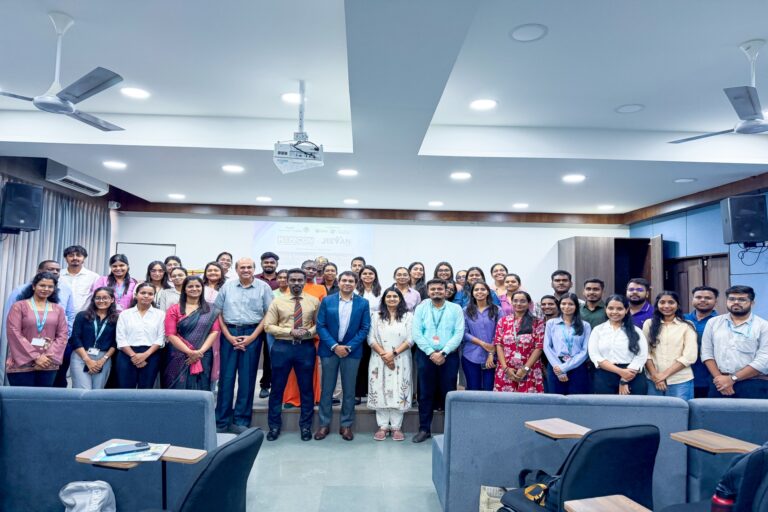
– A cloud-native session at Parul University
This is a philosophy Parul University actively supports. Through student communities like the AWS Student Builder Group, the Tinkering Hub, and a culture of hands-on, experiential learning, students are encouraged to learn by building and contributing, often finding their first connections and opportunities well before they enter the industry.