Two sessions during the Parul Institute of Architecture Delhi Tour bracketed the architecture profession at its operational extremes. INTACH (Indian Trust for Art and Cultural Heritage) works at the heritage-conservation end, where the discipline is materials analysis, craftsmanship preservation, and the protection of cultural identity. AFCONS Infrastructure works at the large-span construction end, where the discipline is engineering coordination, project management at scale, and the integration of architectural form with structural and services engineering.
These sessions were organised for students who will be working in the private practices, in government, in heritage organizations, or in construction management companies, and they should be able to understand both sides of the coin. The architect who only knows heritage cannot deliver a metro station. The architect who only knows infrastructure cannot restore a 500-year-old monument. Both kinds of work require architectural intelligence. The disciplines are different. The profession is the same.
INTACH: thirty years of heritage restoration
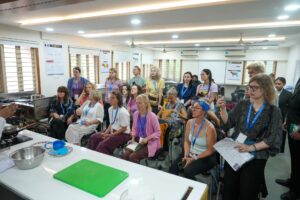
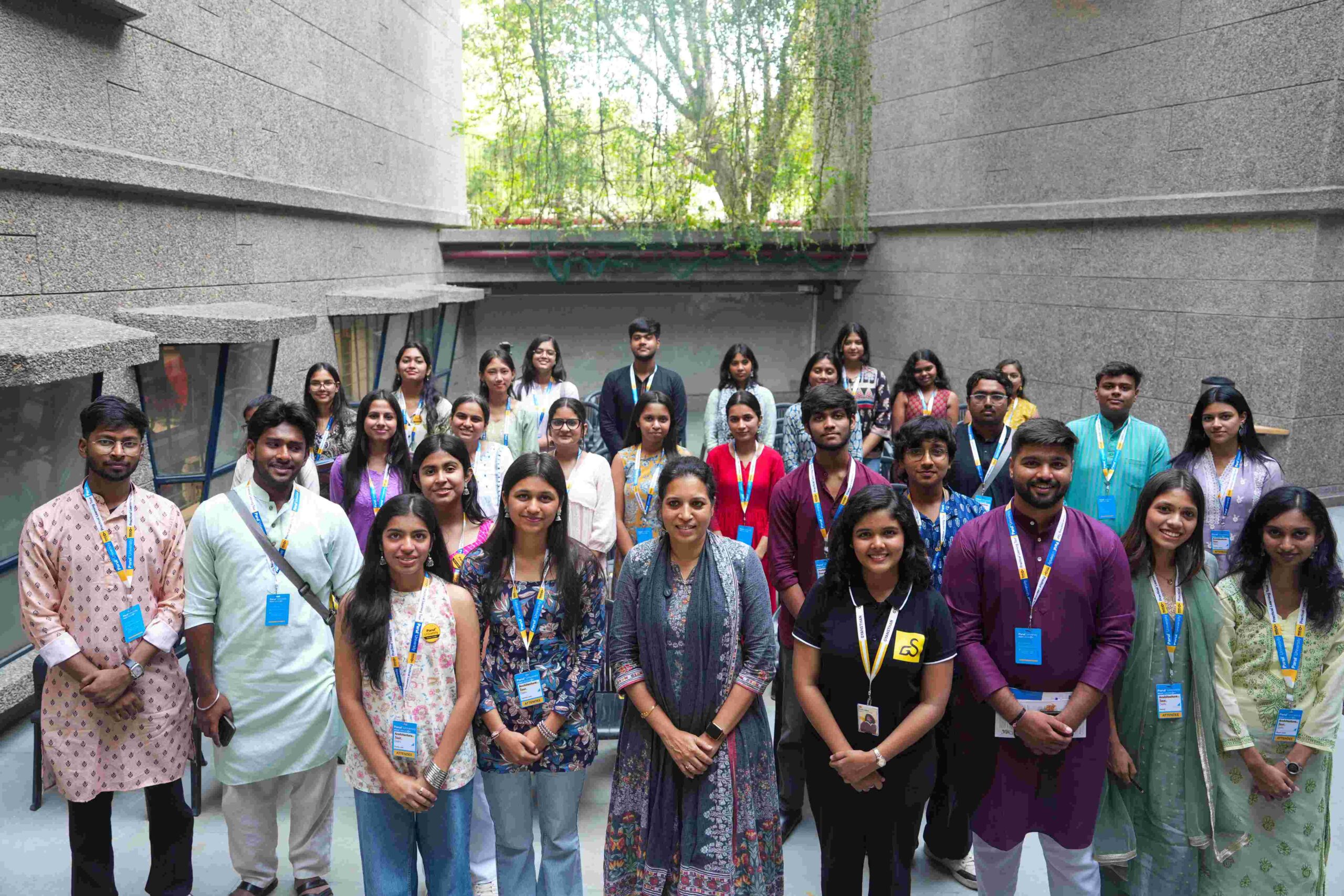
The session of INTACH was taken by Ms. Vijaya Amujure, Principal Director. He shared how INTACH started. INTACH started over thirty years ago to preserve the Indian cultural heritage. The founders felt it was getting neglected, inappropriate restoration, and outright demolition.
Presently, the organisation focuses on the ancient architecture, intangible cultural heritage, material preservation and natural hertiage. Ms. Amujure addressed about the three decades of project work and the institutional evolution that produced the present practice.
- The completed projects: more than three decades of project completion that cover temple complexes, palaces, urban heritage, districts, water bodies, and craft-tradition documentation across the country.
- Teaching and documentation: INTACH records and teaches the traditional construction crafts to highlight the craftsmen who were capable of working with historical materials that are themselves vanishing resources.
- Cultural Heritage: The organization, based on the collected data, has made a framework that decides which heritage site should be a priority and which should be allowed to be demolished or fade.
- Regional Divisions: Regional divisions are made based on the rivers and regions. Along the lines of the country’s natural and cultural geography, they found out that heritage practices differ between the Ganga and Cauvery, and it also differes in terms of temple traditions, mosque traditions, and directional differences too.
- Analysis of material: Material analysis across history is the most technically demanding part of the practice; this requires the restoration teams to understand the chemistry, the structural behavior, and the weathering patterns of materials from timelines.
- Water-bank heritage: ghats, stepwells, riverside temples, and the integrated water-cultural systems that defined many Indian cities before colonial urbanisation.
Focus on the bigger picture while making decisions.
Ms. Vijaya Amujure, Principal Director, INTACH
Ms. Amujure’s emphasis on the bigger picture is operational rather than philosophical. Heritage decisions taken without the bigger picture in view tend to optimise for the present moment at the cost of the long term. A restoration that uses modern cement in a heritage stone wall may look acceptable today and will damage the wall over the next fifty years. A heritage site preserved in isolation from its surrounding urban context becomes a museum piece rather than a living part of the city. The bigger picture for INTACH includes the materials, the craftsmanship, the urban context, the community use, and the multi-decade trajectory of the site.
Read More: Dr Ajit Pai at Parul Institute of Architecture’s Delhi Tour 2026!
Heritage as technical discipline, not nostalgia
The Parul Institute of Architecture students at the INTACH session left with a working understanding that distinguishes professional heritage practice from amateur enthusiasm. Heritage restoration requires materials chemistry, historical research, craftsmanship preservation, structural analysis of buildings that predate modern engineering standards, and coordination across multiple regulatory frameworks. The work is technical. The output is cultural. The two are not opposed.
Ms. Amujure traced the regional differentiation of Indian heritage work. The construction traditions and materials of north India differ from those of the south. Temple architecture differs from mosque architecture differs from colonial-period civic architecture. A heritage practitioner who works only in one tradition cannot operate across the country. INTACH’s institutional structure reflects this. The organisation maintains regional chapters with local expertise, coordinating through a central institutional framework that ensures methodological consistency.
The Master of Planning at Parul University includes specialised modules in architectural conservation that align with the kind of heritage practice INTACH represents. Students interested in heritage restoration as a career pathway find that the M.Arch programme covers materials analysis, historical research methodology, and conservation theory at the depth the profession requires.
Read More: Inside Indian Architecture Governance
AFCONS: Delhi Metro alignment, the Chenab Bridge, and large-span engineering
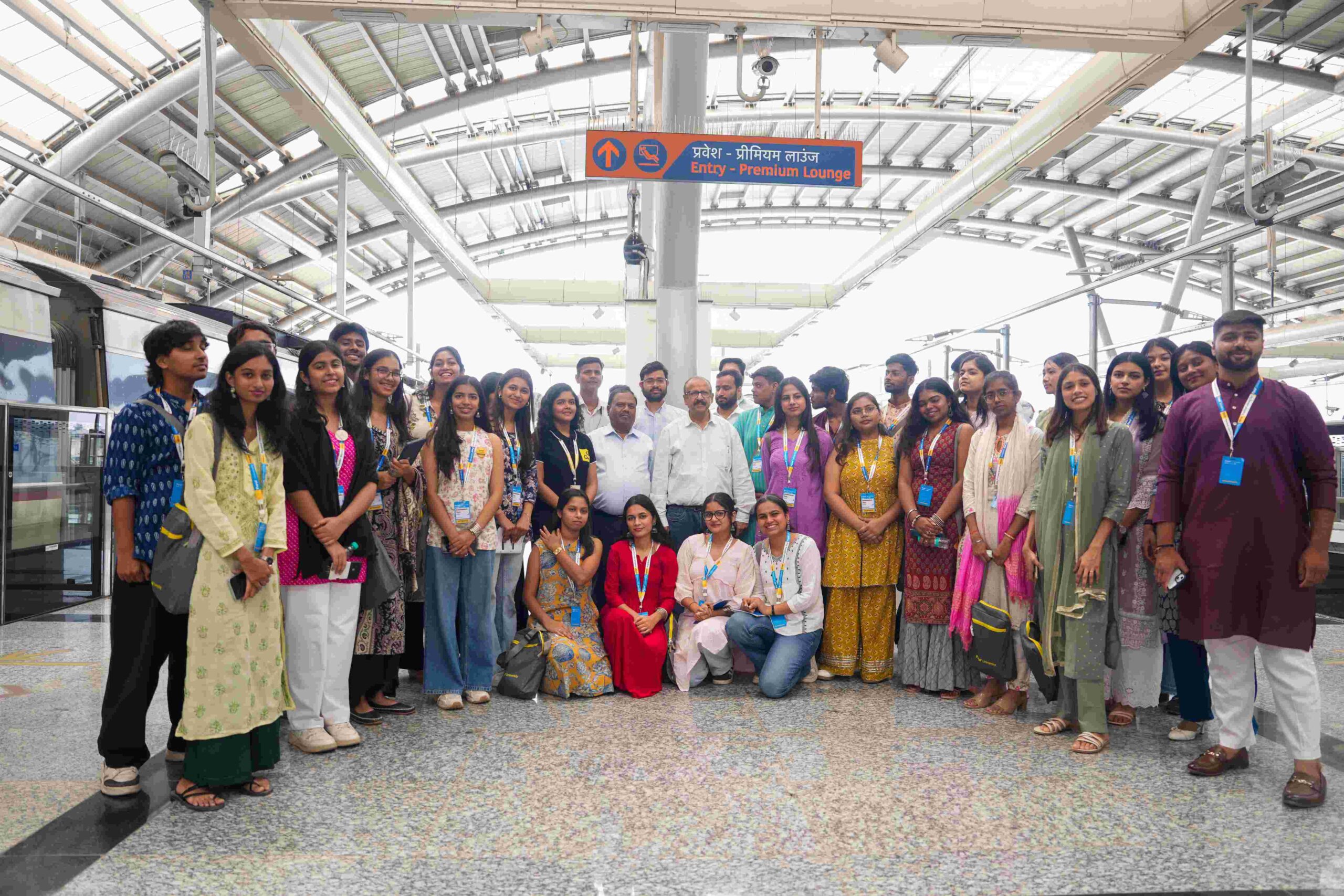
The AFCONS Infrastructure session was hosted by Dr. Ravikanth Shukla, Project Manager. AFCONS is one of India’s largest infrastructure construction companies, with a portfolio spanning urban metro systems, railway bridges across challenging terrain, port infrastructure, and large industrial facilities. Dr. Shukla walked the Parul Institute of Architecture students through two reference projects and the underlying construction discipline that connects them.
- Delhi Metro alignment construction: the engineering challenge of constructing a metro line through an active dense urban environment, with continuous coordination between architectural design, structural engineering, services routing, and surface-level traffic management.
- Chenab Bridge construction techniques: the world’s highest railway bridge, crossing the Chenab River in Jammu and Kashmir at a height of 359 metres above the river, representing one of the most technically demanding infrastructure projects in modern Indian construction.
- Comparative analysis of two metro stations: the Parul Institute of Architecture students were walked through the architectural and engineering differences between two specific Delhi Metro stations, learning how nominally similar functional requirements produce different design outcomes depending on site, surrounding context, and engineering constraints.
- Public division and circulation in metro cities: the discipline of separating passenger flows, emergency egress, services access, and the public realm in a metro station that handles thousands of users per hour.
- MEP integration with structural architecture: the discipline of coordinating Mechanical, Electrical, and Plumbing systems with the structural and architectural form, particularly in large-span structures where services routing has substantial impact on structural design choices.
- Construction ideology of affordability and ease: the firm’s institutional commitment to construction approaches that deliver durability without excessive cost, recognising the public-budget realities of Indian infrastructure procurement.
Connecting the points of Delhi, and keeping in mind future things for the next 5 to 6 years is very important.
Dr. Ravikanth Shukla, Project Manager, AFCONS Infrastructure
Dr. Shukla’s framing was structural. Infrastructure construction in a dense city is not a single project. Every metro line is part of a network. Every station is part of a multi-modal transit system. Every infrastructure decision today constrains or enables the infrastructure decisions of the next decade. The construction firm that thinks only about the immediate contract delivers buildings that work in isolation. The firm that thinks about the five-year network produces infrastructure that fits.
Chenab Bridge: large-span engineering at the architectural extreme
The Chenab Bridge is the structural showpiece of the AFCONS portfolio. At 359 metres above the river, the bridge is taller than the Eiffel Tower. The arch spans 467 metres. The bridge is designed to operate in seismic zone V and to withstand winds of up to 266 kilometres per hour. Construction in the location, in the Jammu and Kashmir terrain, with limited road access and challenging weather, required years of engineering preparation before the first construction equipment reached the site.
Dr. Shukla framed the Chenab Bridge as an architectural project as much as an engineering one. Every structural decision had architectural consequences. The visual relationship of the bridge to its surrounding mountain landscape was treated as a design problem rather than an incidental outcome. Parul Institute of Architecture students learn from cases like the Chenab Bridge that the boundary between architecture and structural engineering disappears at the scale of large-span infrastructure. The architect who cannot read a structural calculation cannot contribute to a project of this kind. The structural engineer who cannot evaluate a visual decision similarly cannot fully participate.
MEP integration was the recurring technical theme across the AFCONS session. Mechanical, Electrical, and Plumbing systems consume substantial volume inside any large structure. Routing those systems competes with structural members for the same internal volume. A poorly coordinated project results in MEP routing that crashes into structural beams, with expensive rework during construction. A well-coordinated project resolves the conflicts in the design phase. Construction-management firms like AFCONS are therefore as much coordination organisations as construction organisations.
What heritage and infrastructure together teach
The INTACH and AFCONS sessions read together produce a clearer view of the architecture profession than either session alone. The architect who works on a heritage stepwell project for INTACH and the architect who works on a Chenab Bridge approach structure for AFCONS face nominally opposite problems. The deeper structure of the work is the same. Both projects require materials understanding, structural intuition, contextual sensitivity, and the discipline of coordinating multiple disciplines across long project timelines.
The two sessions also demonstrated different career models within the architecture profession. INTACH attracts architects oriented toward research, documentation, and the preservation of cultural memory. AFCONS attracts architects oriented toward construction, engineering coordination, and large-scale public infrastructure. Both kinds of work are essential. Both kinds of careers are open to Parul Institute of Architecture graduates.
The B.Arch programme at Parul Institute of Architecture provides the foundation for both pathways. The Master of Architecture allows specialisation in heritage conservation for students drawn to the INTACH practice model. The construction-management and project-coordination modules in the B.Arch syllabus prepare students for the AFCONS practice model. The Bachelor of Planning feeds students into urban infrastructure and metro-system planning roles.
Read More: Check out the M.Plan program at Parul University.
FAQs
What is INTACH (Indian Trust for Art and Cultural Heritage)?
INTACH (Indian Trust for Art and Cultural Heritage) is a heritage conservation organisation founded over thirty years ago to address the systematic loss of Indian cultural heritage. The organisation operates across heritage architecture, intangible cultural heritage, natural heritage, and material conservation. INTACH structures its India-wide work around the country's natural and cultural geography, with regional chapters maintaining local expertise. Heritage practice at INTACH includes materials analysis across historical timelines, traditional craftsmanship preservation, water-bank heritage restoration, and cultural-identity research. Ms. Vijaya Amujure, Principal Director, hosted the session for Parul Institute of Architecture students during the Delhi Tour.
What is the Chenab Bridge?
The Chenab Bridge is the world's highest railway bridge, crossing the Chenab River in Jammu and Kashmir at a height of 359 metres above the river, taller than the Eiffel Tower. The arch spans 467 metres. The bridge is designed to operate in seismic zone V and to withstand winds of up to 266 kilometres per hour. AFCONS Infrastructure is the construction firm associated with the project, and Dr. Ravikanth Shukla, Project Manager at AFCONS, walked Parul Institute of Architecture students through the construction discipline that produced the bridge during the Delhi Tour session.
What did Parul University students learn at the AFCONS session?
Parul Institute of Architecture students at the AFCONS session, hosted by Project Manager Dr. Ravikanth Shukla, learned about Delhi Metro alignment construction in an active dense urban environment, the engineering of the Chenab Bridge, the comparative architecture of two specific Delhi Metro stations, the integration of MEP (Mechanical, Electrical, and Plumbing) systems with structural architecture, public-flow circulation in metro stations, and the institutional discipline of construction approaches that deliver durability without excessive cost. The session emphasised that infrastructure construction in dense cities must be designed for the next five to six years of network development rather than for the immediate project alone.
What does MEP integration mean in architecture?
MEP integration refers to the design coordination of Mechanical, Electrical, and Plumbing systems with the architectural and structural form of a building. MEP systems consume substantial internal volume and routing space, particularly in large-span structures such as metro stations, airports, and infrastructure facilities. Poor MEP integration results in services routing that conflicts with structural members, requiring expensive rework during construction. Strong MEP integration resolves conflicts in the design phase. Construction-management firms like AFCONS Infrastructure operate as much as coordination organisations between architecture, structural engineering, and MEP teams as they do construction organisations.
Which Parul University programmes feed careers in heritage restoration and infrastructure construction?
The B.Arch programme at Parul Institute of Architecture is the foundation for both career pathways. The Master of Architecture at Parul University includes specialised modules in architectural conservation that align with heritage restoration practice at organisations like INTACH. The construction-management and project-coordination modules in the B.Arch syllabus prepare students for infrastructure-construction practice with firms like AFCONS. The Bachelor of Planning at Parul University feeds students into urban infrastructure planning, including metro-system and transit-oriented development work.