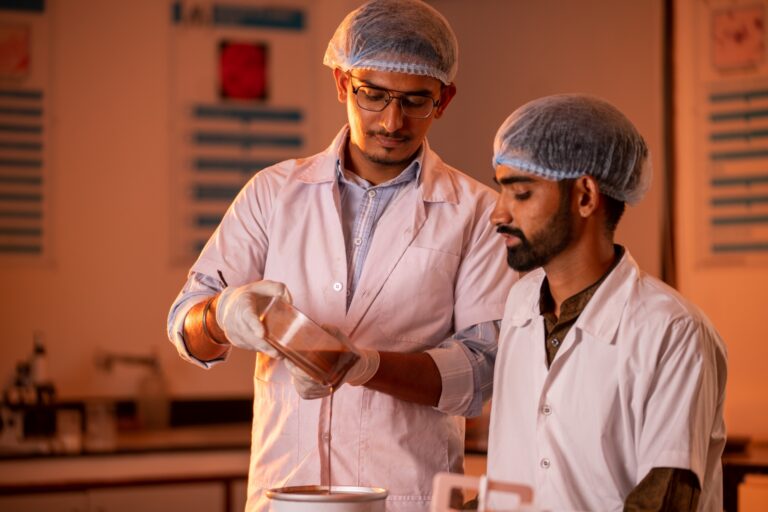
India’s dairy sector is becoming more modern at every stage. Around 168 lakh litres per day of milk chilling capacity had been created, and 76,748 quality-testing devices had been distributed under the National Programme for Dairy Development as of June 2026. (PIB)
This shows an important change. Dairy today is not only about collecting milk and selling it. Behind one packet of milk, cheese, butter or ice cream, there can be machines, testing systems, cooling technology, processing equipment and trained professionals.
For students thinking about a B.Tech in Dairy Technology, understanding these changes is important because their future workplace may look very different from the traditional dairy setup.
How Is Technology Improving Milk Collection and Testing?
Fresh milk needs quick testing because its quality can change if handling is not proper. Modern dairy collection systems can make this process more organised.
Digital and electronic testing equipment can help check important factors such as fat content and milk quality. Digital records can also make it easier to maintain information related to milk collection and testing.
Cooling is another major part of the process. Milk must be chilled properly after collection to control quality loss before it reaches the processing unit.
The government is also investing in this area. According to PIB, dairy-sector programmes support milk procurement, chilling, and quality-assurance infrastructure.
Which Technologies Can Change Dairy Processing Plants?
A dairy plant has many steps happening one after another. Technology can help make these steps more controlled and consistent.
Some important areas include:
• Automated processing:
Machines can support operations such as pasteurisation, separation, filling and packaging.
• Sensors and monitoring systems:
These can help teams observe temperature, pressure and other processing conditions.
• Digital quality records:
Production and testing information can be stored in a more organised form.
• Modern packaging equipment:
Better machinery can improve sealing and handling during packing.
• Cleaning systems:
Automated cleaning processes can support hygiene inside processing equipment.
Technology does not remove the need for skilled people. Professionals are still needed to understand the process, check results, solve problems and maintain safety standards.
Get Complete Details From Expert
How Is the Cold Chain Making Dairy Products Safer to Handle?
Milk and many dairy products need controlled temperatures during storage and transport. This makes the cold chain an important part of dairy technology.
Modern chilling centres, insulated transport systems and cold-storage facilities help maintain suitable temperatures while dairy products move from one point to another.
The scale of this shift can also be seen in government infrastructure plans. As of June 2026, dairy processing and value-addition projects with a combined capacity of 418 lakh litres per day had been approved under the Animal Husbandry Infrastructure Development Fund. (PIB)
For dairy technologists, this means understanding production alone may not be enough. Knowledge of storage, transportation and quality management is also becoming useful.
Can Technology Help Create New Dairy Products?
Walk through a dairy section today, and you may find far more than plain milk. There are different types of cheese, yoghurt, flavoured dairy products, frozen products and other value-added foods.
Developing such products needs more than a recipe.
Dairy professionals need to understand milk chemistry, microbiology, processing conditions, texture, hygiene, packaging and storage. Technology allows teams to study these factors more carefully and test how a product behaves during processing.
This is where dairy technology connects science with actual consumer products. A student entering this field may eventually work not only around milk processing machines but also in quality testing, product development or research.
What Skills Will Future Dairy Technology Professionals Need?
As dairy plants become more technology-based, students may need a wider mix of skills.
Important areas to understand include:
- Dairy chemistry and microbiology
- Milk and dairy-product processing
- Quality assurance and food safety
- Processing equipment and plant operations
- Hygiene management
- Product development
- Digital monitoring and basic data understanding
Learning the theory is important, but practical knowledge matters just as much. Students should understand what happens when equipment, temperature, hygiene or processing conditions change in an actual plant.
How Does Parul University Prepare Students for Modern Dairy Technology?
Students interested in this changing industry can explore the B.Tech in Dairy Technology at Parul University.
The four-year programme combines dairy science with microbiology and engineering principles. Students get practical exposure through real-world projects, industrial training, and dairy plant visits. The programme also covers areas such as product development, hygiene management and supply-chain operations.
This type of learning is useful because dairy technology is increasingly moving beyond textbook knowledge. Students need to see how processing, testing, equipment and quality systems connect inside a real production environment.
Where Could the Technology Shift Take Dairy Students Next?
A dairy plant of the future may have smarter machines, better quality systems and more digital monitoring, but somebody still has to understand what those systems are doing.
That creates an interesting space for students.
A student entering a B.Tech Dairy Technology programme today may eventually work around processing, quality assurance, food safety, product development, production management or dairy research. Their role may also change as new equipment and processing methods enter the industry.
Exploring the B.Tech Dairy Technology programme at Parul University can be the next step towards understanding where you may fit into this changing industry.