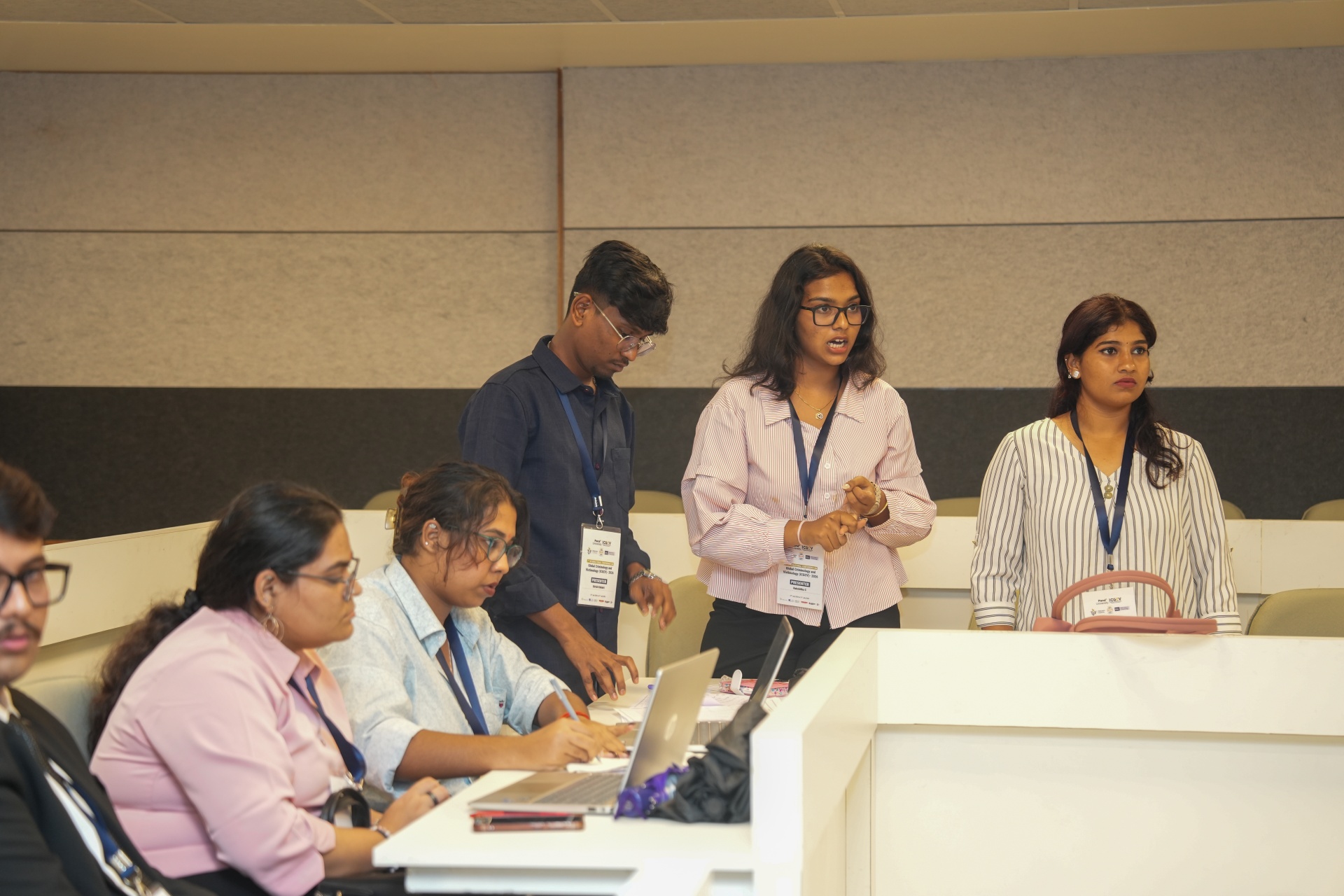
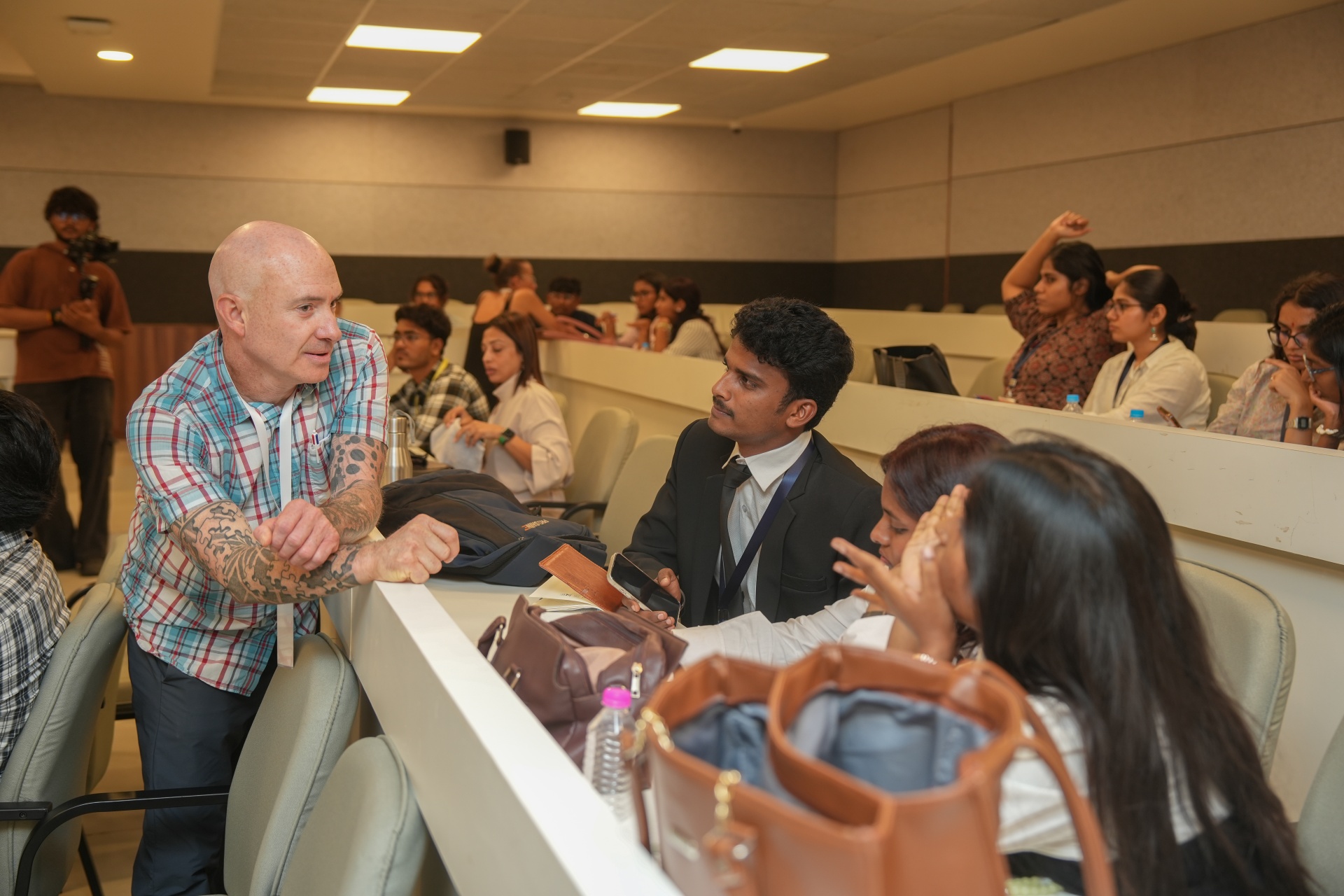
One of the quiet strengths of Parul University’s ICGCV 2026 was how seriously it took young researchers. Across 24 thematic sessions and a poster track, some 200 student and scholar presentations tackled the real social questions of our time, and did so in front of an international faculty. For students, presenting research to the people whose work they study is a rare and formative experience.
Land, Identity and Displacement
There are different types of harms. Due to which damage can be done to the property, land, etc. In a session on labour, land and corporate harms, researchers examined land disputes and displacement in Jharkhand.
Showing how mining and industrial projects can uproot Adivasi communities for whom land is not merely property but the foundation of culture, livelihood, and identity. Analysing cases and legal frameworks (including the CNT, SPT, and PESA Acts), the research argued that displacement causes lasting harm well beyond relocation, and that development must protect constitutional rights, culture, and the environment, with local communities involved from the start of planning rather than merely informed after the fact.
Global Inequality and Reproductive Justice
Another paper examined reproductive exploitation in the Global South, studying how commercial surrogacy can draw economically vulnerable women into reproductive labour, and how this connects to questions of bodily autonomy, dignity, and global inequality. Proposing a “de-colonial reproductive reckoning” model, the researchers argued that policy should protect the health, dignity, and rights of surrogate mothers, not merely regulate contracts, and called for stronger legal protection and common international ethical standards.
Structural Inequality and Overlooked Harm
Several posters extended the conference’s focus on structural harm. One study (with a Parul University SCOPE scholar among the authors) examined the systematic undervaluation of rural women’s labour in India, showing how limited access to legal protection, social security, and recognition deepens inequality, a form of structural victimisation beyond conventional crime. Another examined custodial deaths in Tamil Nadu, evaluating legal safeguards and accountability mechanisms (including the Protection of Human Rights Act, 1993) that protect the right to life. A third studied desensitisation to violence against women, examining how repeated exposure can shape social attitudes and the recognition of harm.
Protection, Rights and Justice
Other research engaged carefully with questions of protection and rights. One poster examined child protection through an intersectional lens, drawing attention to overlooked and underreported victims, and calling for private and accessible reporting procedures, trained personnel, community awareness, and equitable access to justice, healthcare, and counselling, research squarely aimed at strengthening safeguards for children. Another approached the marital-rape exception in India through a comparative gender-justice perspective linked to the Sustainable Development Goals, adding a legal and policy dimension to the conversation. Across these, the common thread was a focus on protection, accessible access to justice, and responsible intervention.
Innovation in Method: Civic Behaviour and Serious Games
The showcase also featured methodological innovation. A poster by Parul University SCOPE scholars proposed a “Patriotism Meter,” a behavioural assessment mechanism within “serious games” designed to measure civic responsibility and constructive patriotism through the choices players actually make, rather than through self-report surveys. Distinguishing constructive from blind patriotism, it offered a fresh, evidence-based way to study civic learning, a reminder that criminology and social research increasingly draw on technology and behavioural science.
Why the Student Showcase Matters
Learning from research helps students to know more about their field. When it is presented by them it gives them confidence and improves their communication skills. The research had topics such as land rights, gender justice, structural inequality, digital harm, child protection, and civic behaviour. And the common concern that they all had was vulnerability, prevention, and responsible response.
Just as importantly, the showcase demonstrated what a great academic conference can do for the next generation: place doctoral scholars, students, and faculty in the same space as global experts, and treat their research as a real contribution to the field. For Parul University, it was proof of a research culture that does not merely host the conversation on justice, but actively grows the scholars who will shape it.
Frequently Asked Questions
How many research papers were presented at ICGCV 2026?
Around 200 research presentations by students and scholars featured across the conference’s 24 thematic sessions and a dedicated poster track, alongside the keynotes and plenaries. This gave student and early-career researchers the opportunity to present their work directly to an international faculty of leading criminologists and victimologists.
What topics did the student research cover?
Student and scholar research spanned land rights and displacement, reproductive justice and global inequality, the undervaluation of rural women’s labour, custodial accountability, cyber fraud, child protection, gender justice, desensitisation to violence, and innovative methods such as behavioural assessment in “serious games,” all connected by a focus on vulnerability, prevention, and justice.
Why is a student research showcase valuable at an international conference?
First thing, research helps student to know more about their field. It helps students to get exposure in the of the research career. They get an opportunity to work with leading global experts, receiving feedback and build networks that shape their development. It also exhibits real and actual research culture at the host institution. One that not only hosts the academic conversation but actively grows the next generation of scholars.