Shri B.V. Patel Education Trust - 52 Years of Practical Science Education
The Shri B.V. Patel Education Trust was founded in 1974 in Ahmedabad, Gujarat, with a founding commitment to pharmaceutical and scientific education that remains its defining characteristic more than five decades later. The Trust’s name Shri B.V. Patel honours a vision of education that is not abstract or theoretical but practically grounded: learning that produces professionals who can work with instruments, design experiments, and generate publishable data from their first day in a research environment.
Over its 52 year history, the Trust has supported institutions, research programs, and training initiatives across pharmaceutical sciences, chemistry, and materials research in Gujarat. Its philosophy that real scientific understanding cannot be gained from textbooks and theory alone, but only from practical exposure to instruments, methodologies, and research environments has shaped every programme it has supported. The MNRDC workshop at Parul University was, in Dr. Neeta Shrivastava’s own words at the review session, “a powerful reflection of this philosophy in action.”
Dr. Neeta Shrivastava - Deputy Director and Workshop Convener
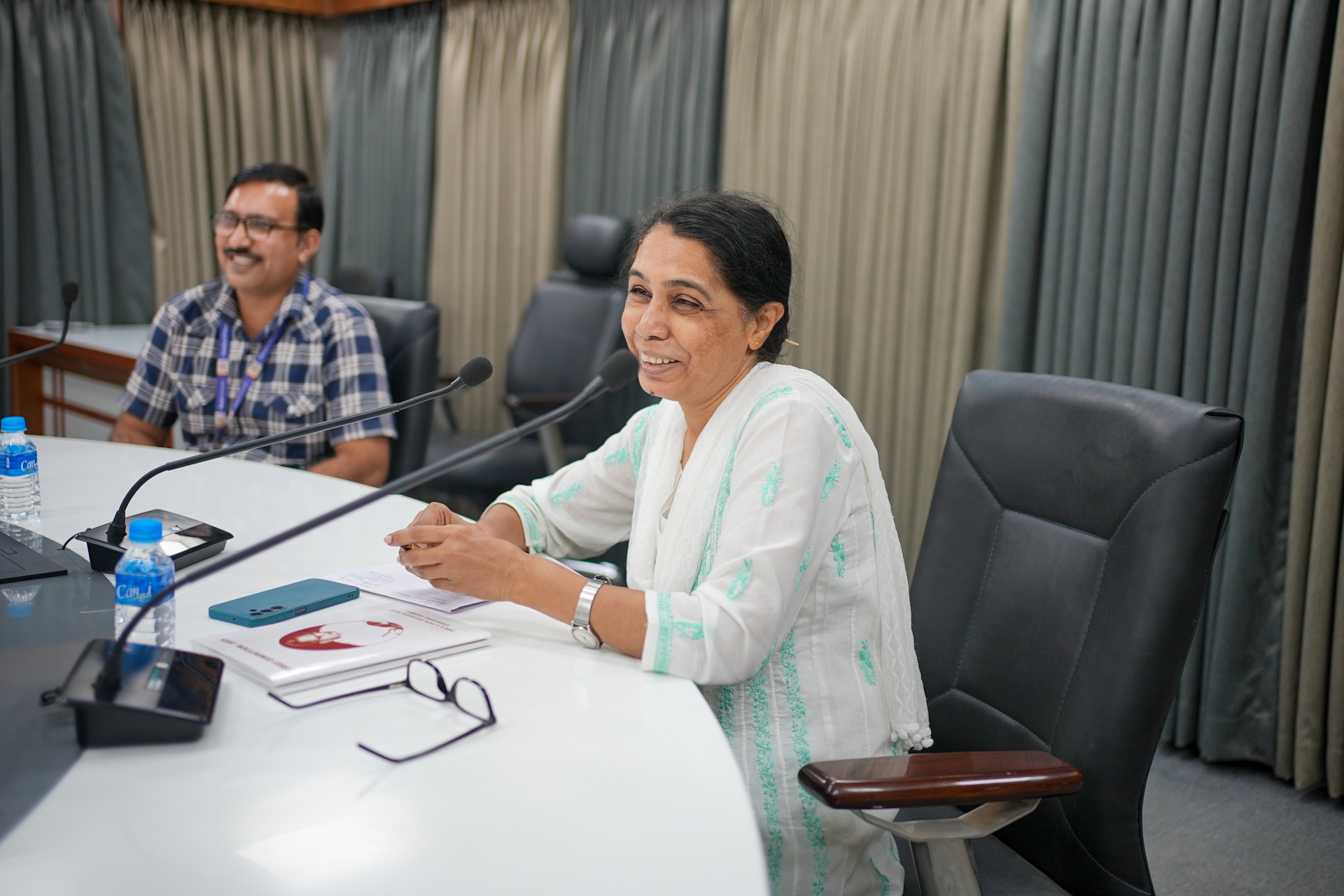
Dr. Neeta Shrivastava serves as Deputy Director of the Shri B.V. Patel Education Trust and was one of the principal conveners of the 3 Day Microscopy Workshop. Her presence throughout the final day’s review session attentively taking notes as each participant shared their experience was not ceremonial but substantive. She was tracking every observation, suggestion, and word of appreciation to assess the workshop’s impact against the Trust’s educational goals.
When the review session concluded, Dr. Shrivastava congratulated the entire MNRDC team on the workshop’s success, acknowledging the quality of expert sessions, the dedication of the Research Cadre, and the overwhelmingly positive reception from participants across ten disciplines. She then addressed the participants directly: “Every single programme that we have supported has been built around this philosophy to bridge the gap between knowledge and capability. This workshop is a powerful reflection of that commitment in action.”
Her observation that the Trust has believed since 1974 that “true understanding comes from practical exposure to instruments, methodologies, and research environments” spoken in a room where pharmacy, Ayurveda, genetics, civil engineering, and electronics students had just spent three days operating SEM, AFM, and EDS instruments made the Trust’s 52 year history suddenly concrete and present.
Inkarp Instruments Private Limited - Industry Brings Real-World Application
The final hands on session of the workshop on Day 3 was led by Mr. Vijay Bhaskar of Inkarp Instruments Private Limited, one of India’s established scientific instrument supplier and service organisations. Inkarp operates across multiple instrument categories analytical chemistry, physical testing, surface analysis, and thermal analysis serving both research institutions and industry clients. Mr. Bhaskar’s presence at the workshop brought a dimension that purely academic sessions cannot provide: the perspective of an industry professional who deploys these instruments daily in commercial and industrial contexts.
What Industry Does Differently With Surface Analysis Tools
In an academic research setting, SEM, AFM, and XRD are used to generate original knowledge: discovering new material properties, characterising novel compounds, validating theoretical predictions. In an industrial setting, these same instruments serve quality assurance, failure analysis, and process control answering questions like “Is this batch of pharmaceutical particles within specification?”, “Why did this coating fail?”, and “Does this alloy have the crystal structure our customer requires?”
Mr. Bhaskar’s session highlighted how industrial SEM use differs from academic SEM use in calibration standards, documentation requirements, reporting formats, and the speed of analysis needed to keep production lines running. For workshop participants who were predominantly from academic backgrounds, this industrial perspective was genuinely novel showing them how skills they were developing for research could translate directly into industry roles.
Inkarp as Part of India's Scientific Instrument Ecosystem
Scientific instrument suppliers like Inkarp play a largely invisible but essential role in India’s research infrastructure. They provide not just instruments but installation, calibration, training, and ongoing technical support the human infrastructure that keeps Rs.12 crore instruments producing reliable data over their 1015 year operational lives. The MNRDC’s partnership with Inkarp for the workshop session reflects an understanding that instrument expertise lives not just in manufacturers but in the organisations that deploy and maintain these instruments across the Indian research landscape.
The MNRDC Partnership Model - What Makes It Work
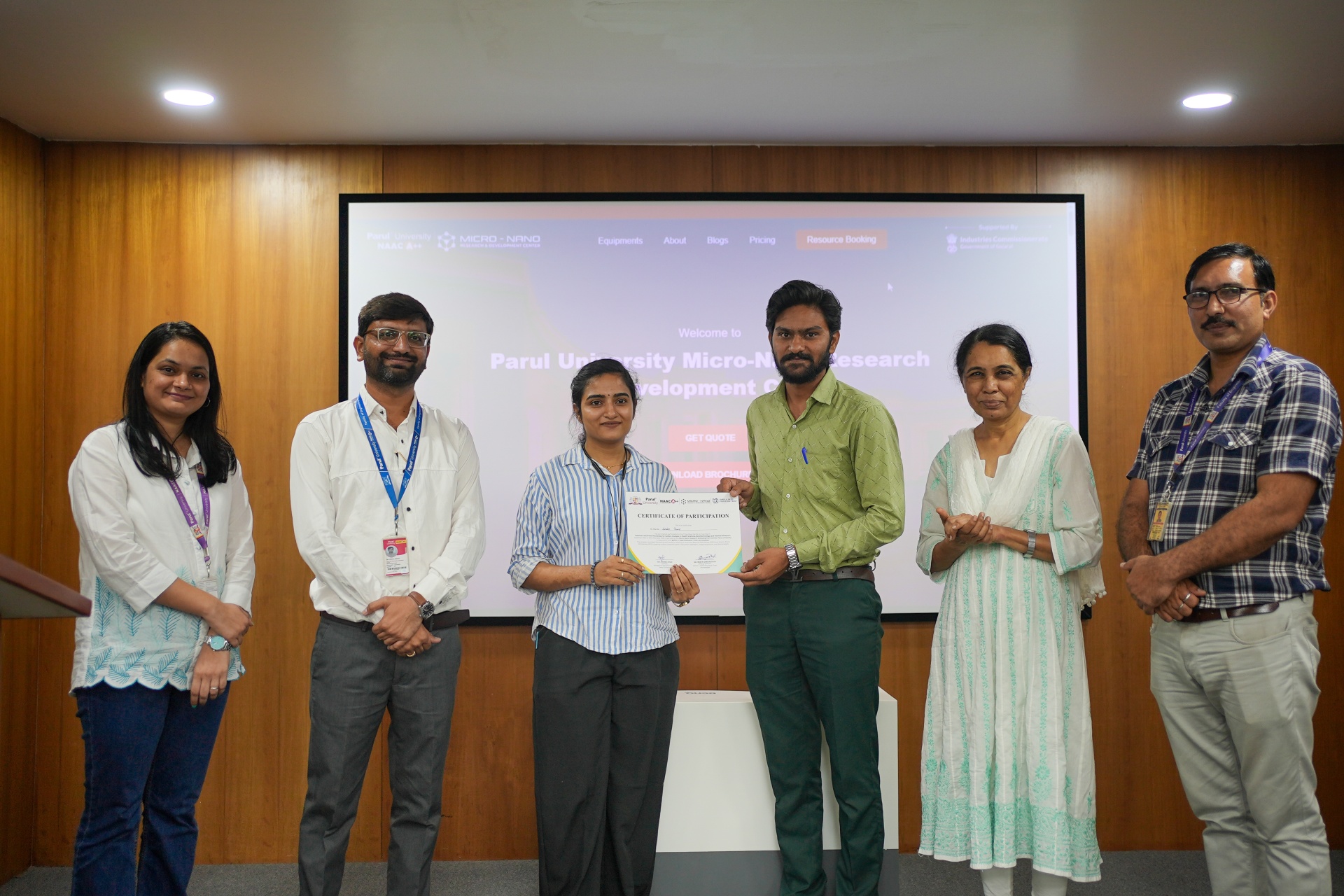
The combination of Shri B.V. Patel Education Trust’s 52 year institutional legacy, Inkarp Instruments’ industry expertise, and the MNRDC’s research infrastructure creates a training model that very few Indian universities can replicate. The Trust provides the philosophical framework and support for practical learning. Inkarp provides the industry connection and operational expertise. The MNRDC provides the instruments, the expert faculty Prof. Dr. V. Ganesan, Dr. Rathore, Dr. Solanki, and the research environment. The result 17 participants trained across ten disciplines from pharmacy to genetics to civil engineering is what happens when institutional partnership is built on shared values rather than commercial transaction. Researchers and institutions interested in partnering with the MNRDC can explore collaboration frameworks at micronanornd.paruluniversity.ac.in.