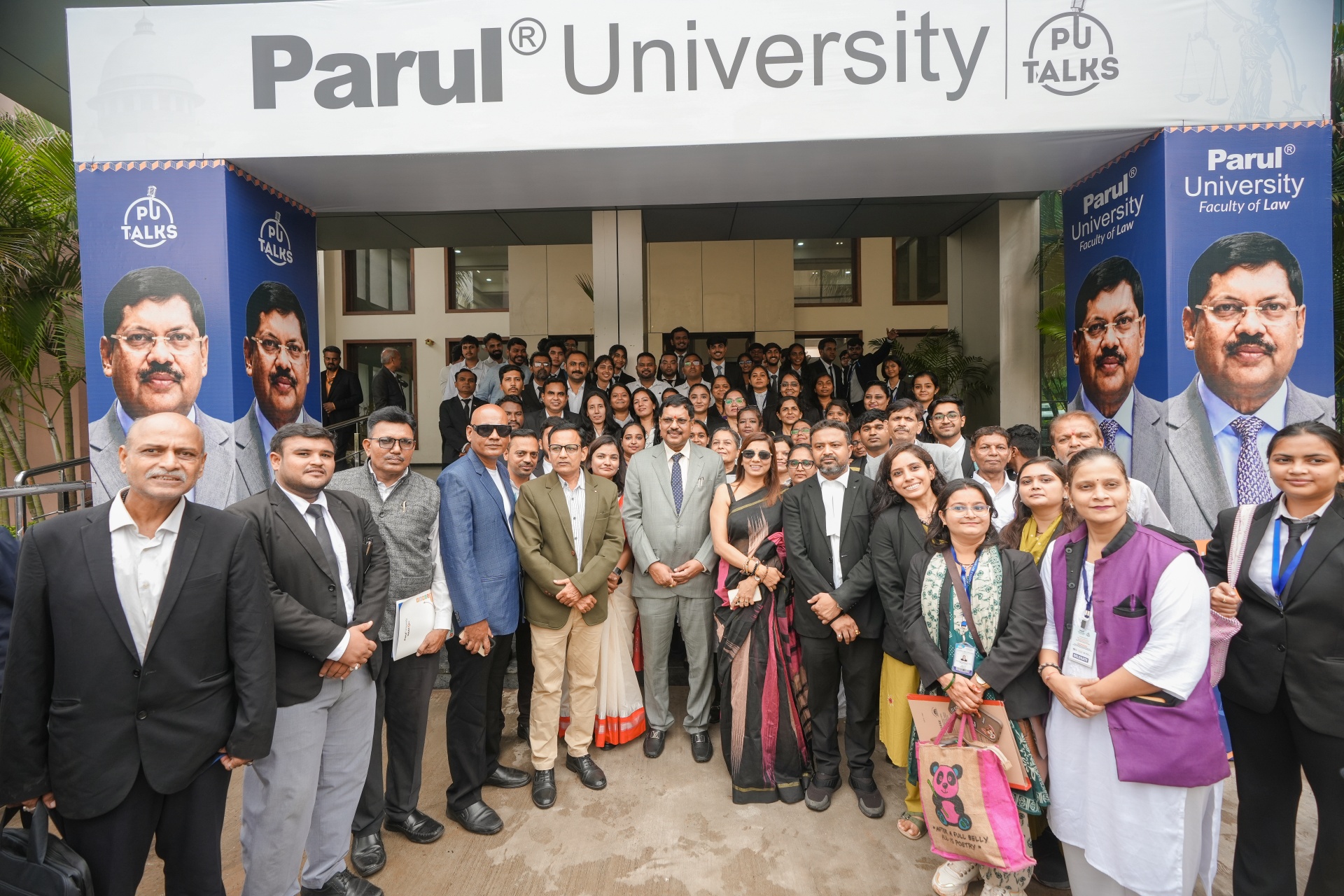
To the law students gathered at Parul University, Justice B. R. Gavai, Former Chief Justice of India, delivered a message that reframed their entire profession. Law, he said, is not merely a career; it is a calling. Here is the vision of the young lawyer’s duty that he shared.
“A Lawyer Is a Social Engineer”
Quoting Dr. B. R. Ambedkar, Justice Gavai gave students a definition of their profession that goes far beyond the courtroom.
Dr. Ambedkar used to say that a lawyer is a social engineer. He is a social reformer.
– Justice B. R. Gavai, Former Chief Justice of India
The meaning, he explained, is that the legal profession is more than an earning profession; it is a service rendered to the public. A lawyer does not simply argue cases; they help shape a fairer society, making the profession a form of nation-building.
A Lesson From History: Lawyers as Guardians of Rights
To show what this duty looks like in practice, Justice Gavai took students back to the era of the Emergency, when fundamental rights were suspended, and political leaders were jailed. It was, he reminded them, through the valiant efforts of lawyers in the courtrooms that those rights were ultimately restored. The prime responsibility of a lawyer, he said, is to uphold the dignity of the Constitution and of humankind, a responsibility that can, at decisive moments, help protect a democracy itself.
The Three Calls to Young Lawyers
Justice Gavai’s appeal to the next generation of advocates was specific and moving:
- Take up the cause of the vulnerable. He urged young lawyers to take on pro bono cases for the poor, for women, and for marginalized communities who cannot afford expensive fees, ensuring that access to justice is not limited by wealth.
- Defend the unpopular. He exhorted them to bravely defend even unpopular people, because everyone is entitled to a fair trial, a cornerstone of justice that a lawyer must protect regardless of public opinion.
- Use technology responsibly. He advised them to be careful with technology and AI, using it to help deliver justice, never to spread misinformation.
Free Speech and the Right to Dissent
This sense of duty extended to protecting rights beyond the courtroom. Asked by a student about an instance where a body had sought to penalise students for protesting, Justice Gavai was firm: the right to express oneself is a fundamental right. He described an attempt to punish students for protesting as wrong and over-enthusiastic, affirming that students have the right to express their views and that doing so should not destroy their careers. For a young lawyer, defending such freedoms is part of the job.
The Future Way Ahead for Aspiring Lawyers!
For students at the start of their legal journey, Justice Gavai’s message is a compass. It reframes law from a means of earning into a means of serving, and it sets a high, inspiring standard: to be the voice for those who have none, to protect the fair-trial rights of all, and to guard the Constitution. It is a reminder that the advocacy skills a young lawyer builds are not just professional tools but instruments of justice. That is the profession Parul University’s law students are preparing to enter. Got the ambition to make your mark in law? Take the next step towards a future in the legal profession with a Bachelor of Law (LL.B.), BA LLB Hons., or Master of Law (LL.M.) in Business and Corporate Law at Parul University.
Frequently Asked Questions
What does it mean that a lawyer is a “social engineer”?
Justice B.R. Gavai attributed this to Dr. B.R. Ambedkar, as a lawyer is a social reformer and someone who can shape society in a balanced way. It truly reframes the legal profession as more than a way to earn a better living. It’s service to the public and a contribution towards nation-building!
What are the core duties of a young lawyer?
Justice B.R. Gavai inspired young lawyers to take up pro bono cases for women, the poor, and marginalised communities and be brave and defend them, as everyone is entitled to receive a fair trial. He even suggested they use AI responsibly to deliver justice instead of spreading misinformation. Besides all of this, he added, above all, to uphold the dignity of the Indian Constitution!
Why does defending unpopular clients help?
As everyone is entitled to receive a fair trial, this is the core and foundational principle of justice. As former Chief Justice B.R. Gavai said, defending them ensures that the legal system protects the rights of all and not just approved ones. And to follow this duty is part of a lawyer’s duty!