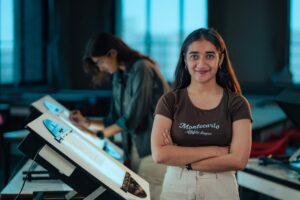
At Parul University’s molecular diagonostics workshop , Dr. Mukul Jain delivered a challenge alongside the science: do not just learn to run tests; learn to invent affordable ones. For students of life and applied sciences, it reframed their skills as the foundation of a business and a public good
The Real Problem: Access, Not Just Technology
Modern genetic technology is remarkable but often expensive. As Dr. Mukul Jain noted, a single Next-Generation Sequencing (NGS) test can cost in the region of tens of thousands of rupees, which makes it impractical for mass public-health screening, especially in under-resourced areas. The technology exists; affordable access does not. That gap, he argued, is precisely where a smart startup can make a difference: by developing simpler, PCR-based tools (potentially using RFLP methods) that deliver a reliable result at a fraction of the cost.
A Public-Health Opportunity
Dr. Mukul Jain grounded the idea in a real need. Some inherited conditions, such as sickle cell disease and thalassemia, occur more frequently in particular regions and communities, and early identification can make a real difference to families and health outcomes. The opportunity is to build affordable screening that reaches these populations. Crucially, he stressed that any such work must be done responsibly: with proper, documented ethical consent, respectful community engagement, and appropriate approvals, never as data collection done to a community rather than with it. Handled this way, affordable diagnostics become a genuine public good.
The Non-Invasive Future
A second big theme was comfort and accessibility. Much routine testing today is invasive, requiring blood draws that patients dislike. The future, Dr. Mukul Jain argued, is increasingly non-invasive, using easily collected samples like saliva or even dried blood spots on a paper card so that testing can happen simply and, potentially, at home. He pointed to emerging research on detecting biomarkers from tears and to using simpler, cheaper sequencing to screen for genetic traits early in life so families can make informed lifestyle choices. The direction is clear: make testing cheaper, gentler, and closer to the patient.
Funding a Diagnostic Startup
A good idea needs capital, and Dr. Mukul Jain was practical about where students can find it, without personal debt:
- Corporate Social Responsibility (CSR) funds: Large companies are required to invest in social projects, and a diagnostic tool serving underserved communities is exactly the kind of initiative they may support, often via partnerships with NGOs or public bodies.
- Government grants: The Student Startup and Innovation Policy (SSIP) actively funds student innovators, offering grant support to help build an initial prototype.
A lack of money, he argued, is no longer a valid excuse; the capital is available for students who know where to look and how to pitch.
The Frontier: Point-of-Care and Data Ethics
Dr. Mukul Jain also pointed to an ambitious frontier: miniaturised, portable PCR devices that connect to a smartphone, taking a small sample and returning a result to the user’s phone, bringing lab-grade testing to the point of care. He noted, too, that aggregated health data has real value to research and industry but was clear this is a domain that must be governed by strict consent, anonymisation, and privacy safeguards, with the interests of the people the data comes from placed first.
An Open Door
Perhaps the most important message was an offer. A student’s relationship with the university, Dr. Mukul Jain said, does not end when the workshop does. The Research and Development Cell is open to students who want to build a real diagnostic prototype, and the university’s innovation and incubation ecosystem can support the journey from a prototype to a patent to a product. Students now have the theory and the hands-on skills; all that is left is the ambition to build. For this generation that is entering an AI-driven world, being health-focused, this skill could be invaluable. Explore hands-on learning and research opportunities with a Bachelor of Technology (B.Tech.) in Biotechnology, a Bachelor of Science (B.Sc.) (Honours) in Biotechnology, and a Master of Science (M.Sc.) in Biotechnology at Parul University.
FAQs
Why are affordable diagnostics important?
The most advanced genetic tests are too expensive to be performed on a large scale and made widely available, which is necessary to be able to test the largest number of individuals in order to help the most people, especially in areas lacking resources. Reliable, affordable, PCR-based diagnostic tools can provide reliable results at a lower cost, providing greater access to early detection and better health outcomes.
What are some ways to launch a startup for diagnostic use?
Corporate Social Responsibility (CSR) funds are one such accessible pathway, in which companies invest in social impact projects (which are often carried out by NGO or public partnerships) and government grants, including the Student Startup and Innovation Policy (SSIP), which provides support to student innovators to develop their prototypes. Research cells and incubation facilities at universities can also be used for the provision of facilities and mentorship.
What is non-invasive diagnostic testing?
Non-invasive testing requires samples to come from places that are not broken through the skin, like saliva, dried blood spots on paper, or even tears, without using a needle to draw blood. It aims to make testing easier, cheaper, and more widely available, even in the comfort of the home, and it looks like a big area for the future of diagnosis.