Parul University Signs Academic MoU with Assumption University, Bangkok!
- • The visit to Assumption University, Bangkok, and the MoU signed there.
- • What the partnership is designed to cover, from student exchange to joint research.
- • How a framework MoU turns into actual programs.
- • Where the agreement fits in Parul University's wider international network.
MoU with Assumption University:
Bangkok, Thailand
Signed during a Southeast Asia visit:
By Dr. Geetika Madan Patel, VP and Medical Director, Parul University
Framework agreement:
Specific activities to follow via separate implementing agreements
The visit and the signing!
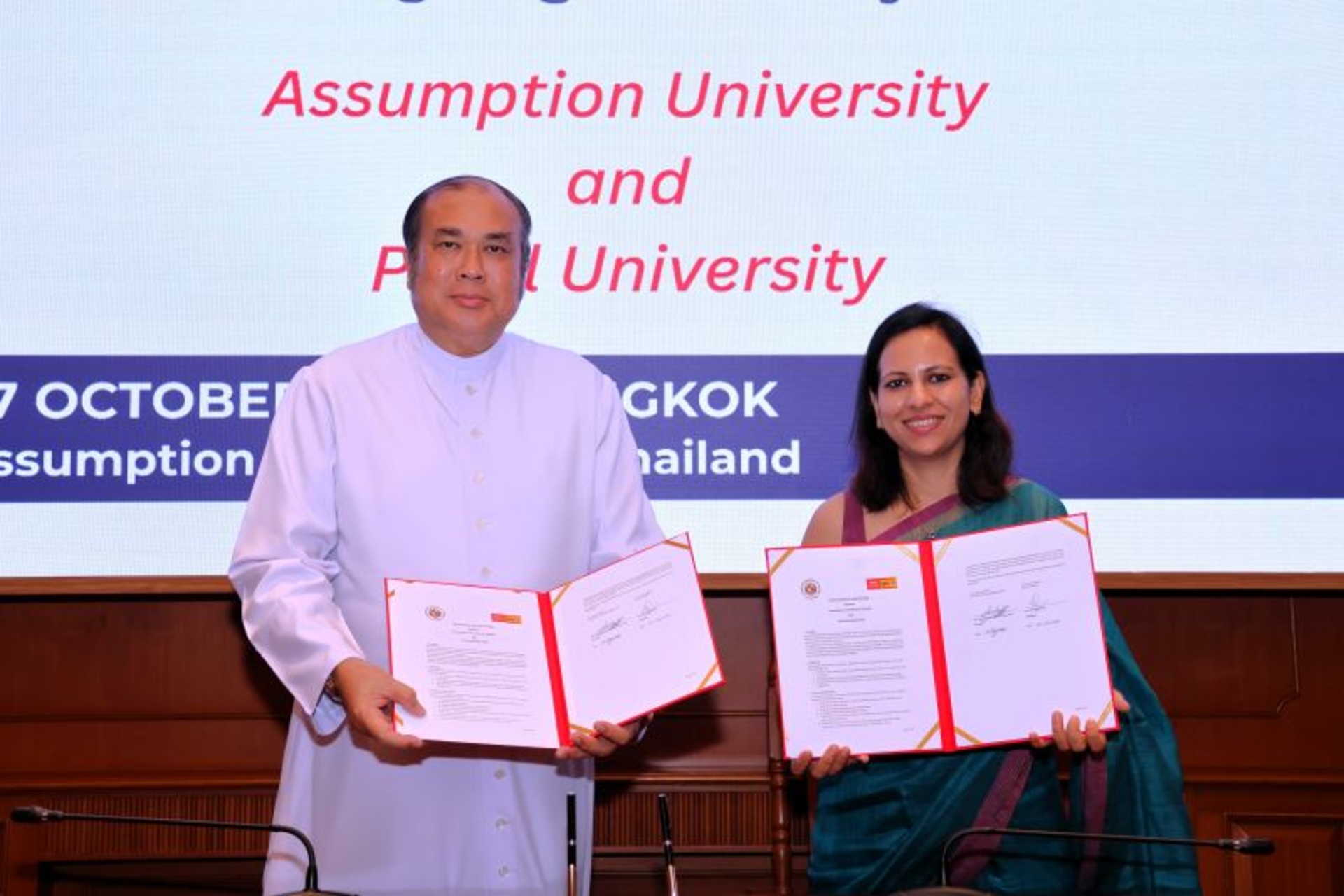
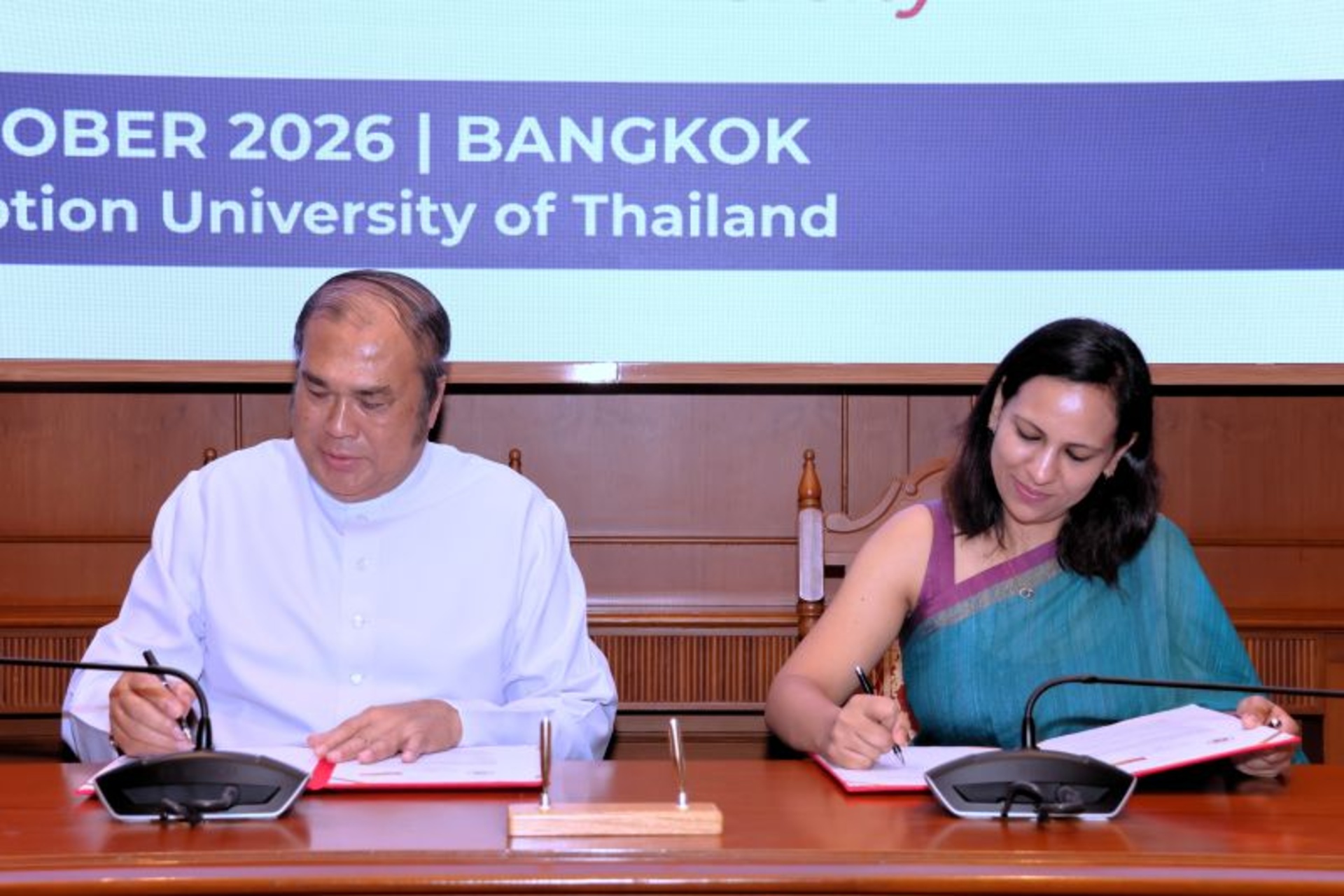
Parul University has signed a Memorandum of Understanding with Assumption University in Bangkok, Thailand, adding one of Southeast Asia’s well-known private universities to its international partnerships. The agreement was signed during a Southeast Asia visit by Dr. Geetika Madan Patel, Vice President and Medical Director of Parul University, who met Assumption University’s President, Rev. Bro. Sirichai Fonseka, and members of the university’s leadership team.
The meeting was as much about groundwork as ceremony. The two sides used it to exchange perspectives, identify areas of mutual interest, and map out where a collaboration could go before formalising that intent in the MoU. For a university that counts international engagement among its priorities, a partner in Bangkok opens a route into one of the region’s busier higher-education hubs.
The partnership for the welfare of students!
The MoU sets out a broad scope of academic cooperation between the two institutions, built around the exchange of people, research, and teaching.
| Area of cooperation | What does it cover? |
|---|---|
| Scholar and staff exchange | Professors, advanced graduate fellows, researchers, and professional staff |
| Student exchange | Graduate and undergraduate students |
| Academic materials | Exchange of information and academic materials |
| Joint research | Joint research programs, including work intended for publication in academic and professional journals |
| Conferences and workshops | Joint organisation of, and participation in, conferences, workshops, and academic events |
| Distance education and IT | Collaboration in distance education and information technology |
| Language and preparatory courses | Supporting activities such as language training, orientations, and preparatory courses |
Underneath those headings sit the objectives the agreement names: to promote mutual understanding and goodwill between the faculty, staff, and students of both universities; to encourage collaboration through research, teaching, and knowledge exchange; and to develop programs and projects that contribute to human-resource development and global engagement. The scope also leaves room, in its own words, for other feasible educational activities of mutual benefit to the parties, their students, and the public.
The framework!
The part of the agreement worth understanding is how it turns into activity, because an MoU of this kind is a framework rather than a finished program. Each collaborative activity, a specific exchange, a joint research project, and a shared course is to be set out in its own separate written agreement, whether an implementing agreement, an annex, or a letter of intent, which spells out the details, the responsibilities, and the financial arrangements for that activity. In other words, the MoU opens the door; the specific programs are negotiated and documented one by one as they take shape.
The agreement also settles the practical questions that partnerships live or die on. Each university designates a liaison office or contact person to coordinate the work, both sides agree to seek financial and in-kind resources to support joint programs, and each ordinarily bears its own costs unless a specific activity’s agreement says otherwise. On intellectual property, the terms are clean: work created solely by one university stays with that university, while anything developed jointly through the collaboration is jointly owned. Those are sensible, standard terms, and they are what let an academic framework become real projects without later disputes.
International collaborations!
MOUs are agreements between two parties. When it is signed by two universities, it is executed to offer better exposure to students. International partnerships initiate student exchange and faculty exchange. This leads to the exchange of learning, global exposure, cultural exchange, and much more. This move cannot be executed by just one campus. Altogether, the universities carry out research and joint programs. This is an addition to Parul University’s international collaborations.
For Parul University, which maintains partnerships with more than 120 foreign universities and hosts a large international student community, the Assumption University agreement extends that network further into Southeast Asia.
What the partnership produces will depend on the implementing agreements that follow it and on the appetite of faculty and students on both sides to use the door it opens. The work of turning shared aspirations into actual exchanges, research, and courses is the stage that comes next.
SOURCE AND CONTEXT. This information is based on Parul University’s communication. They have signed a Memorandum of Understanding with Assumption University, Bangkok. This was observed during Dr. Geetika Madan Patel’s Southeast Asia visit. This was signed with objectives and scope of collaboration. The contents of the MoU are confidential and shall not be copied or made public. This is a framework agreement. Under this agreement, various specific programs will be implemented.