- ● A two-day hands-on computational drug discovery workshop at Parul University, 25 to 26 September 2026, with Growdea Technologies.
- ● What participants ran: docking, molecular dynamics, library screening, generative design and ADMET, on an Indian-developed platform
- ● The MoU with Growdea, and the on-campus computing it is meant to bring.
- ● The caution the instructors stressed: AI narrows the search, it does not replace lab validation.
25 to 26 Sep 2026
Two-day hands-on workshop
MoU signed
With Growdea Technologies
3 perfect scores
30 out of 30 in the assessment
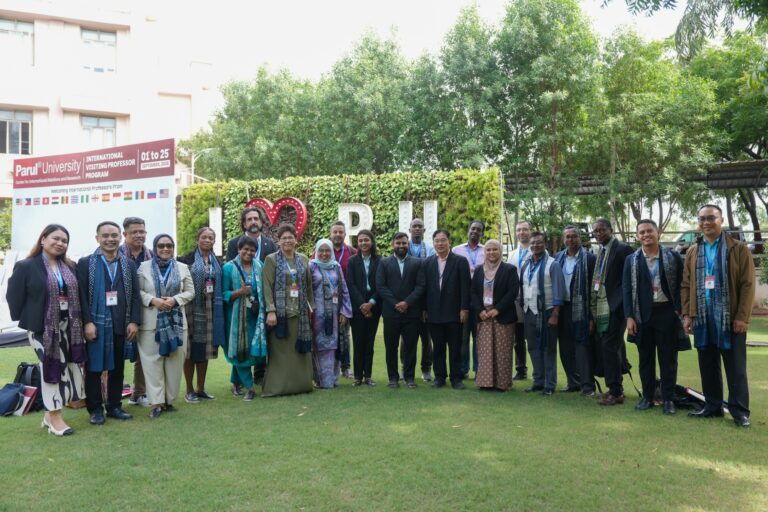
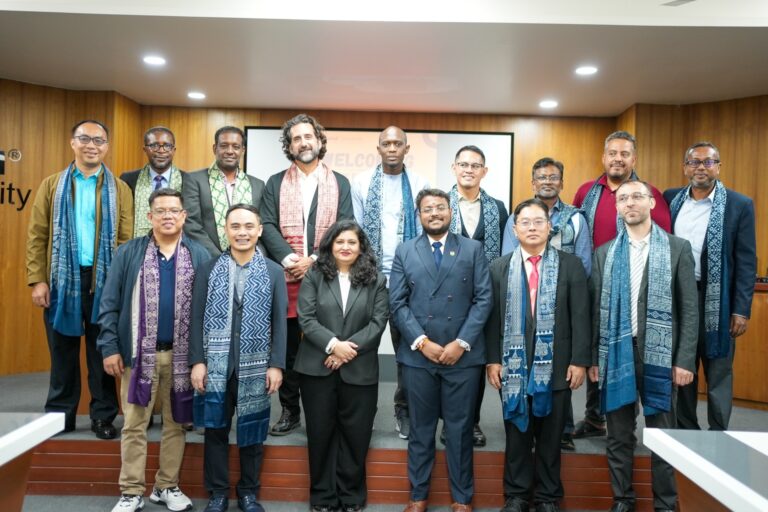
On 25 and 26 September 2026, the Department of Life Sciences at Parul University held a two-day workshop on AI-enabled computational drug discovery, together with Growdea Technologies, an Indian software firm. Participants worked on their own terminals and ran real docking and molecular dynamics jobs. During the programme, the university also signed an MoU with Growdea covering internships, server access and the possibility of setting up a computing cluster on campus.
Hands-On Docking, Molecular Dynamics and Screening: What Participants Ran Across Two Days
This was not a lecture series. Every participant logged into a shared computational platform, prepared molecular files, and ran jobs, errors and all. Every participant logged into a shared computational platform, prepared molecular files and ran jobs themselves, including the ones that failed. Day one had two parts. Participants began with molecular docking, they placed a ligand into a protein to obtain a static prediction of how the two fit together. Then they ran a simulation of the complex over time and analysed the trajectory to test whether the predicted pose remains stable once the molecule is allowed to move or it changes.
Day two widened the scope from a single molecule to a whole set. Participants screened a library of compounds, improved an existing lead, generated new structures and tested them for drug-like behaviour before any laboratory work.
The instructors kept the failures in view rather than skipping past them. When a job returned an “Invalid Ligand” error, they took participants back through the file, the format and the atom valencies. Much of real computational work lies in input preparation and troubleshooting, and the workshop was taught with that in mind.
The Growdea’s modules tools used on the platform
The training ran on Growdea’s own software, a set of modules that map onto the stages of a discovery project.
| Module | What it does |
|---|---|
| Docana | Molecular docking: fits a ligand into a protein binding site and ranks poses |
| Simana | Builds a solvated molecular-dynamics system and sets the simulation conditions |
| Trajectaana | Reads the simulation trajectory, with metrics like RMSD, RMSF and hydrogen-bond persistence |
| i-Frag | Fragment-based lead optimisation: keeps the strong part of a molecule, replaces the weak |
| GroGen | Generative design: proposes new molecules within drug-likeness limits, sent straight to docking |
| ADMET Vault | Predicts absorption, distribution, metabolism, excretion and toxicity, in a traffic-light view |
Why AI and Docking Scores Do Not Replace Laboratory Validation
The most useful thing in the workshop was a caution, repeated across both days. The most useful thing in the workshop was a caution, repeated across both days. Docking scores are not directly measures of binding but estimates provided by a score function. Simulation is not a direct measure of how a molecule will behave in a cell, but rather it describes how a modelled system will behave under certain conditions. These tools prioritise and narrow; they do not prove.
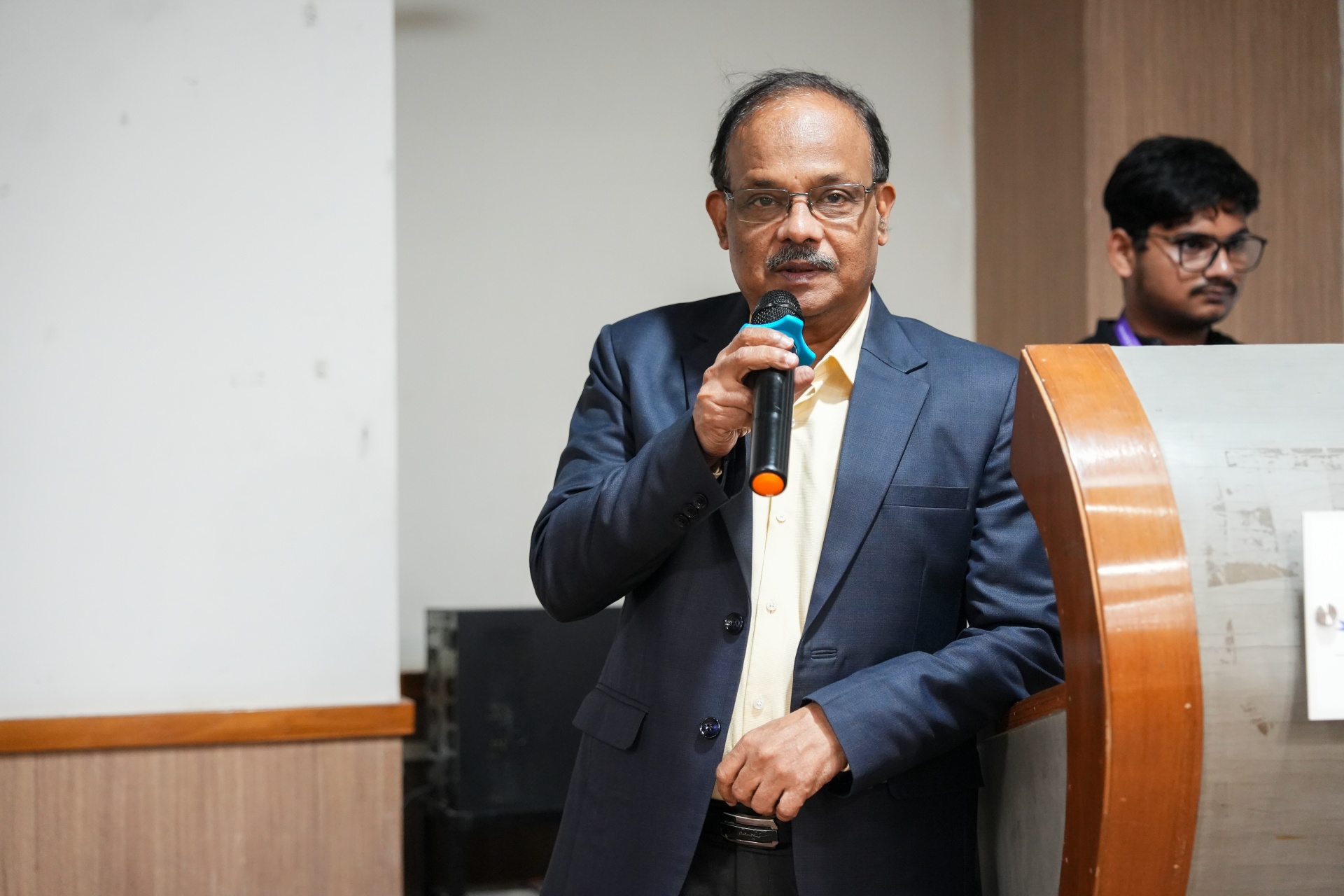
“AI helps us do faster searches, but we still need to rely on biological and physical reasoning to interpret the outputs.” says Provost Dr. K N Madhusoodanan during the final session. This is a slightly different take on AI and shows how valuable it can be to train using it.
Computational Drug Discovery Across Disciplines: Applied Sciences, Microbiology, Biopharmaceutical Studies and Ayurveda
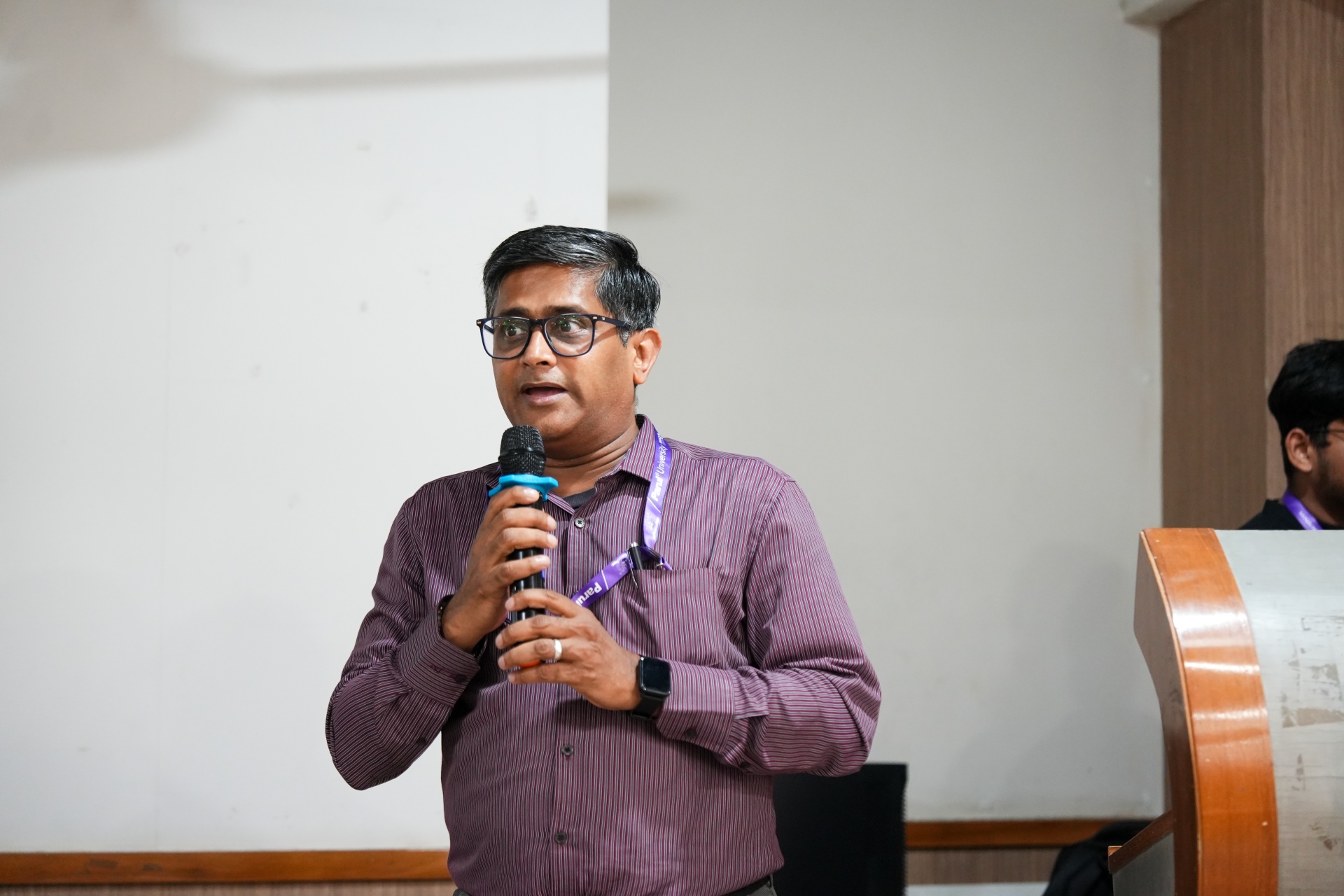
The room was mixed on purpose. Participants came from applied sciences, microbiology, biopharmaceutical studies and Ayurveda, with pharmacy and engineering in the wider discussion. The same workflow answers different questions for each. A chemist prioritises compounds before synthesis. A microbiologist screens before assays. An Ayurveda researcher, as Dr. Poonam Bhojak noted, can probe how a known phytochemical might act on a biological target, then test the hypothesis in the lab.
That reach is the argument for treating computational screening as a shared analytical layer rather than one department’s niche.
What the Parul University and Growdea Technologies MoU Covers: Internships, Server Access and On-Campus Computing
The collaboration began with a practical problem: molecular-modelling software is expensive, and the department went looking for an Indian-developed alternative. Growdea was that alternative, and the MoU formalises the relationship. Dr. C. Rajesh, Vice Principal of the Parul Institute of Applied Sciences, called it a strategic step rather than a one-off event.
Leadership described the MoU as pointing towards student internships, placements in computational biology, discounted or continuous server access, and an enterprise multi-GPU server on campus. The server would let longer simulations run locally and support several users at the same time. These remain stated intentions and have not yet been delivered. The MoU provides the framework, and the internships and the server are still to follow.
Recognition
The hands-on sessions concluded with a timed assessment of 30 questions. Three participants scored a perfect 30 out of 30: Dr. Milind Chatrabhuji, Dr. Palak Chaudhary and Ms. Ruchita Naghori. All three were recognised with book honours and certificates at the valedictory session.
What the Workshop and MoU Mean for Computational Research at Parul University
Two days cannot teach computational drug discovery, and the organisers said so plainly: participants left with a starting point, not mastery. The durable outcome is not the training. It is the access. An Indian-developed platform, a signed partnership, and a plan for local computation give the university a computational research capability it did not have before. Whether that becomes sustained research depends on what runs on the servers after the certificates are handed out.
SOURCE AND CONTEXT. Based on the workshop coverage report (Department of Life Sciences, Faculty of Applied Sciences, Parul University, 25 to 26 September 2026) and feedback from participants. Resource persons were Dr. Avinash Mishra, Founder and CEO of Growdea Technologies, and Ms. Lavanya Pathak. Platform and performance claims are Growdea’s. MoU outcomes such as the on-campus server are stated intentions, not delivered facts. LinkedIn profiles are linked with tracking parameters removed.
Explore research and the faculty
Faculty of Applied Sciences: paruluniversity.ac.in/faculty/applied-sciences
Growdea Technologies: growdeatech.com
People and organisations
- Dr. Avinash Mishra Founder and CEO, Growdea Technologies; resource person
- Ms. Lavanya Pathak Resource person
- Dr. C. Rajesh Vice Principal, Parul Institute of Applied Sciences
- Dr. K N Madhusoodanan Provost, Parul University
- Dr. Anupam Jyoti Workshop coordinator, Department of Life Sciences
- Growdea Technologies Pvt. Ltd. Indian computational drug-discovery software firm