A close before three judges
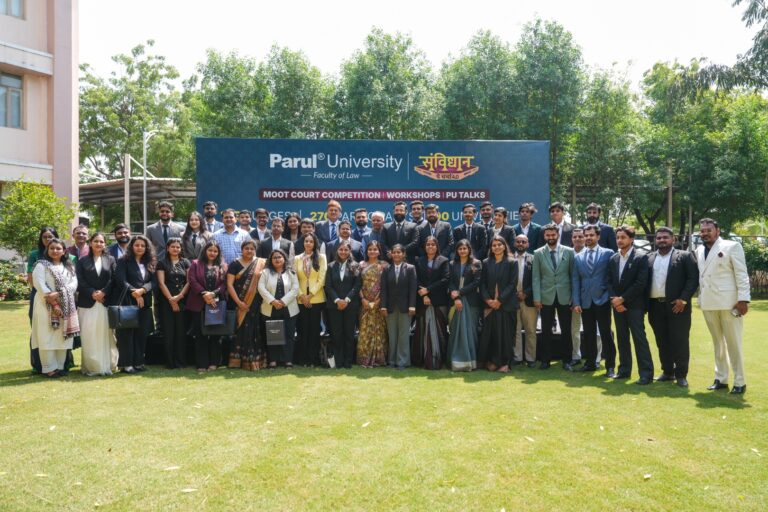
The valedictory, in the Central Auditorium, was presided over by Justice N. Kotiswar Singh of the Supreme Court, Justice Soumen Sen, Chief Justice of the Kerala High Court, and Justice Sourendra Pandey of the Patna High Court, with the Dean of the Faculty of Law and the university President. Students from more than 40 universities filled the hall for the final addresses, the Q&A and the prizes.
Justice Sourendra Pandey: a promise made to the people
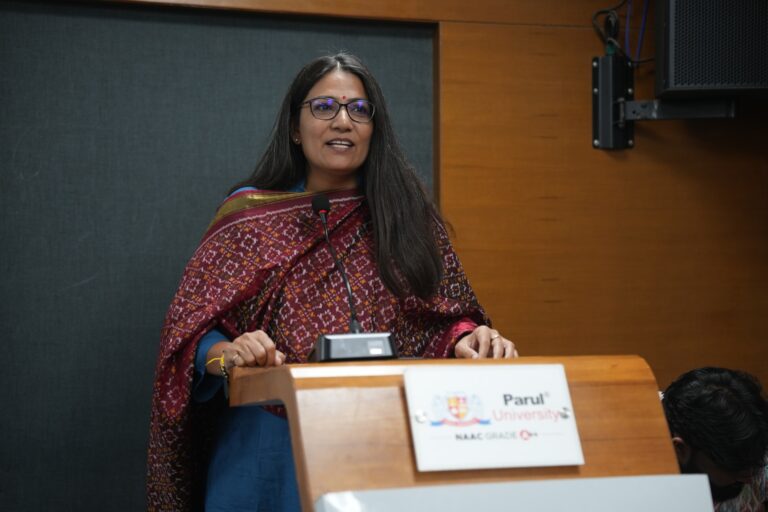
Hon’ble Mr. Justice Sourendra Pandey, appointed to the Patna High Court in 2025 after a career at the Patna and Jharkhand High Courts, said the very idea of Samvidhan Pe Charcha deserved to be held in every institution in India, because the Constitution is never discussed too much. Having just judged the national final, he praised the mooters and made an appeal: corporate careers draw most of the attention, but the judiciary needs good advocates, and good orators should try litigation early.
He asked students why the Constitution opens with “We the People” and not with the Government or Parliament, and answered that it is a promise to the people that belongs to every person individually, to be carried into daily life. Technology, society and governments change, he said, “but the dignity of the individual remains important,” and a person with a different view is not an enemy. On the judiciary’s role he was precise: “The judges do not own the constitution. It’s owned by all of us,” and judicial review enforces a promise already made rather than granting a favour.
The student Q&A
The interaction ranged across live questions of the justice system. Asked about regional diversity in the higher judiciary, Justice Kotiswar Singh urged students to believe in the Constitution and not merely read it, since it was crafted by some of the finest minds from diverse backgrounds. On whether social-media platforms are still mere intermediaries, he noted that a judge speaks only through the judgment and cannot explain it, and asked students to protect the Constitution and the judiciary from uninformed comment. On statutory timelines for criminal trials and on NDPS bail, Justice Pandey explained that Article 21 comes into play with long incarceration and that courts have intervened to grant bail where a speedy trial cannot be ensured, while cautioning that a rigid statutory deadline would strain an already heavy docket.
The winners
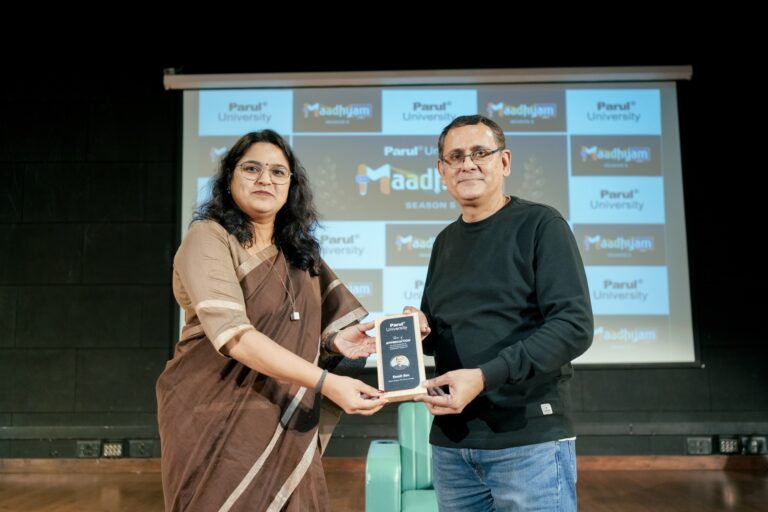
The ceremony closed with the felicitation and prize distribution, presented by the judges and the President. In the 3rd State (Gujarati) Moot Court Competition, the Best Mooter, Best Researcher and Best Memorial each received 15,000 rupees, with 30,000 for the first runner-up, 40,000 for the runner-up team and 60,000 for the winner. In the 4th Inter-University Moot Court Competition, the Best Mooter, Best Researcher and Best Memorial each received 40,000 rupees, with 80,000 for the first runner-up, 1.25 lakh for the runner-up team and 1.75 lakh for the winning team, which also took the trophy. As the judges put it, the real reward was the sharpened mind each participant carried home.