

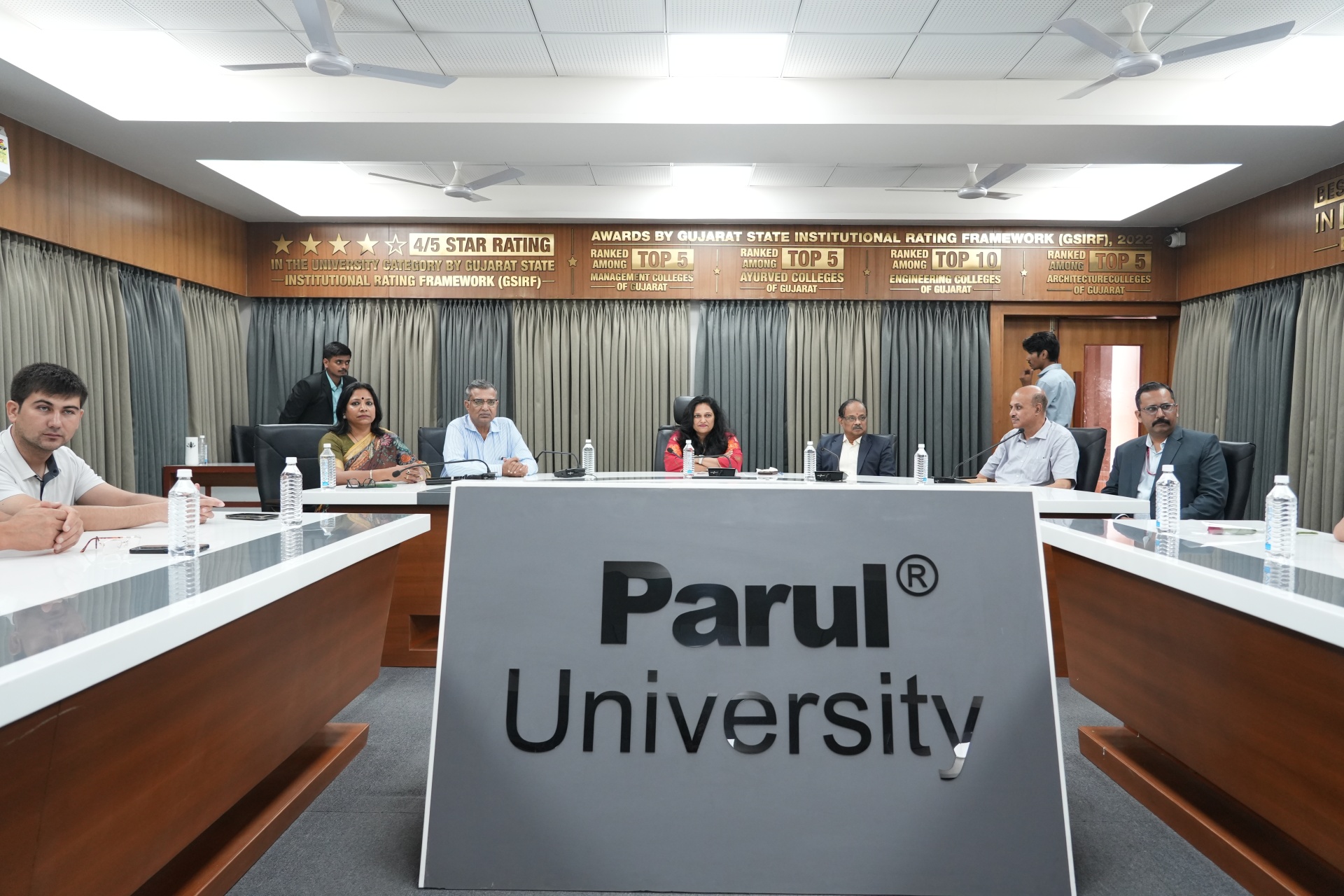
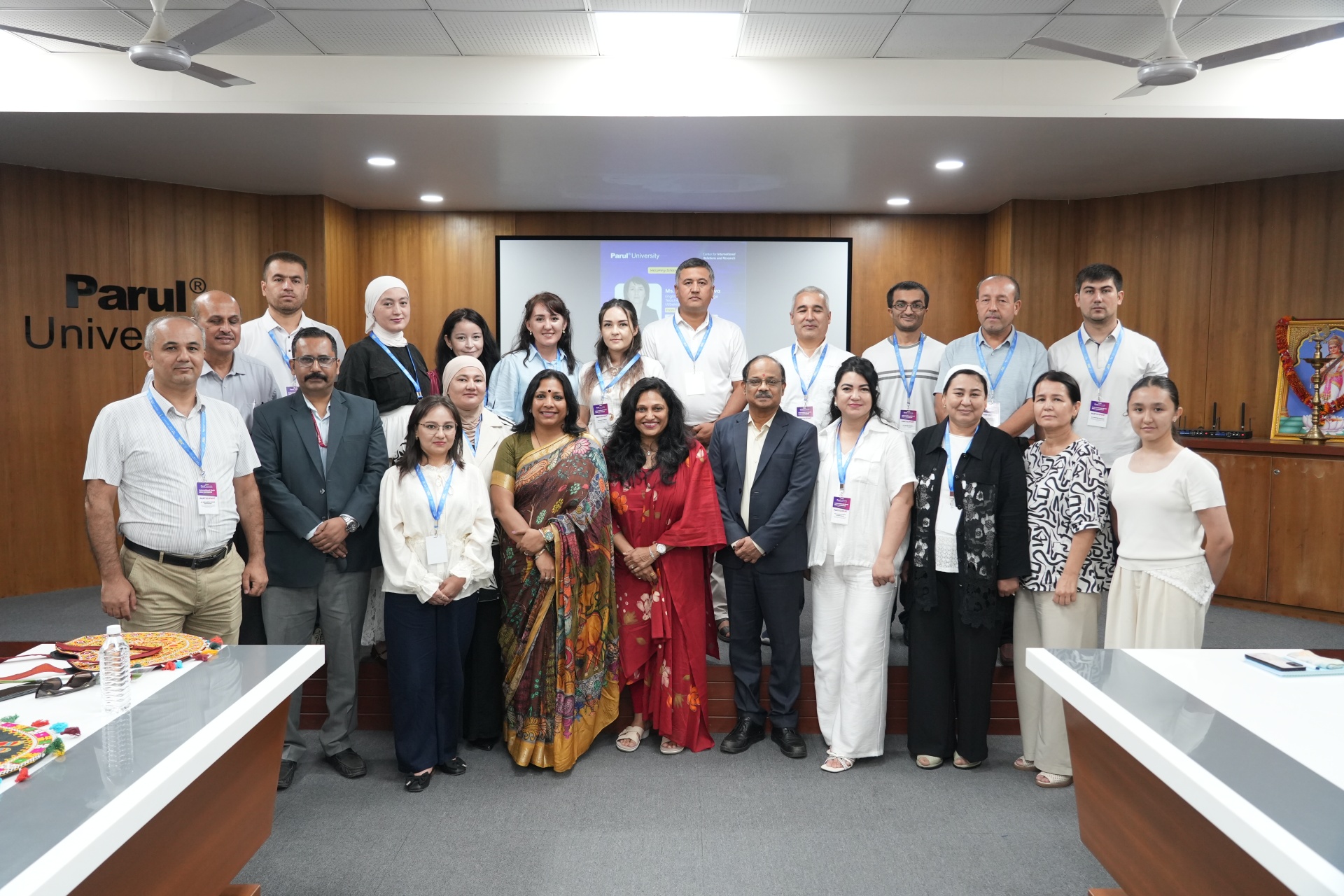
A university can describe its medical facilities on a brochure. It is another thing entirely for experienced international surgeons to walk through them and give their honest verdict. During Parul University’s International Week 2026, medical experts from Uzbekistan did exactly that, touring the university’s hospitals and teaching centres. What they saw offers an outside, credible window into Parul University’s healthcare ecosystem.
A Tour of Parul University’s Hospitals
Dr. Jahongir Ikromov, an anesthesiology and intensive-care specialist from Karshi State University, was especially well placed to judge a medical campus. During his visit, he explored three key facilities: Seva Ashram Hospital, the university’s Simulation Centre, and its Ayurveda Hospital. His visit to Seva Ashram Hospital resonated most with his professional interests. He was impressed by the accessibility of healthcare services and the availability of medical care to people from different sections of society, a reminder that a teaching hospital serves its community as much as it trains students.
Advanced Departments and Growing Ambitions
As a specialist, Dr. Ikromov was keen to observe departments close to his own field, and he was informed of the hospital’s facilities across a range of advanced areas, including neurosurgery, oncology, transplantology, and catheterization laboratory services. This breadth speaks to a serious clinical ecosystem. It aligns with the university’s stated ambitions, shared during the delegation’s medical discussions: an existing transplant unit with plans to expand into liver transplantation and a broader expansion of medical infrastructure that includes a planned oncology department housed in a dedicated 250-bed building. For a visiting expert, seeing both established facilities and clear plans for growth is a strong signal of a healthcare institution moving in the right direction.
A Surgeon’s Verdict on the Teaching
Facilities matter, but so does the quality of medical education, and here the visiting surgeons were equally impressed. Dr. Bahtiyor, a gastrointestinal surgeon with twenty years’ experience, delivered guest lectures on advanced surgical techniques, including laparoscopic and robotic surgery, emergency surgery and hernia repair. He praised the classroom facilities, particularly the large screens that let a professor display detailed anatomical diagrams and surgical videos clearly, and found the interactive teaching style very similar to his own. Most tellingly, he tested the students, asking about the eight functional segments of the human liver, and was impressed by how smartly they answered.
The students answered my difficult anatomical questions very smartly.
– Dr. Bahtiyor!
From a surgeon of two decades, that is real validation, not just of the university’s facilities, but of the calibre of the doctors it is training.
A Two-Way Medical Exchange
The visit was never meant to be one-directional. The Uzbek doctors came to learn from India’s healthcare and education systems and to exchange experience. What emerged was the foundation of a genuine medical partnership: invitations for fellowships, PhDs, and observerships, and firm plans for future doctor exchanges, with Parul University’s clinicians invited to Uzbekistan and Uzbek doctors returning to India. This kind of cross-border clinical and academic exchange is exactly how a medical university builds both its reputation and its students’ horizons.
Healthcare Ecosystem!
Parul University’s healthcare ecosystem is unusually broad, spanning modern hospitals, a simulation centre, Ayurveda and integrative medicine, an MBBS program, and postgraduate medical education. Having that ecosystem examined and praised by experienced international surgeons and specialists is meaningful validation. For prospective medical students, it is reassuring evidence that they would be learning in a serious, well-equipped, and internationally engaged clinical environment, one where the facilities, the teaching, and the students all earned the respect of visiting experts.
From foundational medical education to specialised clinical and surgical practice, explore the Bachelor of Ayurvedic Medicine and Surgery (BAMS), MD Ayurved, and MS Ayurved programs at Parul University. Develop your understanding of Ayurveda through structured academic learning and progress towards specialised roles across Ayurvedic healthcare and clinical practice.
FAQs
What healthcare facilities does Parul University have?
Parul University’s healthcare ecosystem includes Seva Ashram Hospital, a Simulation Centre, and an Ayurveda Hospital, with facilities spanning advanced areas such as neurosurgery, oncology, transplantology, and catheterisation laboratory services. It also runs an MBBS program and postgraduate medical education and has plans to expand into liver transplantation and a dedicated oncology building.
What did international doctors say about Parul University’s medical facilities?
Visiting medical experts from Uzbekistan praised Parul University’s hospital facilities, the accessibility of its healthcare services, and its teaching environment, including large screens for anatomical teaching. An experienced surgeon also praised the calibre of the medical students, noting how well they answered advanced anatomy questions.
Is Parul University good for medical (MBBS) studies?
Parul University offers a broad medical ecosystem, hospitals, a simulation centre, Ayurveda and integrative medicine, an MBBS program, and postgraduate education, which was examined and praised by visiting international surgeons and specialists during International Week 2026.


