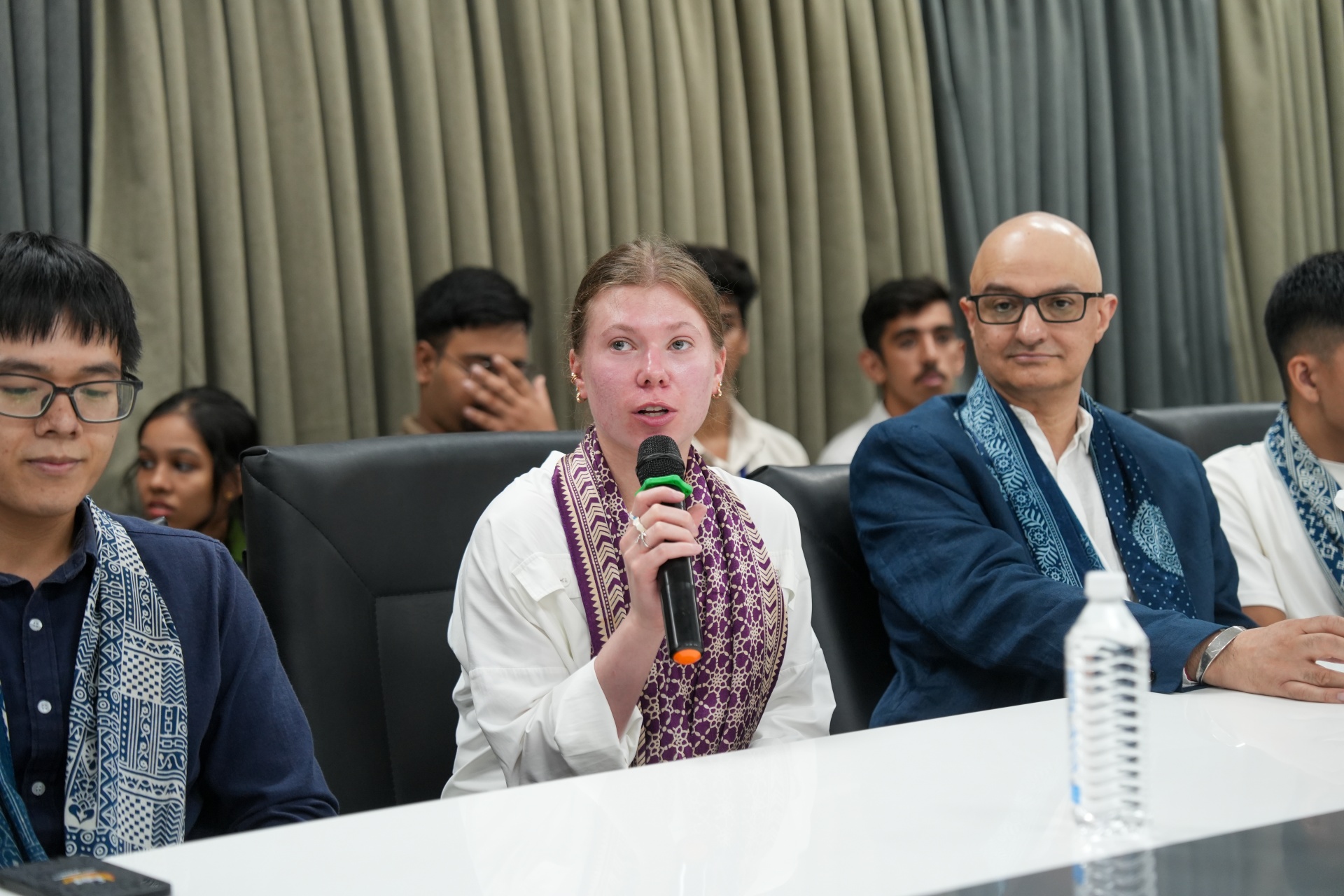
For a program built to test whether sustainability can be taught as a genuinely global subject, the Global Discovery Program (GDP) 2026 at Parul University offered a clear answer. It brought international students together for a two-week academic and cultural residency around a single theme: sustainability and ESG, pairing sessions on climate, public health, and policy with hands-on project work and cultural immersion. Here is what three of them, from three very different countries, made of it.
Adil, Morocco: A Water Filter Built for Floods
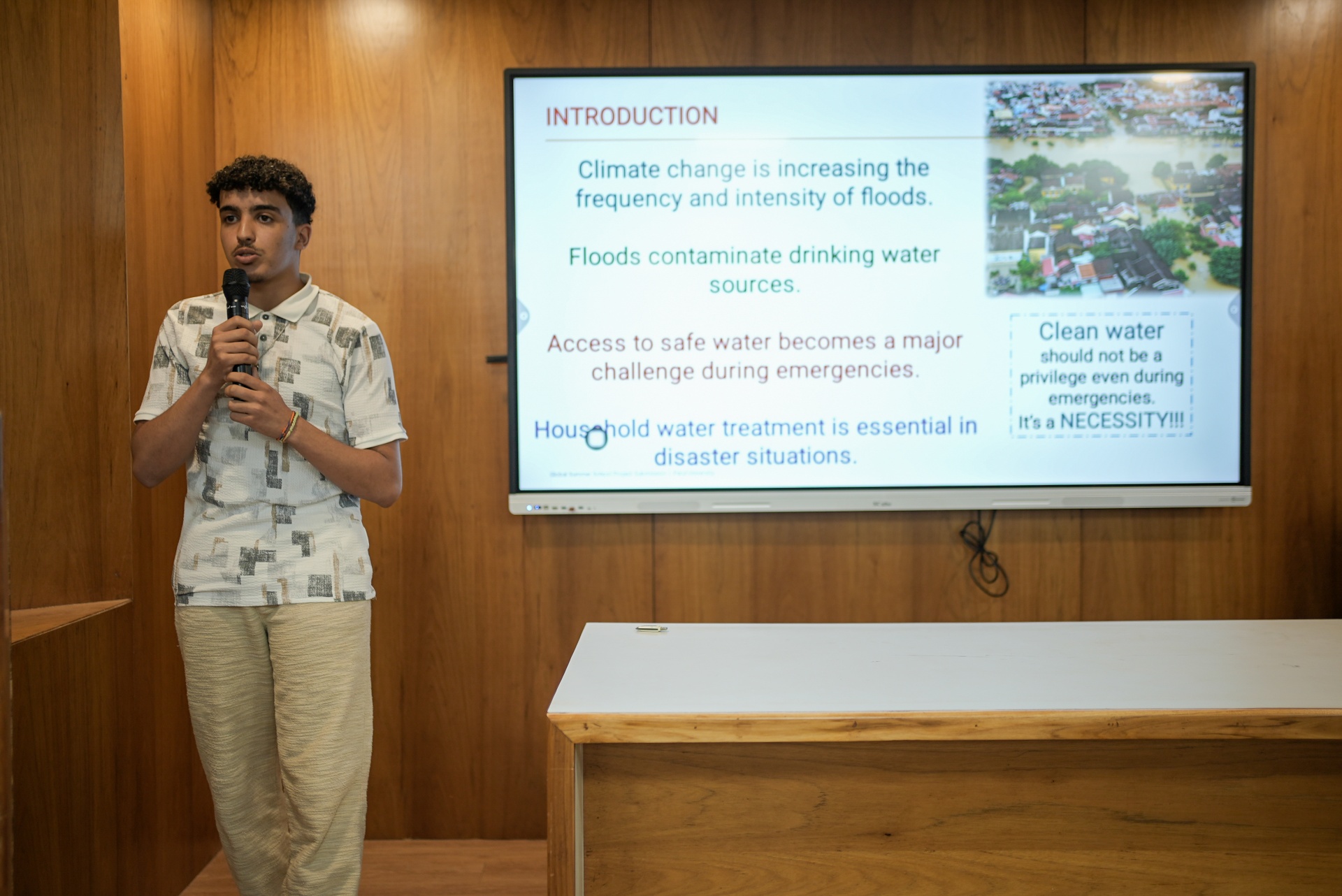
Adil Oubanala, a second-year Ecological Training student from Mohammed VI Polytechnic University, arrived nervous; it was his first summer school. He left, in his words, grateful. What pulled him in most was the project: his team designed and tested a low-cost survival water-filtration system for flood conditions, built only from locally available materials, and it worked in the laboratory. “The best thing was that it was practical,” he says. “We tried to make the filtration system, and it worked.” His own contribution drew on home: he taught his Indian teammates about desalination, a technique common in Morocco but less so in India. What struck him academically was the framing: “They are looking at the topic in an international way, in India, Morocco, Russia, in many countries.” He credits mentor Dr. Ashita Rai, whose session on water and climate resilience fed directly into the build. His three words for the two weeks: culture, diversity, amazing.
Daria, Russia: Auditing a Campus’s Waste
Daria Smirnova, a Master’s student in System Development and Environmental Management from ITMO University, St. Petersburg, chose the GDP because its theme matched her specialisation exactly. After nearly thirty hours of travel, what first struck her was the campus: unlike ITMO, whose buildings are spread across the city, Parul University is a single residential campus, green and self-contained, with everything in one place. Her project was a campus waste audit: her team built a questionnaire, surveyed shopkeepers and vendors about the waste generated daily, analysed the data, and proposed practical improvements to segregation and collection. “The project became much more meaningful because it involved practical fieldwork instead of only theoretical discussions,” she says. She also noted the university’s visible sustainability efforts, including solar panels across campus, and, comparing the two systems, found that both encourage the same things: research, teamwork, and solving real problems together.
Nguyen, Vietnam: Turning Bio-Waste Into Something Useful
Nguyen Ngoc Ha, a student at Hanoi University of Science and Technology, took on the hardest personal challenge. Her group’s project, converting bio-waste into usable green products, sat squarely in biology, a subject she had never studied. She is candid that it was the biggest barrier she faced. What helped was her mentor’s dedication: realising she was struggling with the scientific terms, he walked the group through their presentation slide by slide, explaining every technical word until she fully understood. She also singled out the teaching culture itself. At home, she said, a “think before you speak” ethos can make students hold back; at Parul University, she found faculty actively encouraging students to ask questions and simplifying complex ideas so everyone could follow. Her favourite session, fittingly for a science-and-tech student, was “AI in Sustainability: Innovation for a Greener Future.”
Knowledge That Flowed Both Ways
The common thread across all three projects was exchange. These were not international students folded into someone else’s idea; they were genuine contributors, Adil handing his Indian teammates a technique from Morocco, and taking Indian approaches home in return. “While we were learning about your country, we also learning about our country,” as Adil put it. It is exactly what a program like this is built to produce: not a one-way transfer of knowledge, but a working collaboration, tested in a laboratory, that neither side could quite have reached alone.
What They Expected, and What They Found
Perhaps the most telling part of their accounts is how their impressions changed. Some had formed ideas about India from the internet before arriving; what they actually experienced, above all, was warmth. Nguyen recalls landing in Ahmedabad with no local SIM card and asking a stranger for help. He immediately shared his phone’s hotspot. Across two weeks, she says, not a single student she stopped for directions ever ignored her; they would drop what they were doing to help. “The kind act of an unknown person made me realise that most of the negative things I had believed were untrue,” she says. For Adil, the nervousness he arrived with gave way to something he struggled to put into words.
If I hadn’t come here, I would be so ashamed of myself. The memories I made, the friendships, I cannot give you a word. I will always remember them.
– Adil Oubanala, Morocco
Why Programs Like This Matter
It is worth naming what a program like the GDP represents. Bringing students from across the world to live, learn, and build together for two weeks, and sending them home as genuine ambassadors for the experience, is exactly the kind of international engagement that NEP 2020 and the national Study in India vision call for. For the university, it is evidence of a real global classroom, not a claim on a brochure but students from Morocco, Russia, and Vietnam publicly describing what they gained. And the clearest measure of its success is simple: young people who arrived unsure, and left calling it an opportunity no one should pass up. Students describing what it is like to study in India.
Frequently Asked Questions
What is the Global Discovery Program at Parul University?
The Global Discovery Program (GDP) is a two-week international academic and cultural residency at Parul University, built around sustainability and ESG. It brings international students together for academic sessions on climate, public health, and policy, hands-on group projects, and cultural immersion. The 2026 edition hosted students from countries including Morocco, Russia, Vietnam, and the UK.
What do students do in the program?
Students attend academic sessions on sustainability, public health, climate resilience, and ESG policy; work in mixed international-and-Indian teams on practical sustainability projects (such as water filtration or waste management); and take part in cultural immersion activities. The 2026 cohort’s projects included a flood-water survival filter, a campus waste audit, and converting bio-waste into green products.
Can international students study at Parul University?
Yes. Parul University hosts a large international community and runs many programmes for global students through its Center for International Relations and Research (CIRR), including summer schools like the Global Discovery Program, semester exchanges, internships, and full degrees. Students from around the world come to study, research, and experience India.