For a student planning to study B.Tech Petroleum Engineering, this industry size is interesting, but it should not be the only reason for choosing the course. Your university can strongly shape how you understand drilling, reservoirs, production systems, petroleum geology and other technical areas.
This is why comparing programmes is really important.
Does The B.Tech Petroleum Engineering Curriculum Cover the Right Subjects?
For a student planning to study B.Tech Petroleum Engineering, this industry size is interesting, but it should not be the only reason for choosing the course. Your university can strongly shape how you understand drilling, reservoirs, production systems, petroleum geology and other technical areas.
This is why comparing programmes is really important.
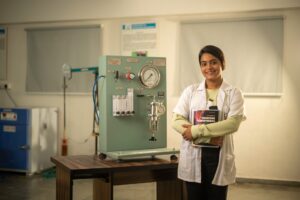
What Petroleum Engineering Labs and Practical Facilities Should You Check?
Petroleum Engineering cannot be understood properly only through classroom notes. Before choosing a university, find out what kind of practical work students actually perform.
● Drilling-Based Learning:
Check whether students study drilling fluids, drilling equipment and well-related engineering concepts through practical activities.
● Reservoir and Production Training:
Look for opportunities to understand reservoir behaviour, well production and production analysis.
● Engineering Software Exposure:
Reservoir modelling, simulation and technical analysis tools may help students understand modern engineering workflows.
● Laboratory Work:
Practical sessions involving petroleum fluids, fluid flow and related measurements can connect theory with actual engineering problems.
The important question is not simply, “Does the university have labs?” Ask what students actually learn and perform inside them.
Get Complete Details From Expert
Request a CallDoes The Programme Include Industrial Training and Internships?
Petroleum operations involve complex systems, different technical teams and strict safety procedures. Industrial exposure can therefore be an important part of learning.
Check whether industrial training or internships are formally included in the programme. A structured internship is different from simply asking students to find experience on their own.
You can also examine whether the programme uses industry case studies, field-based examples, technical projects or practical problem-solving exercises. These experiences may help students understand how classroom concepts are used in real engineering situations.
For example, a student may understand reservoir engineering theoretically but gain a clearer picture after working with reservoir data or simulation exercises.
How Should You Evaluate Faculty and Technical Learning Support?
Faculty profiles deserve more attention than students sometimes give them.
Check whether faculty members have qualifications or experience connected with petroleum engineering, drilling, reservoirs, production, geology or related areas. Their research interests can also tell you which technical areas receive greater academic attention.
Students should also see whether faculty information is clearly available rather than relying only on promotional statements.
Technical support is equally important. Petroleum Engineering increasingly involves data interpretation, simulation and engineering software. Access to suitable computing facilities can therefore support classroom and project work.
What Career Preparation Should a Petroleum Engineering Programme Provide?
A good programme should help students understand different petroleum engineering roles rather than treating all jobs as the same.
Students may eventually explore roles such as:
● Drilling Engineer:
Works with planning and technical aspects of drilling wells.
● Reservoir Engineer:
Studies underground reservoirs and resource recovery.
● Production Engineer:
Works with oil and gas production systems and well performance.
● Petroleum Engineer:
Handles technical problems related to exploration, extraction and production.
● Mud Logging Engineer: :
Studies drilling information and geological samples during well operations.
Career guidance should help students understand the skills required for such roles rather than only showing company names or placement numbers.
How Does Parul University Support B.Tech Petroleum Engineering Learning?
Parul University offers a four-year B.Tech Petroleum Engineering programme covering drilling operations, reservoir engineering, geosciences and production technologies. Its programme page also highlights petroleum geology, drilling technology, enhanced oil recovery, safety management and environmental regulations.
Practical learning includes geological mapping, drilling fluid testing and production analysis, along with exposure to reservoir simulation, drilling engineering, and production operations through training and industry-based case studies.
The published curriculum also shows specialised courses such as Introduction to Petroleum Geology, Petroleum Exploration and Drilling Engineering, along with associated laboratory work. In later semesters, the teaching structure includes industrial training/internship, reservoir modelling and simulation, and a reservoir modelling and simulation laboratory.
These are useful points students can examine when comparing the programme with their own learning and career interests.
Which Questions Should You Ask Before Taking Admission?
Before applying, go beyond the course name. Read the full curriculum, understand the laboratories, look at faculty profiles, and check how internships and technical projects are structured.
You may even make your own checklist and compare each factor separately.
The university you choose will become the place where concepts such as drilling, reservoir behaviour and production engineering move from textbook chapters to actual technical understanding. Spending some extra time checking these details before admission can therefore make your B.Tech programme decision much clearer.
FAQs
Is mathematics important for B.Tech Petroleum Engineering?
Yes, mathematics is used in engineering calculations, fluid flow, reservoir analysis and several technical subjects.
Can diploma students enter B.Tech Petroleum Engineering through lateral entry?
Lateral-entry options may be available depending on the university's eligibility rules and admission requirements.
Is Petroleum Engineering suitable for students interested in geology?
Yes, students interested in geology may find areas such as petroleum geology, exploration and reservoir studies especially relevant.