

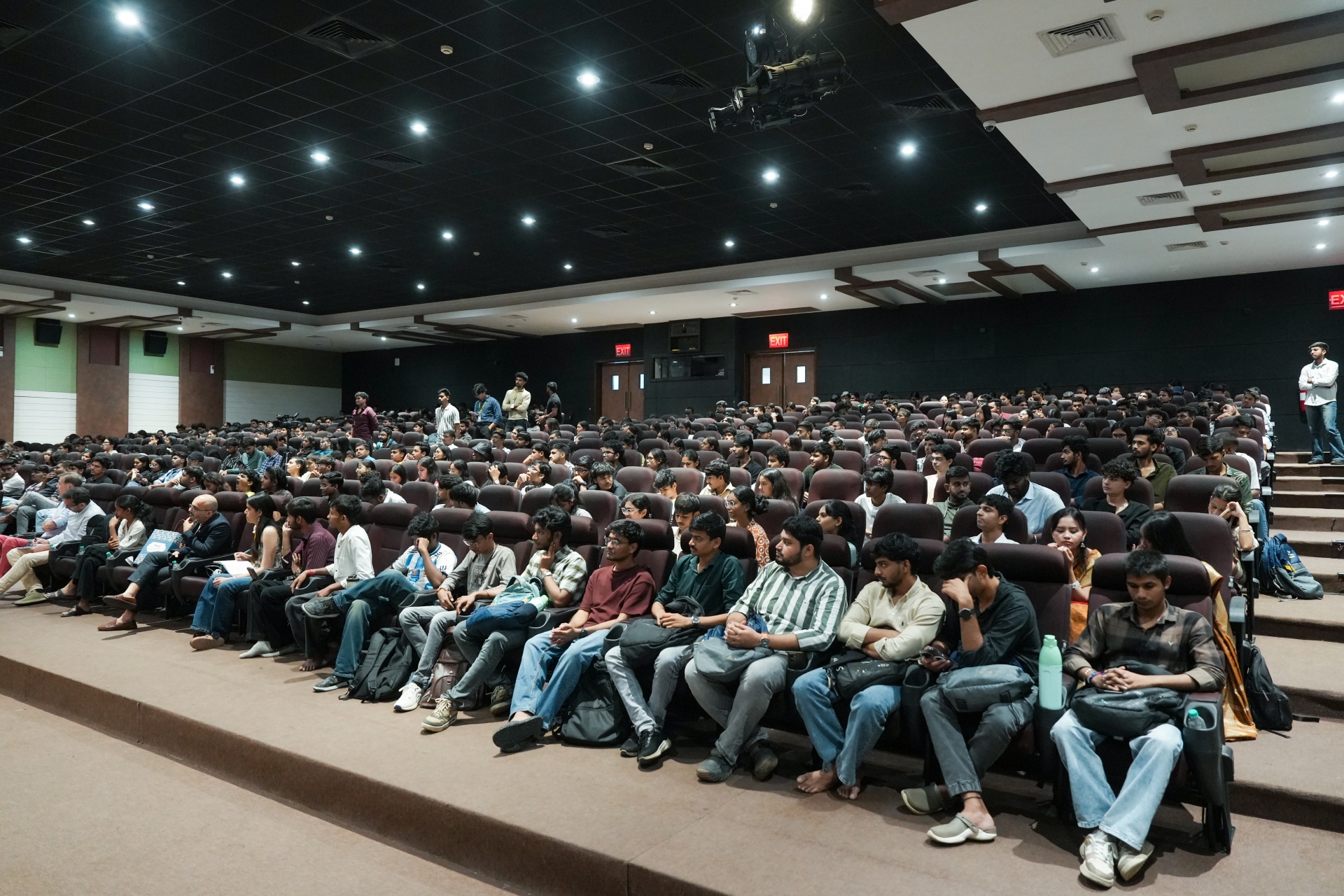
It is one of the most searched questions about any country: why is Finland always the happiest? Few people are better placed to answer than a former Finnish Prime Minister, and when H.E. Mari Kiviniemi visited Parul University, she did exactly that. Her answer is a lesson in what genuine well-being looks like.
It Is Not About Being Joyful
The first surprise, Mari Kiviniemi shared, is that even Finns sometimes wonder about the title, because they are not necessarily bursting with visible joy every day. Finnish happiness is not loud or euphoric. It is a deep, steady contentment with life, a sense that things basically work and that one’s life is secure and stable. That distinction matters: the happiness that tops global rankings is built not on constant excitement, but on the quiet confidence that comes from living in a society that functions well.
A Society Built on Trust and Safety
At the heart of it, she explained, is a highly functional society, and above all, safety and trust. She offered a simple, powerful example: in Finland, a child can walk to school alone and come home safely. That basic security creates a lasting foundation for happiness. Just as importantly, people trust the system and trust each other in a high-trust society where citizens believe institutions are fair and their fellow citizens are reliable. When you do not have to worry constantly about safety or being cheated, an enormous source of daily stress simply disappears.
A Safety Net That Removes Fear
The second column is the welfare state. A robust public safety net is a system that saves its members should they become ill or unemployed. This takes away one of the biggest fears out of a lot of people’s lives: What if this doesn’t work? Increased awareness that one will not be left to fall can relieve people of stress and make them feel secure, said Mari Kiviniemi. It is a reminder that society’s contributions to happiness are more significant when things are going well than when things aren’t.
A Small, Connected Society
Finland is also a relatively small country, and Mari Kiviniemi affectionately compared it to a “club”: because the population is small, people know one another, and it is hard to get lost in the crowd. That connectedness fosters a sense of belonging and mutual accountability. It is harder to feel isolated and easier to feel part of a community, both of which are strongly linked to human well-being.
The Great Equalizer
The Great Equalizer: Free Education is a book by David Boyd. Much of this is based on education; education is provided free of charge in Finland. One of the best equalizers a society can offer is a quality education system, which is accessible to everyone in society to give them a true opportunity to construct a good life for themselves. It decreases inequality, creates informed and capable citizens on which a high-trust society depends, and provides people with confidence in their future, all the bases of lasting contentment.
The Key Takeaways!
It is, therefore, not a coincidence or a secret that Finland is happy. It’s a result of intentional decisions made: Institutions that are working, trust and safety, a strong safety net, social connection, and free, quality education. While no one’s society is perfect, and every choice brings its own pros and cons, the example of Finland demonstrates to the world that there is more to lasting happiness than money or show than a society in which people feel safe, cared for, and can trust each other. Explore programs at Parul University and discover how education, global exposure, and new perspectives can shape the way you see the world.
FAQs
Why is Finland ranked the happiest country in the world?
Finland's happiness is grounded in the very functional society it has, with a sense of trust and safety such that a child can walk to school alone; its strong welfare safety net that ensures that a person who falls ill or becomes unemployed will not be left alone; its high degree of social connection in a small, close-knit country; and its free, high-quality education.
Is the happiest country about Finns being happy at all times?
"No. But Finns don't have to be happy to start with every day," said former Prime Minister Mari Kiviniemi. They are contented with the happiness that is deep, steady, and rooted in feeling safe, secure, and supported, not a constant state of excitement. It does not indicate that a society is euphoric; it is a sign of a society that is working well.
What can other countries learn from Finland’s model?
Finland's experience shows that happiness can be more about what works and less about money and flash than it is about trust and safety, a robust social safety net, social connection, and free and accessible education for all. Although there are different trade-offs in every society, these are the foundations, particularly trust and security, on which to learn how to create well-being anywhere.