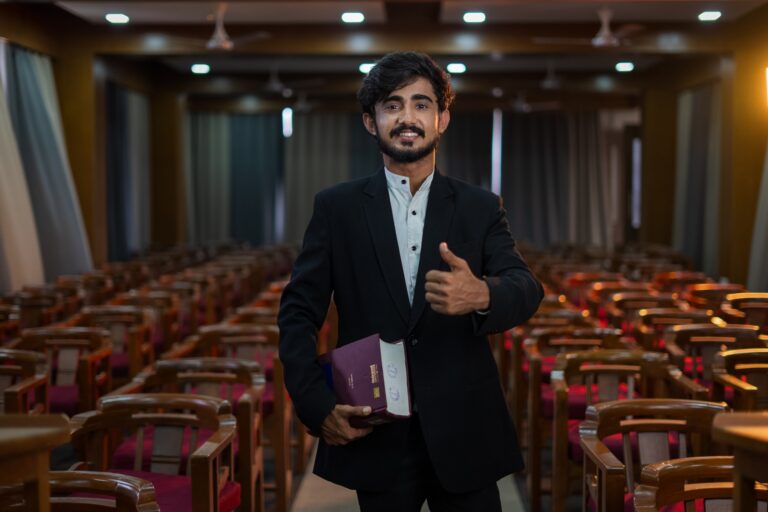
About Dr. Mahesh Suthar
Esteemed guests were invited to the Drug Awareness Program at Parul University. Dr. Mahesh Suthar was one of them. He is a psychiatrist in the Department of Psychiatry at SSG Hospital, Vadodara. He is the Nodal Officer of the hospital’s Addiction Treatment Center. He is been heading it for 12 years. The program was conducted by Insight Cell. The goal was to help the students with recognising the condition when it appears, that is to find the addiction signs.
What addiction is, and how to recognise it
As the session was based on addiction, the signs and ways to handle it were discussed. Dr Suthar said that there are three things to mark that is tolernace of a person, where a person need more a substance to feel the same effect. Then there is withdrawal, the discomfort experienced when one tries to reduce or leave it. There is a breakdown in routine functioning, where daily routine gets affected, the studies, work or relationships might start to suffer. If a student is not able to study for long hours, or in general not able to study because of these habits, then he or she has crossed the line from use into dependence. And this is where professional help is required.
In simple language, he shared that the brain’s reward system boils down to a single source, which leads to dependence. He was clear that not everyone who tries a substance becomes dependent. He shared that he has seen cases or people around in his own medical college batch who tried alcohol but only a few got into addiction. The risk rises with factors such as isolation, stress, the way a person copes and above all, early and heavy exposure.
The warning signs, and where help exists
For students and staff alike, Dr. Suthar named the signals worth noticing: repeated absence from classes, tests or exams, a sudden change in the circle of friends, withdrawing from people, and a general change in behaviour. A classmate who goes quiet or absent may be dealing with a mental-health difficulty or an addiction, and a simple, caring question can be the first step. His advice was to refuse firmly under pressure, to stay alongside a struggling friend rather than judge them, and to seek professional help when a habit is known to be harmful and cannot be stopped.
He noted that most people do not walk in for treatment on their own; they come because family or friends helped them see the problem. He pointed students to professional treatment and to the national Tele-MANAS helpline, which can be used confidentially, and said the Addiction Treatment Centre at SSG Hospital runs with support from AIIMS New Delhi, with most treatment free of cost. De-addiction, he stressed, is not the work of one doctor or one department; the whole society has to work on it together. Join Faculty of Psychology at Parul University and find the programme that suits your interest such BA in Psychology, or B.Sc. in Psychology or masters.
Also Read: Awareness Program on Drugs at Parul University with Guests as Police and Doctors.