International law as reasoning, not a list
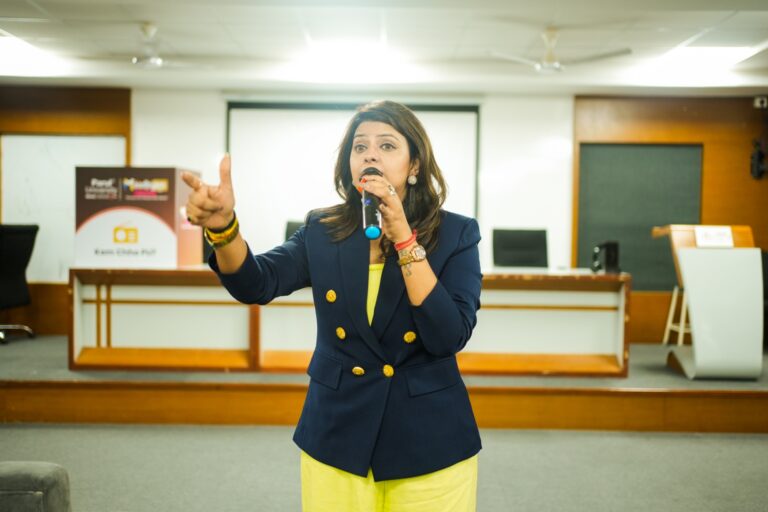
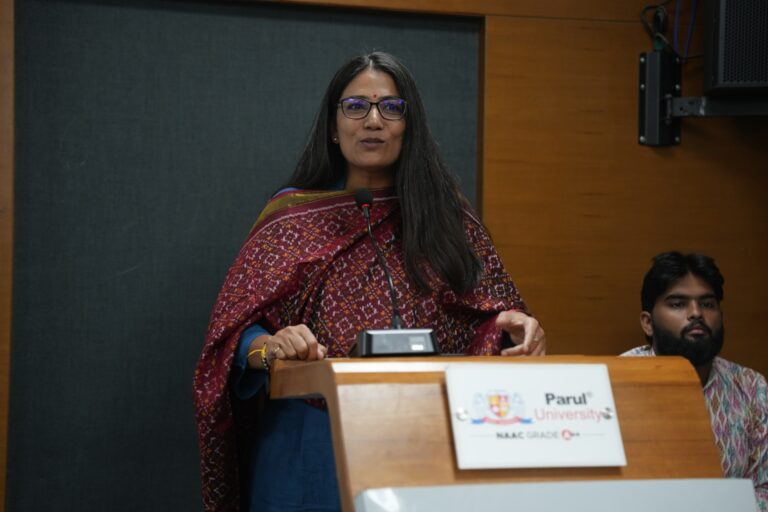
Dr. Nilam Andalia Kurniasari of Universitas Airlangga, Indonesia, taught at the Faculty of Law, Parul University, at the Moot Court under the Centre for International Relations and Research (CIRR) Visiting Professor Program. Her sessions moved between the sources of international law, the position of states in the international legal system, and the law governing maritime spaces. She urged students not to treat international law as a collection of conventions, but to think about how rules operate when states have different interests, when norms interact, and when there is no single enforcement authority comparable to a domestic legal system.
International law and the sources
The guest Dr Kurniasari started the topic with generic principles of law. She talked about pacta sunt servanda. The principle that agreements are to be kept, showing that a principle can operate within international law. It can operate even when the Latin phrase is not written into every regulation. There should be good faith. She further added about judicial decisions and the writings of highly qualified publicists as subsidiary means. It was for determining rules of law. Drawing out the word subsidiary with the students to establish its supporting role.
Crucially, she argued that the sources of international law should not be forced into the strict hierarchy students know from domestic systems, where a constitution sits above legislation and regulations. When norms conflict, she explained, a lawyer’s task is to identify the treaty provision, customary rule or general principle that supports a client’s position, while the adjudicating authority determines the outcome, so legal education is about building an argument from a source, not only remembering provisions.
Equality of Sovereigns, and when a state will not follow
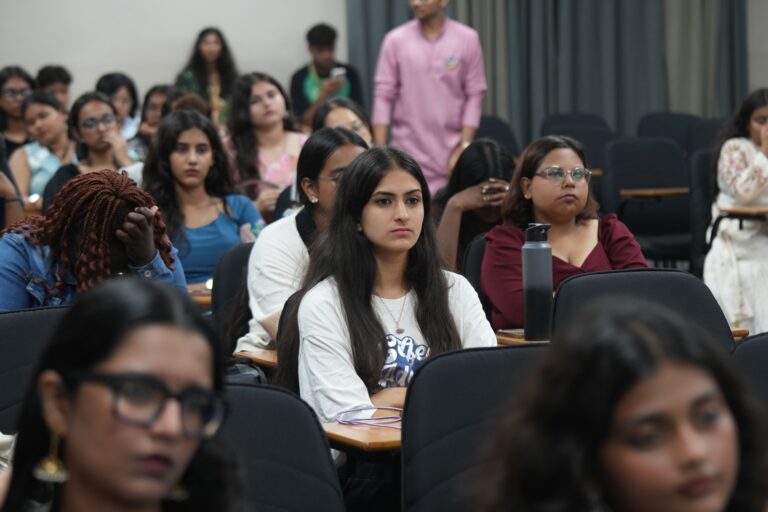
The session had the audience as students.The students came from different countries such as Indonesia, India, Kenya and Zimbabwe. The guest pointed out to the room to show the sovereign equality of states. According to law when a country is large and a there is a small island state or equal sovereignty even through territory, the population and military capacity differ and a legal principle exists that is in a different dimension from the realities of international relations.
She asked why sovereign states accept international obligations at all, connecting it to the need for peace, order and stable relations.
When compliance is supposed to be made concrete, she shared the International Court of Justice Case over Pulau Ligitan and Pulau Sipadan between Indonesia and Malaysia. It was awarded to Malaysia. She explained with an example, asking students what would happen if Indonesia didn’t agree to comply. Or taking sanctions, pressure, and resolutions and their limits, and explained that Indonesia followed the decision in light of regional stability and its commitment to international law. This was to show that an international judgment is about how states uphold their commitment and the ruling itself. She also mentioned the World Trade Organisation‘s special and differential treatment to show that equality does not always mean identical treatment for every state.
Why the ocean needs law, and the road to UNCLOS
Every territory and the near by areas have certain rules and regulations. The guest presented three questions: Why the ocean needs to be governed, who should govern it, and where that is found. She pointed out the modern development. The development of maritime law. The law formed through the League of Nations Codification Conference of 1930. With the United Nations Conference on the Law of the Sea in 1958 and 1960 and the adoption of the 1982 United Nations Convention on the Law of the Sea (UNCLOS). UNCLOS is the tool or instrument on marine pollution and safety at sea such as MARPOL and SOLAS and the role of the International Maritime Organisation.
Maritime zones under UNCLOS
India has their laws related to sea zone, business zones, economic zones and others. There are certain rules and laws that one needs to follow. Dr.Kurniasari discussed about UNCLOS. The lesson started with measurements. Measurement begins at the baseline, with normal and straight baselines for different coastlines. The territorial sea extends up to 12 nautical miles from the baseline. Talking about internal waters. It is on the landward side. The contiguous zone reaches 24 nautical miles. It is the area where a coastal state exercises control over customs. It is fiscal, immigration, and sanitary matters. The EEZ that is the economic zone is spread upto 200 nautical miles. There is a particular right and jurisdiction for the coastal state, and the continental shelf. This under Article 76 of UNCLOS. It is concerned with the seabed and subsoil as the natural prolongation of land territory. It can be defined as applying to situations that extend beyond 200 nautical miles. She mentioned about how law is connected through concepts such as Deadweight Tonnage and the historical practice of resource. The resource used near coasts.
Also Read: Meet The International Professors at Parul University under CIRR’s Programme