When people picture a journalist, they usually picture one thing: a reporter with a microphone or an anchor at a desk. In reality, journalism is a family of related but distinct crafts, and knowing the types of journalism is the first step to working out which one suits you. The main types split two ways, by beat (the subject you cover) and by medium (print, broadcast, or digital), and most journalists end up specialising in one or two. A journalism and mass communication course is built to let you sample them before you commit. At Parul University’s Maadhyam festival, each of these types was represented by a working professional who practices it, which is the clearest way to understand what each actually involves.
Investigative journalism
Investigative journalism is the deepest and slowest form, which involves finding out what somebody wants to be hidden, revealed by documents, sources, and patient verification. It’s not about telling what has happened; it’s about proving a story no one gave you. The discipline is being inquisitive, fact-checking, and correlating clues, and that’s what the festival’s investigative event, The Last Lead, tested the students through the eyes of the senior investigative journalist and bureau chief, Prashant Rupera. It’s tough, it’s hard, and it’s one that points to wrongdoing and has to be bulletproof.
Sports journalism
Sports journalism is a world of its own, reporting, analysing, and telling the stories of the athletes and sports they participate in. It’s not just about the numbers; it’s about the reasoning behind a score and the significance of it. It requires one to have real knowledge of the game, writing skills, and analytical skills, as Chandresh Narayanan, the senior sports journalist and cricket analyst who was judging The Reporter’s Dugout, showed the students. The field’s senior voices are open about the challenges they face: Vikrant Gupta, Head of Sports at Sports Tak and Aaj Tak, spoke to Maadhyam about how a culture of digital media values noise and why curiosity, preparation, and discipline are the best armour for a young sports journalist, not outrage.
Political journalism and the line with opinion
Political journalism covers government, policy, parties, and power, and it is where the distinction between reporting and opinion matters most. A political reporter informs, a commentator argues, and confusing the two damages both. This was a recurring theme at the festival. The senior political analyst and debater Vinod Desai judged the national debate competition, Breaking Views, which trained students in civil, evidence-based argument. The broadcast journalist Heem Brahmbhatt of ABP Asmita drew the line sharply for students: a journalist’s job is to inform, not to make up people’s minds or run a propaganda narrative while still calling out what is morally wrong. Political journalism done well holds power to account without becoming a vehicle for it.
Broadcasting and news anchoring
The most obvious craft of broadcast journalism is anchoring, which is journalism for television and video. Senior news anchor and editor Rahesha Sehgal, one of the judges for the flagship Journalist of the Year competition, isn’t a teleprompter reader, the standard the field expects. Heem Brahmbhatt asked students to be a person who walks as a walking piece and a thinking person, changing tone and pitch depending on the weight of a story. The other half was field reporting, where News18 Gujarati News Editor Sandhya Panchal told us how the real story lies behind the obvious frame and it is ground reporting, and not the studio, where the truth lies. Exactly these field-reporting skills were judged by Senior Special Correspondent of India Today and TV9, Gopi Maniar, at the live-reporting event, PU Wants To Know.
Feature/column/literary writing!
There is not only hard news but also soft news. Journalism meets literature: immediacy with depth and craft and voice in feature writing, columns, and long-form storytelling. It’s the writer’s house where he wants to investigate something instead of breaking. The story writing competition at the festival, Kahani Mania, was judged by the author, columnist, and literary critic Mona Verma, who asked students about the philosophy of creative writing and the lesson that lies behind a good story. Feature and column writing can be applied to careers in magazines, newspapers, digital publications, and books, and it’s great for students who prefer the long view to the daily deadline and for those who excel at the written word.
A focus on print and digital reporting and the newsroom behind it.
At the very heart of each type is the fundamental tool of reporting and the newsroom that transforms it into print, the core craft. The print editor Anamni Gupta of The Indian Express taught students the basics that are universal: the six factors of news value, the inverted pyramid, and the rule of verifying or distinguishing between journalism and rumour. The channel head, Pinak Shukla, demonstrated how a TV newsroom of 120+ members converts a tip into a show. The modern touch was added by Priyanshi Sharma of Peek TV: “In this social media world, transparency is still the product, and words like ‘allegedly’ and ‘reportedly’ are not jargon but protection.” A journalism course is taught first, then specialisation, and these are the skills that are taught first.
The essence of the Journalism & Mass Communication Program!
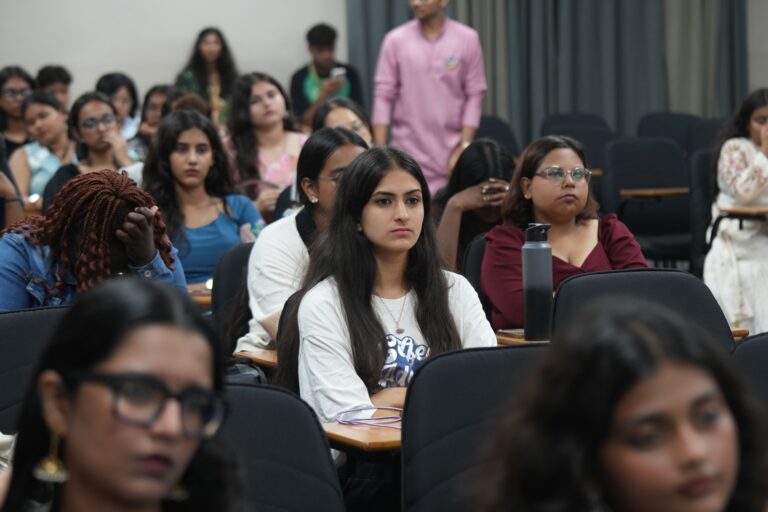
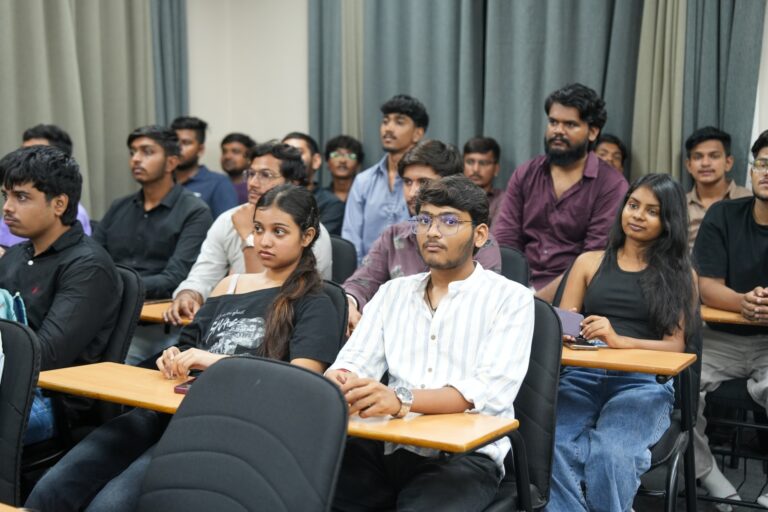
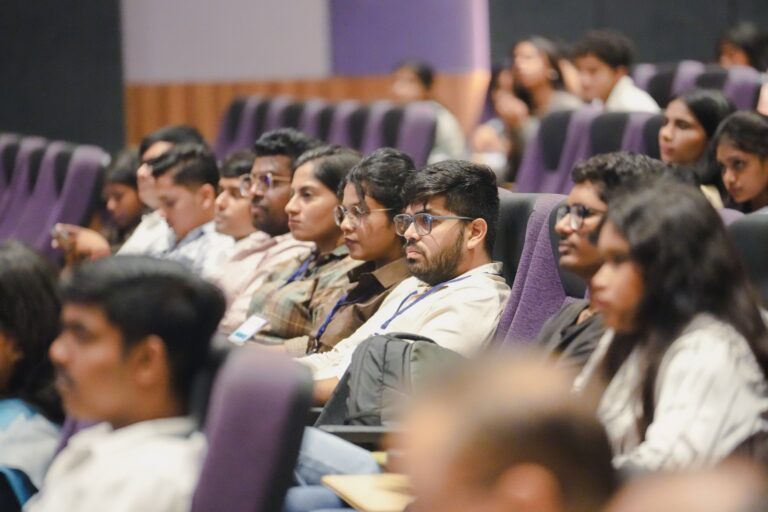
This is not an early decision that a good journalism and mass communication course will impose. It offers the basic knowledge and skills of reporting and verification, writing, ethics, and media law, and then introduces students to each of these areas in practical work, allowing them to choose which one suits their needs. The rationale behind a festival such as Maadhyam, where investigative, sporting, political, broadcast, and feature and live-reporting events all take place side by side and are judged by a specialist in each area. The Faculty of Liberal Arts at Parul University develops this breadth in both its BA and MA in Journalism and Mass Communication programs, where students explore the types and not just guesswork from the outside.