Journalism & communication are correlated, but they’re used separately. They are similar, but not identical, and the knowledge of the difference is the first step to choosing the course. Journalism and mass communication are what? Journalism is the profession of collecting information, verifying it, and reporting it in the public interest. Journalism is one of the mass communication media that are used to convey information to a large number of people through print, TV, radio, the internet, film, public relations, and advertising.
Journalism versus mass communication: the clear distinction
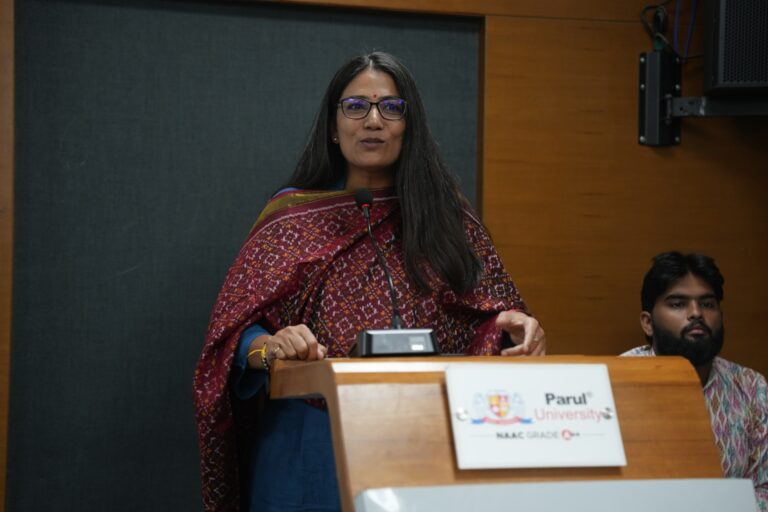
Journalism is a practice with a specific duty. As the senior editor Somit Sen of The Times of India put it to students at Parul University: a journalist’s job is to question, and a story has to be watertight and reported from every side before it is published. News forms the part of mass communication that is the academic and professional study of all mass media. Interestingly, the journalism & mass communication program teaches the unique approaches to researching, verifying, validating, and then writing a perfect story. Besides this, there are specialisations in broadcasting and digital media, public relations, advertising, film, and photography. PU’s Faculty of Liberal Arts offers unique courses such as the BA in Journalism and Mass Communication and the MA in Journalism and Mass Communication, laying a strong grounding in reporting, media ethics, and media law with real studios, media labs, and continuous industry exposure through interactions, internships, and immersive experiences!
The essence of education!
A good journalism and mass communication curriculum is deliberately broad in its early stages and specialised later. The core areas tend to include:
- Reporting and writing: News values, the inverted pyramid structure, the 5Ws and 1H, interviewing, and verification.
- Print and digital journalism: How a story is reported, edited, packaged, and published, and how the same story is adapted from print to digital.
- Broadcast journalism: How a television newsroom works, from the assignment desk to the anchor, and the craft of anchoring and field reporting.
- Media ethics and law: Accuracy, fairness, attribution, sensitive reporting, and the line between public interest and public curiosity.
- Public relations and advertising: How organisations communicate, how campaigns are built, and how PR differs from advertising and from news.
- Photography, radio, and film: Visual storytelling, audio production, and the grammar of the moving image.
The point of the breadth is that modern media work crosses these lines constantly. A reporter now shoots video, writes for digital, and understands search. A good program reflects that, which is why a festival like Maadhyam at Parul University runs workshops in print, broadcast, photography, radio, PR, advertising, and cinematography, all under the 250-acre campus!
The real & raw skills!
The field requires a certain set of skills that are as specific as they are transferable: the discipline to fact-check before one publishes; the judgment to decide what is important to a public, not just what is interesting; the writing to communicate clearly; and the calm under pressure to perform under a deadline. The Indian Express print editor Anamni Gupta places the essence of it in four questions a student should pose to every piece of information: What happened? Is it true? Why is it important to the public? How do we tell it? The four questions are, in essence, the entire discipline in a nutshell and carry over from newsrooms to any job where there’s a need to communicate on a credible basis with an audience.
Specialisations and opportunities they provide
As a student advances, the field splits into separate branches. Reporting/editing is the pathway into print, TV, and online newsroom jobs. Specialisation in broadcast results in anchoring, production, and news production. In addition to newsrooms, candidates with the same degree can pursue a career in public relations/corporate communication, advertising/copywriting, digital content/social media, photography/photojournalism, radio/audio production, or film/video. This is the one thing that is the strength of the field: it does not confine a graduate to a single job title, as many other opportunities can be explored as well!
The future possibilities
The greatest advantage of journalism and mass communication programs over any other is the exposure students are given, not the content of the syllabus. This means that students are given the opportunity to learn from working journalists; they are given real newsrooms and studios to facilitate learning, and students are given events to do the work rather than just read about it. To celebrate the spirit of journalism, Parul University aims to extend unique exposure to students through the Maadhyam festival, where senior journalists from national newspapers come to teach & inspire. The logic is very simple – do what you like and you will shine!