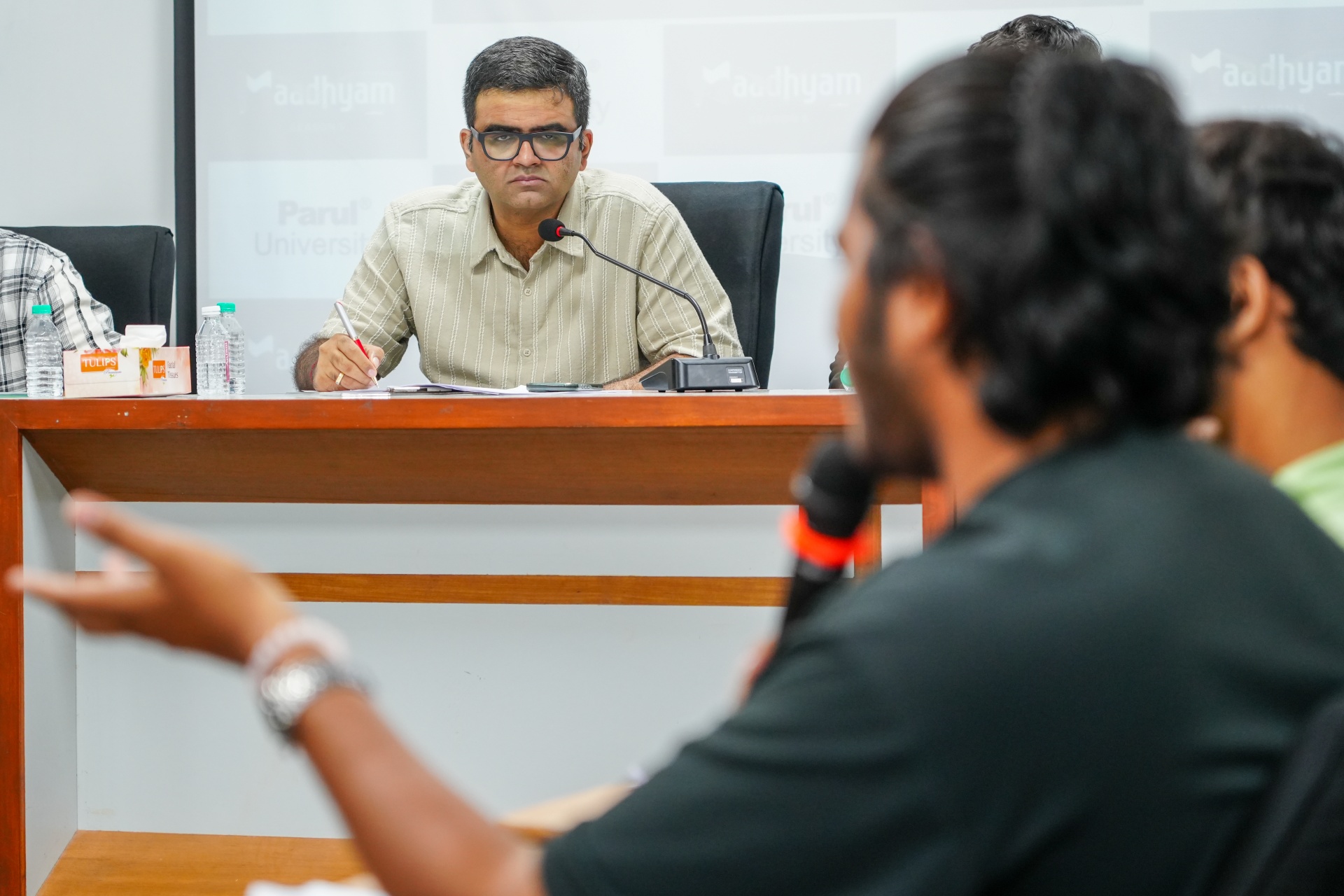
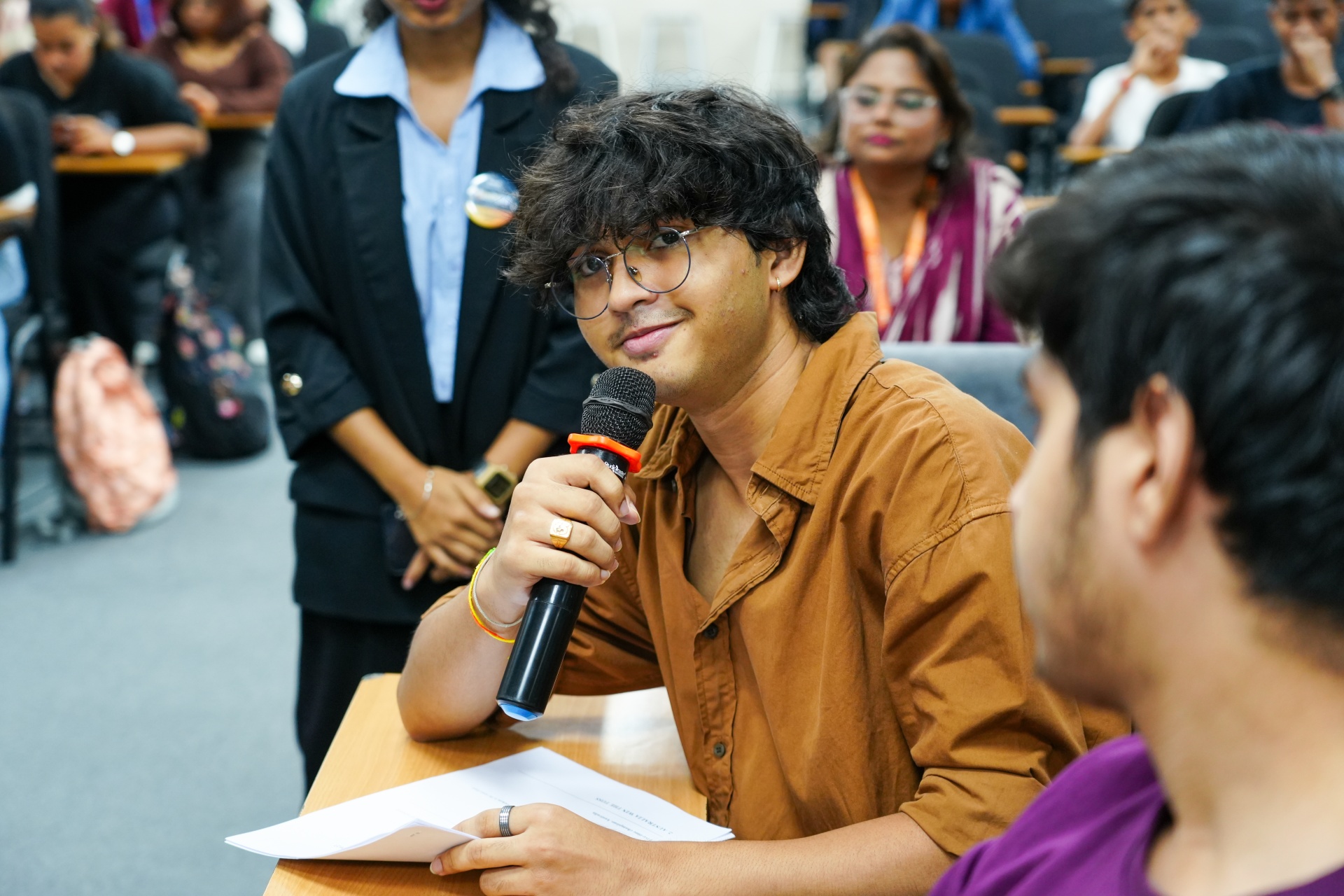
Ask most people what a mass communication degree leads to, and they will say, reporter or news anchor. Mass communication is the study of how your message reaches an audience through any medium, print, digital, radio, or otherwise. If you aren’t looking to make your career in reporting or anchoring, here’s your guide to explore galore opportunities in mass communications by Parul University’s Faculty of Liberal Arts department!
Public relations and corporate communication
It’s the core practice of managing an organization and a craft derived from journalism and advertising. A journalist can report, an advertiser sells, and a PR professional builds a reputation and streamlines communication. Be it crisis management or anything that goes wrong, PR executives are responsible for all of those matters. Their work covers press releases and maintaining media relations via strategic messaging. This topic was thoroughly discussed at Maadhyam Season 5 by the PR strategist Umang Pardasani. He said it’s one of the fastest-growing industries for mass communication graduates, as the field spans agencies, in-house marketing teams, and consultancies.
Advertising and copywriting
Advertising is an art of persuasion, and copywriting is the craft of words that move people to act and take some action. Jitesh P, a creative director, said the first 3 seconds decide whether a message will reach your audience or not. And crafting that message and an entire package of design requires copywriters, creative directors, brand strategists, and account management roles across advertising agencies and branding teams. This is the go-to option for students who are thrilled towards ideas, language, and psychology.
Radio and audio communication!
From becoming a podcaster to a famous radio jockey, this field has enormous opportunities for students. A radio jockey is a performer, communicator, and voice expert who builds a connection with an unseen audience with the power of words and the art of vocal communication. It was taught at Maadhyam by the radio professional Parima Jain & by the chief guest, RJ Devanggana of Carvan Club Hindi. They spoke of scripting, voice, timing, message landing, emotional pitching, usage of voice, and how it’s the top choice for students who can communicate verbally!
Photography and photojournalism
Photography in media is not decoration; it is an independent form of storytelling. A photojournalist reports with images, and the skill is in using light, framing, and timing to carry meaning, not just to record a scene. At Maadhyam, the photo-artist Prof. Shiv Narayan Joshi pressed students to move beyond smartphone snapshots to images that carry emotion and context, and the commercial photographer Tejas Shah judged the photography competition. Careers range across photojournalism, commercial and editorial photography, and visual content for digital media, a field expanding as every platform becomes more visual.
Cinematography and film
Film and video are now central to media, and the field needs people who can tell stories on screen. Cinematography, the craft of the camera and of visual grammar, was taught at Maadhyam by the cinematographer Santosh Thundiyil, and the festival’s Scene to Screen competition had students write, shoot, and screen their own short films. Careers here include cinematographer, director, editor, and the broader world of video content production for brands, platforms, and newsrooms alike. It suits people drawn to the visual and the collaborative, since film is made by teams.
Sports journalism!
Editorial illustration and cartooning, represented at Maadhyam by the illustrator Priyanka Goswami, shared views on specialist craft in opinion journalism and digital media. In sports journalism, the veteran sports journalist Chandresh Narayanan said it has its own world and style of storytelling. Be it creative writing, content, social media management, or news production, all these sections come under the umbrella of mass communication, and so each has a different way of research and representation.