What Architectural Practice Demands: Ar. Daraius Choksi’s World Architecture Day 2026 Keynote
About Ar. Daraius Choksi
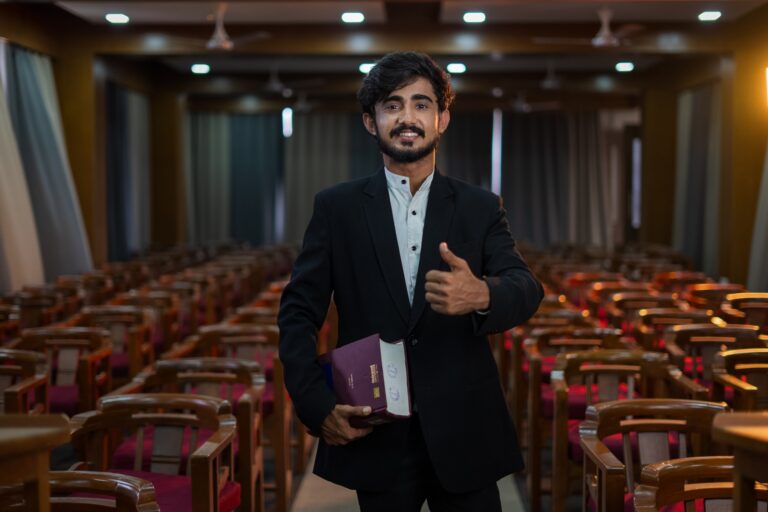
Ar. Daraius Choksi is a practising architect with more than two decades of experience in architecture and master planning. He completed his Bachelor of Architecture at the University of Mumbai in 1998 and has been with the Pune-based practice Christopher Charles Benninger Architects since 1999, where he is now a Studio Director. His experience spans institutional and educational campuses, residential complexes, corporate headquarters, commercial facilities and hospitality developments, across the full project life cycle from concept to handover, and he mentors and trains young architects. He was one of the keynote speakers at Parul University’s Faculty of Architecture and Planning during the inaugural session of World Architecture Day 2026.
Taking a chance, and creating one
Ar. Daraius opened with how he joined his practice. On weekly site visits near Pune around 2000, before mobile phones and the internet were common, he kept passing a cluster of stone-clad, greenery-covered buildings, the Centre for Development Studies and Activities, built by an American architect who had settled in India. He sent a postcard and an application, interviewed, and moved to Pune. His message to students was that young architects must take chances, and that it is not enough to wait for a chance because one must also create one.
A university built against the odds
His first project was a large university campus near Bengaluru, commissioned in 2010, which he used to show how a master plan changes under real conditions. The team prepared more than ninety options as the site shrank from over 100 acres to about 70, a court case removed central land, and planning rules demanded land for roads and a depot, with the plan taking about six years to clear. A designer, he said, needs creativity that is not diminished at any stage and the perseverance to carry it through, not overnight bursts of inspiration. With neither groundwater nor municipal supply, the campus runs on a rainwater system with three grades of water, and its simple, durable palette of stone and exposed concrete, naturally lit and ventilated without air conditioning, was chosen so a building can last fifty to sixty years.
IIT Hyderabad, and Brownfield Development
At IIT Hyderabad, his studio’s lecture hall complex of about twenty-five classrooms, from 60 to 800 seats, made circulation the key issue: the building sits in the landscape so students walk up or down about three metres, with ramps and stairs for all and radiant cooling in the halls to cut the HVAC load. His third project transformed a client’s seventy-year-old head office, a mix of load-bearing walls, concrete, steel and ferro-cement, with a new strengthening method, radiant-cooling floors that cut the air-conditioning load to about a fifth, and a new courtyard as the common space. Brownfield development, he told students, will be the largest area of work in the coming years and will define their generation.
I before AI, and a book for the library
Ar. Choksi closed with a piece of advice. The best form of good luck, he said, is to have good teachers, and before artificial intelligence, which students will use extensively, it is imperative to develop one’s own intelligence, in his phrase, I before AI, where the I also means the eye that sees and coordinates. AI will offer solutions, but only the architect can judge which is best. The vote of thanks recalled five lessons from Christopher Benninger’s first book, including that to gain something beautiful you may have to give up something beautiful, that the ultimate search of all artists is the search for truth, and that there is only one form of good luck, which is to have good teachers. Ar. Choksi then presented a book by Christopher Benninger to the institute’s library.