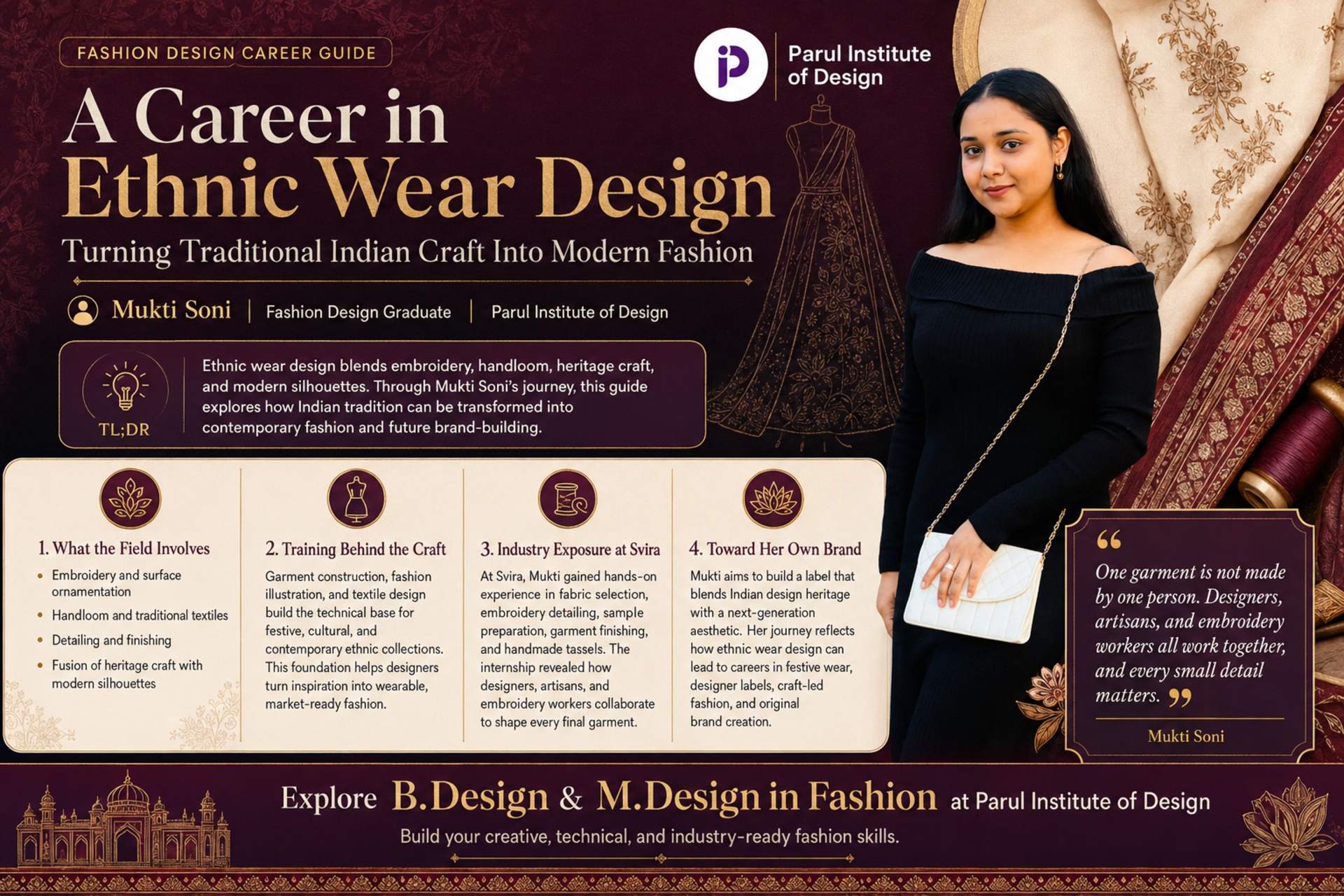
Indian heritage has a fashionable history, and very few are aware of this point. Gone are the times when people were just pursuing fashion designing as a hobby, as in today’s time, it’s one of the top-paying professions in the world. A career in the ethnic wear industry sits at one point: heritage & fashion. How to take the right inspiration and to mould it with the same is the real process of any design. When you work in the ethnic industry, working with the crafts of Indian clothes, embroidery, and handloom, ornamentation, intricate detailing, and contemporary hues plays a premium role in designing the final outfit. The look and feel must carry the current vibe and the trend as well.
Say hello to the gem of Parul Institute of Design – Mukti Soni, a proud fashion design graduate, who’s super passionate about building her own brand blending Indian design with a next-gen touch.
Her eye for it was formed early. Growing up in a goldsmith family in Dediyapada, a village in Gujarat’s Narmada district, she spent childhood around jewellery work, noticing small details, colours, and traditional designs- the exact sensibility ethnic wear demands.
Deep-down Roots of Indian Ethnic Wear Design!
Ethnic wear design is craft-intensive in a way that fast fashion is not. The work centres on techniques that take skill and patience:
- Embroidery and surface ornamentation: The decorative handwork that gives ethnic garments their richness.
- Handloom and traditional textiles: Fabrics with their own regional stories and properties.
- Detailing and finishing: Handmade elements such as tassels, where small choices change the whole look.
- Fusion with modern silhouettes: Adapting traditional forms so they feel contemporary and wearable.
The central skill, as Mukti learned, is attention to detail and patience: a small piece of embroidery, a fabric choice, or a finishing detail can change the entire character of a garment. This is why the craft subjects in a fashion curriculum matter so much for this path.
Sketches to Spaces – Become an Interior Designer with the guidance of Parul Institute of Design!
The Training Behind the Craft!
Ethnic wear design draws heavily on specific parts of a fashion curriculum. On her inspiration, Mukti Soni credits garment construction, epic fashion illustrations, and textile design. She believes her foundation is the real reason she is very proud of her Navratri-inspired Chaniya Choli Collection – a perfect fusion of Gujarati craft in sync with modern ideas.
Building a full graduation collection from a cultural concept is exactly the kind of project that turns a craft interest into a designer’s capability. All ready to launch your ethnic label? Join the B.Design & M.Design in Fashion programmes at Parul Institute of Design and gain techno-creative experience right from day 1 of your journey!
Inside an Ethnic Wear Studio: The Internship
One garment is not made by one person. Designers, artisans, and embroidery workers all work together, and every small detail matters.
– Mukti Soni
Her internship at Svira, a designer-wear studio in Vadodara, showed her how the craft operates as an industry. She worked across fabric selection, embroidery, design detailing, sample preparation, garment finishing, and handmade tassels, and saw how a single outfit passes through many hands, designers, artisans, and embroidery workers, each responsible for part of the whole.
She also learned the industry reality that separates it from college: everything runs to a deadline and a standard of finish, and even a small mistake affects the finished garment. This is the same gap between classroom and industry that a fashion internship reveals.
Toward Your Own Ethnic Wear Brand!
For many of the designers in this field, their only goal is to set up their own brand, but for the Indian market, consumers value heritage and detailed Indian craftsmanship, and so the need for the same has amped globally. This path runs via mastering the originality of craft, understanding textiles and artisans who come with a different point of view that balances traditional values and modern expectations. Mukti Soni’s ambition was real – she wanted to showcase the beauty of Indian culture through her offbeat designs, followed by launching her ethnic wear label!
From Store Displays to Brand Strategy – Understanding Visual Merchandising!
FAQs
What’s the ideal career track in the design industry?
It’s simple - you need both an artistic mindset and technical skills. To have a successful career in the ethnic design industry, you need to study Indian roots and work with traditional Indian clothing; you even need to master the art of crafting for embroidery, handloom and surface ornamentation. Besides this, the careers range from ethnic and designer-wear brands to founding a bridal or festive-ready label to setting up as an independent design brand rooted in heritage craft!
What major skills do you need for ethnic wear design?
To have a career in this industry, you need strong embroidery & sewing skills, followed by a core knowledge of handloom, textile, and garment construction. Besides this, you need to have an aesthetic vision so your design can meet modern expectations such as modern silhouettes and a perfect blend of traditional value with an advanced touch. You can’t just stop at this; you need patience, detailed attention and good communication skills to elevate your career!
How do you start your own ethnic wear brand?
Typically by first mastering the craft and understanding textiles and artisans, then developing a distinct design identity that balances tradition and modernity, and finally learning the business side, production, sourcing, pricing, and retail. Practical studio and internship experience with real garments and artisans is an important step before launching a label.
Which subjects matter most for ethnic wear design?
Surface Ornamentation and Textile Design are central, because embroidery, fabric, and decorative handwork define ethnic wear, alongside Garment Construction, Fashion Illustration, and Collection Development. Together, these teach both the handcraft and the ability to build a coherent traditional-meets-modern collection.