An Egyptologist and certified tour guide
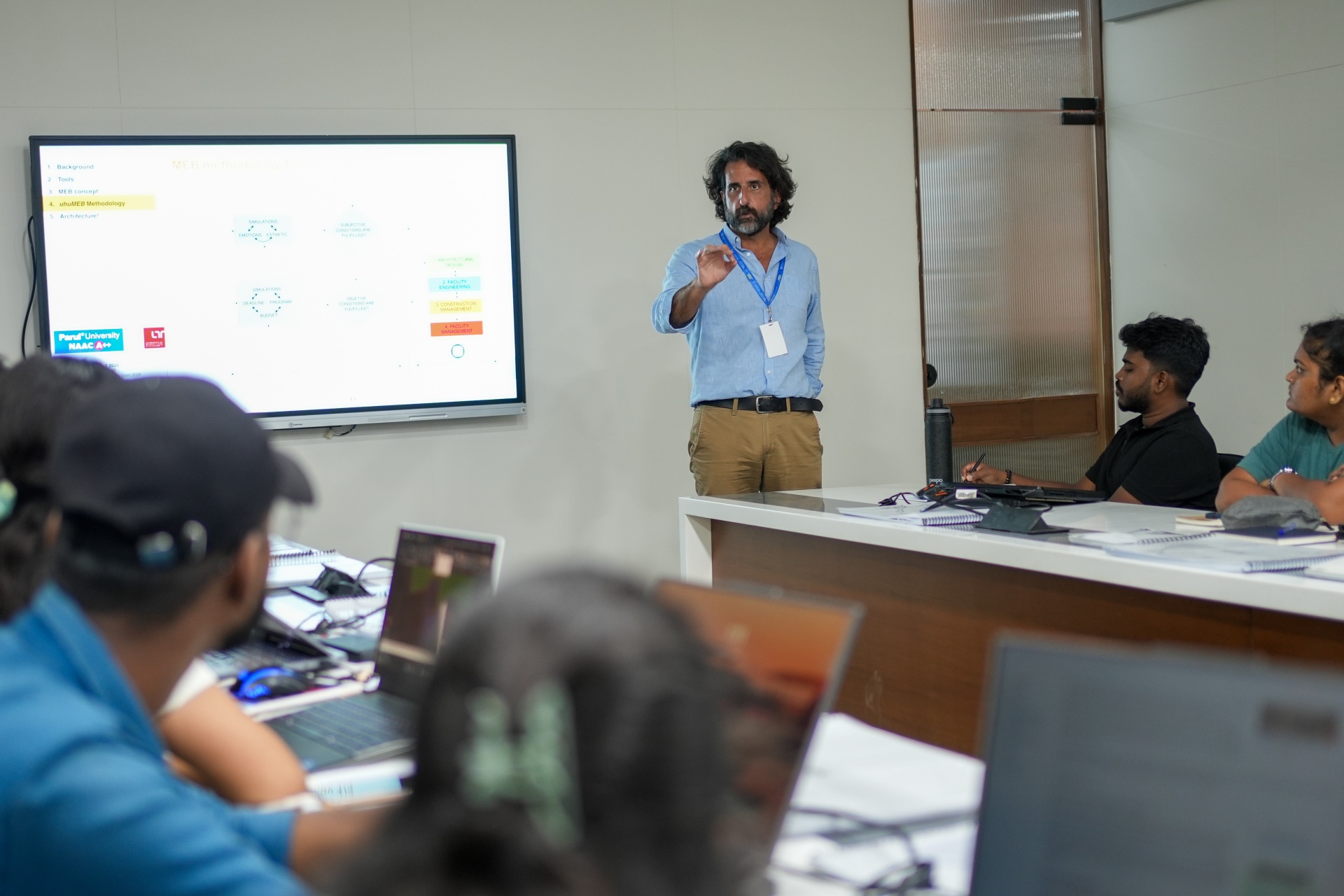
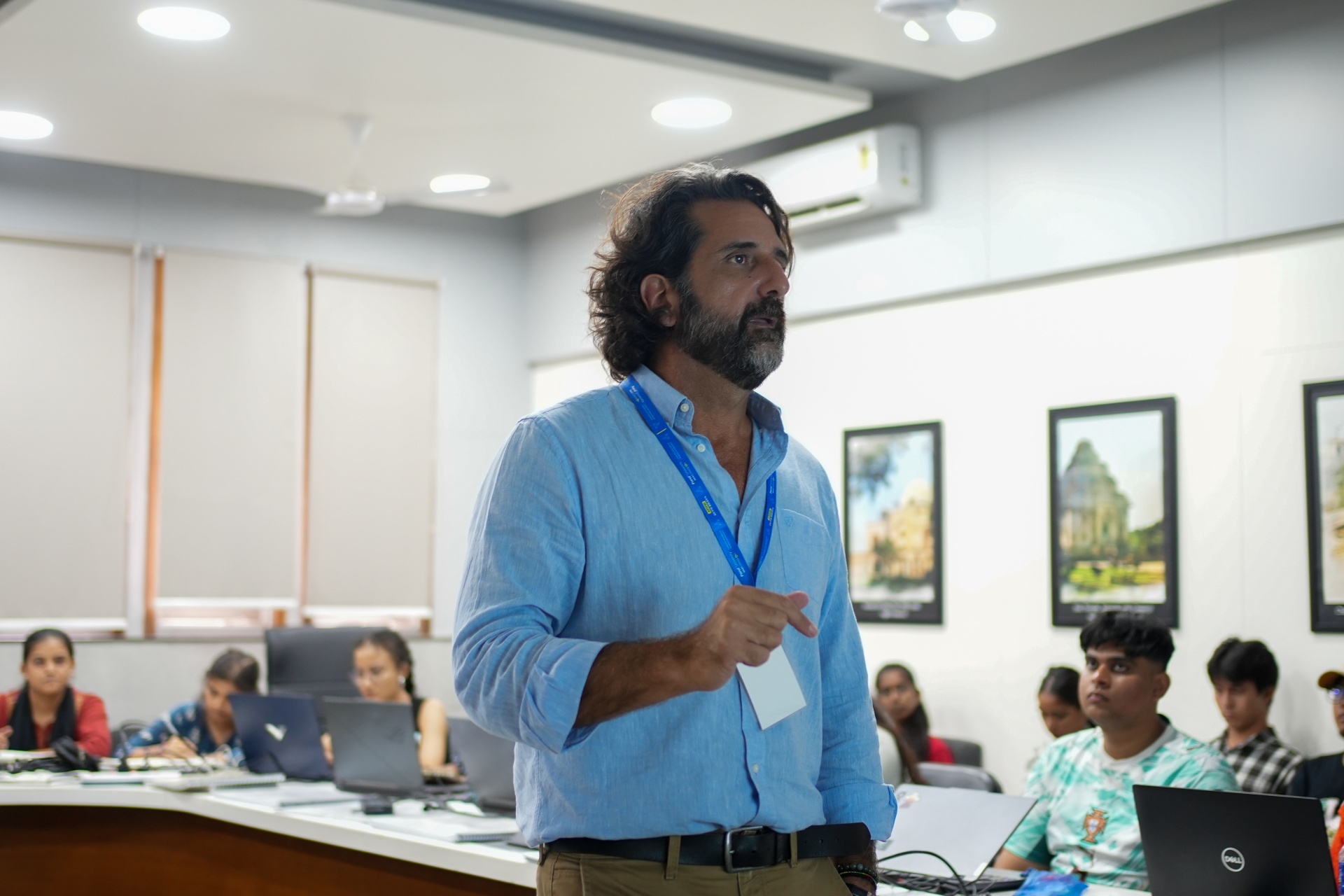
Dr. Mohammed Sayed Heragi Ahmed is an Associate Professor in the Tourism Guidance Department at Luxor University, Egypt, where his speciality is Egyptology and he serves as Vice Dean for Environmental Affairs and Community Service. He completed his master’s in 2009 and his PhD in 2016, and is a certified national tour guide who has guided visitors, many of them Indian, around Egypt’s heritage sites, giving him a view of the profession from both the classroom and the monument. He lives in Cairo, teaches at Luxor, and taught at Parul University’s Faculty of Hotel Management and Catering Technology under the Centre for International Relations and Research (CIRR) Visiting Professor Program over four weeks.
Comparing two ancient civilisations
Usually when international guests visit the host country, they observe the cultures, and how different they are from their own. Dr. Heragi noticed the similarities and differences. His lectures focused on the comparative study of ancient Egypt and ancient India. He started the session with location and geography showing how Nile and the Indus supported agriculture, settlement, storage and trade. He said that due to farming, communities travelled to settle and organise. Talking about Alexandria as a center of scholarship. The Library of Alexandria and the Lighthouse (The Pharos) are the greatest achievements of the Mediterranean world. They are prime examples of knowledge solving. Solving an issue or problem with practical navigation. They are part of the history of solving mathematical problems.
The comparison was not limited to history. There were points related to politics, religion, social structure of the two countries and the afterlife. He discussed about the authority of Pharaoh against India’s succession of Kingdoms and empires. Compared it with the Varna system. Talking about Egyptian social hierarchy and contrasted Egyptian beliefs about maintaining the body with Indian concepts of reincarnation and karma. Pointing out how religions have shaped the architecture, burial and art.
Pyramids, writing, medicine and India's contributions
The culture, the art, healthcare and many other things were discussed. He share how the pyramids and tombs were not merely architecture but an expression of belief about life and after death. Describing the use of durable materials such as stone, granite, and gold for preserving the bodies. The craftsmanship of Tutankhamun‘s funerary objects had these elements. Talking about writing, he shared the hieroglyphic writing and the role of the Rosetta Stone. Greek inscriptions on it allowed the historians and Egyptians to understand hieroglyphs. This expanded the modern understanding of Egyptian history. Letting them understand the medicine preserved by ancient Egyptians on papyri. Speaking about India, he shared the development of the concept of zero, the great depth in planning of Harappa and Mohenjo-daro in the Indus Valley Civilisation. Pointing it as developing through several historical phases rather than as one continuous state.
Tourism, heritage and the India-Egypt comparison
His tourism sessions covered the tourism industry, new trends in tourism, cultural heritage, UNESCO and the interpretation of heritage, with the India-Egypt comparison running through the material. He presented both as ancient civilisations with real potential in tourism and a shared interest in growing visitor numbers sustainably. The lecture students responded to most strongly was on the Grand Egyptian Museum and the pyramids, which drew constant questions, often set against the Taj Mahal. On the craft itself, he taught that a guide is memorable when a story makes a monument come alive, turning a pile of stone into something a visitor can imagine, and that a good guide describes the way of life of the time rather than only reciting facts.
Shared culture, and advice to students
Dr. Heragi returned often to how much India and Egypt share: close education cultures built on family-like relationships and respect for the teacher, overlapping vegetarian-leaning cuisines, and similar approaches to hospitality, which he rated ten out of ten. He noted that Koshary, a traditional Egyptian dish, was added to the UNESCO list in a meeting held in New Delhi. From Egypt’s experience, where cultural heritage is the main tourism product, he drew a wish for India: one clear itinerary that presents the country’s diversity as a single product. His advice to students who will work in hotels, catering and tourism was to work hard and work patiently, because the reward of good research and good work is felt years later. Join the courses of history and research at Parul University.